Plumeria rubra
Frangipani
L., 1753
Added by
Anonymous Curator
Reviewed by
Under Review
Last modified by
Julia Trouin
TaxonomyBiological classification ranks placing this species within the tree of life, from Kingdom down to Genus.
Ecology & StatusHow this species lives: habitat preferences, diet, behavior, population status, and role in its ecosystem.
OriginWhether the species is native (evolved here), endemic (found only here), or introduced by human activity.
Native
Population TrendDirection of change in population size over time: increasing, stable, decreasing, or unknown.
Stable
Trophic RolePosition in the food chain: producer, herbivore, carnivore, omnivore, decomposer, or parasite.
--
Growth HabitPhysical form and structure of the plant: tree, shrub, herb, vine, epiphyte, aquatic, etc.
--
Leaf TypeLeaf characteristics: deciduous (seasonal shed), evergreen, simple, compound, needle-like, etc.
--
Flowering SeasonTime of year when this species typically reproduces or flowers.
--
Recent SightingsWhether this species has been observed in the wild in Costa Rica within recent years.
Yes
Habitat SummaryOverview of the specific ecosystems and environments where this species is found in Costa Rica. Multi-lang
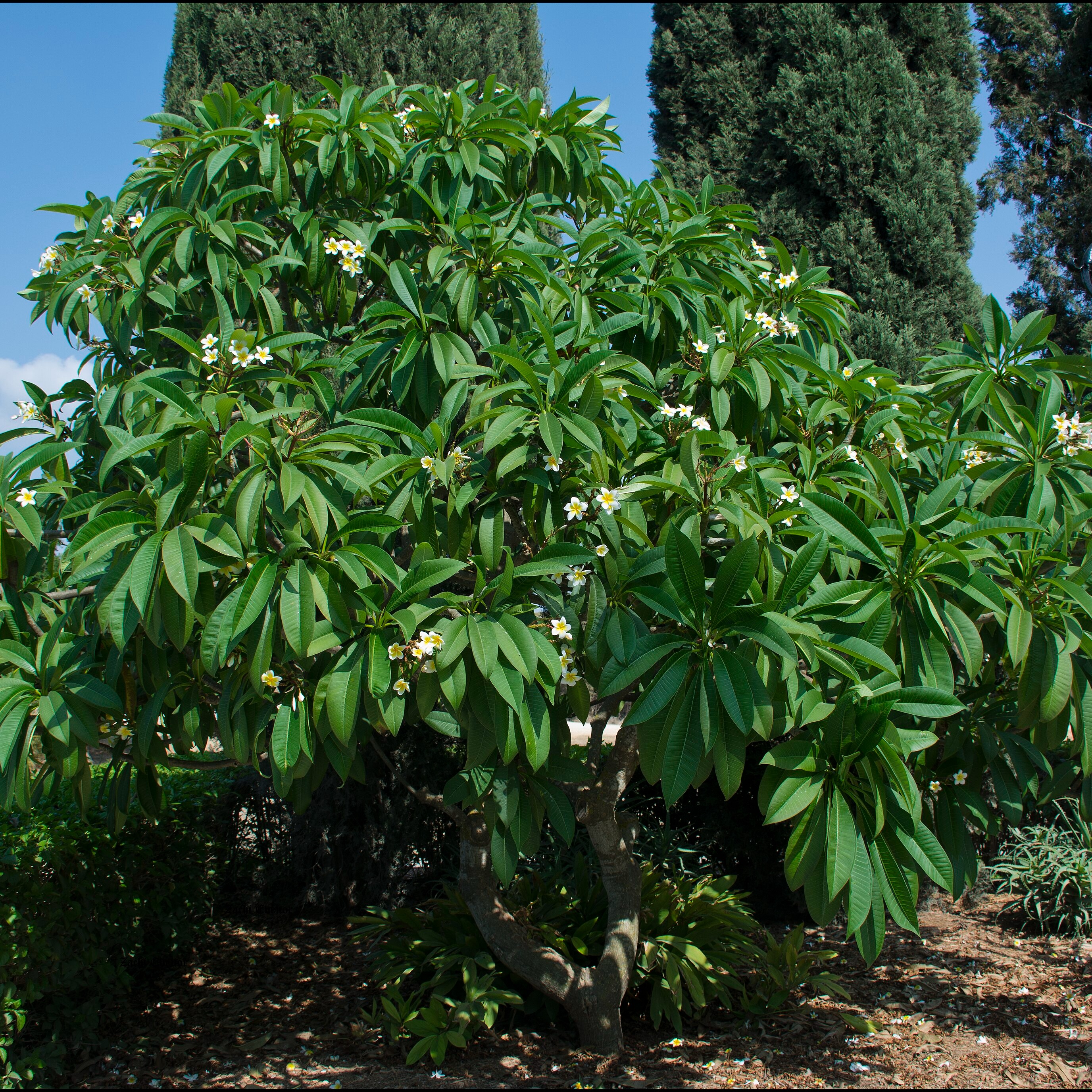
It is a natural survivor of arid ecosystems. Its native habitat is tropical dry forests, rocky slopes, and deciduous thorny scrub, from sea level up to 1,500 meters in altitude. It requires full sun and very well-drained soils to thrive. Highly tolerant to extreme drought, salt spray, and wind, it is common in the coastal areas of the Costa Rican Pacific (such as Guanacaste). Thanks to its hardiness and beauty, it has naturalized in peri-urban habitats and tropical gardens around the entire globe.Light & Water NeedsSunlight intensity and moisture levels this plant needs to grow and reproduce successfully. Multi-lang
Information not available in English. Help us expand this record!BehaviourDaily activity patterns, movement, territory use, foraging style, and seasonal behavioral changes. Multi-lang
The phenology of the Frangipani dramatically marks the aesthetics of the tropical deciduous forest. After months of enduring the inclement sun and looking like a mere skeleton of thick branches without a single leaf, the onset of the reproductive season transforms the tree. It bursts into massive inflorescences at the bare tips of its stems, creating a spectacular crown of flowers that attracts pollinators from miles around before the plant expends energy on producing new green leaves with the arrival of the rains.Toxicity / UsesToxic compounds present and their documented effects on humans or other organisms. Multi-lang
Information not available in English. Help us expand this record!Physical Measures
Length (cm)
200.0 - 800.0 cm