
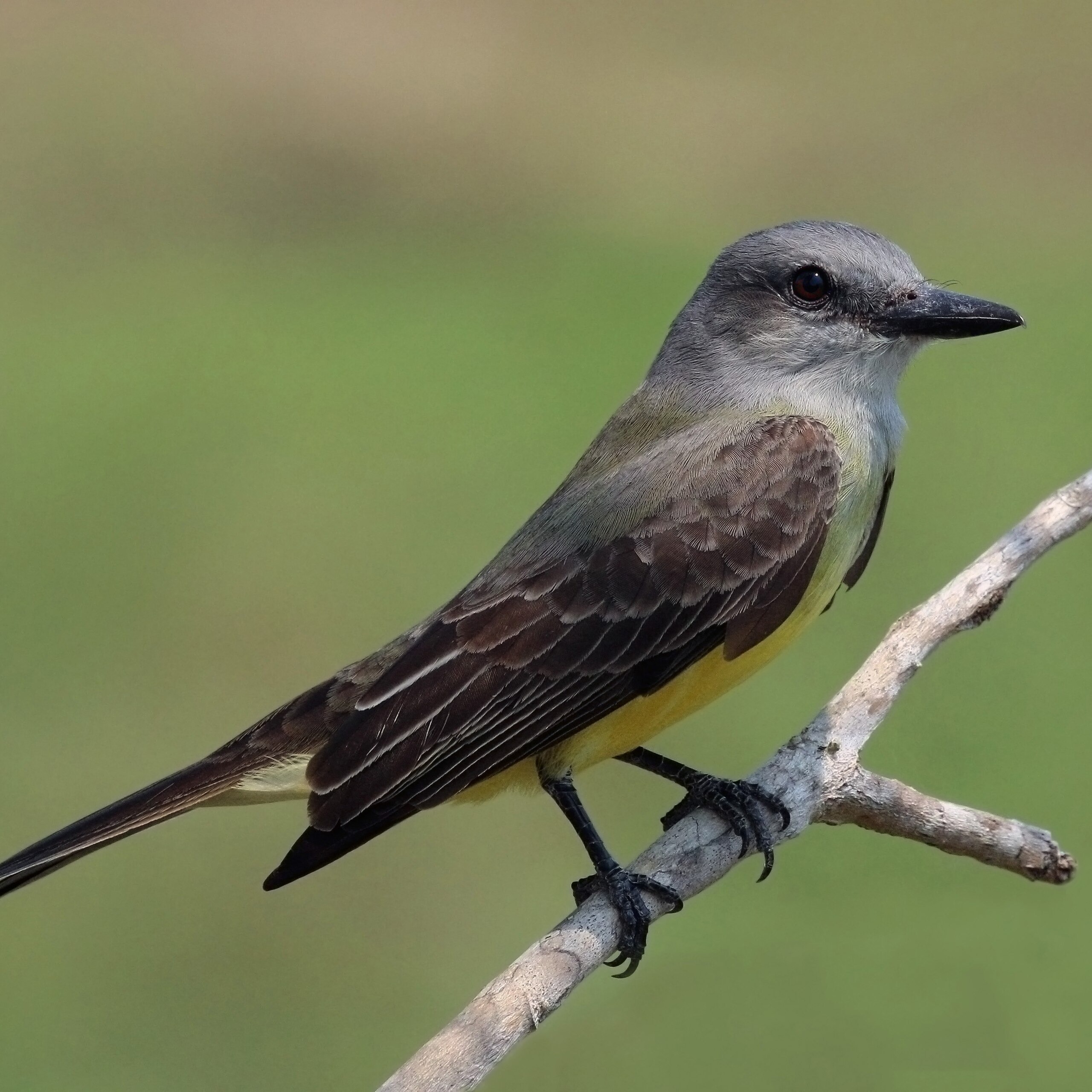
Tyrannus melancholicus
Tropical Kingbird
Vieillot, 1819
Added by
Anonymous Curator
Reviewed by
Under Review
Last modified by
Julia Trouin
TaxonomyBiological classification ranks placing this species within the tree of life, from Kingdom down to Genus.
Ecology & StatusHow this species lives: habitat preferences, diet, behavior, population status, and role in its ecosystem.
OriginWhether the species is native (evolved here), endemic (found only here), or introduced by human activity.
Native
Population TrendDirection of change in population size over time: increasing, stable, decreasing, or unknown.
Increasing
Breeding SeasonTime of year when this species typically reproduces or flowers.
--
Trophic RolePosition in the food chain: producer, herbivore, carnivore, omnivore, decomposer, or parasite.
Insectivore
Recent SightingsWhether this species has been observed in the wild in Costa Rica within recent years.
Yes
Habitat SummaryOverview of the specific ecosystems and environments where this species is found in Costa Rica. Multi-lang
It is one of the most adaptable and ubiquitous birds in the Neotropics. It inhabits an immense variety of semi-open landscapes and ecotones from sea level up to more than 2,000 meters in altitude. It thrives in savannas, forest edges, agricultural pastures, mangroves, and riverbanks, but has also successfully conquered urban and suburban environments, where it is common to see it perched on telephone wires, antennas, barbed wire fences, and bare branches in gardens, always maintaining a panoramic view for hunting.BehaviourDaily activity patterns, movement, territory use, foraging style, and seasonal behavioral changes. Multi-lang
It is a sit-and-wait predator par excellence. It spends much of its day perched motionlessly on natural or artificial watchtowers that offer 360-degree visibility. When it detects an insect, it launches into a fast, zigzagging flight, catching the prey in the air with an audible, dry snap of the beak, before gracefully returning to the same perch or an adjacent one to beat large prey against the branch before swallowing them. They are extremely vocal and active at dawn, establishing their territorial boundaries through constant trilling.Social ActivitySocial structure: whether the species is solitary, paired, or colonial; hierarchy and communication. Multi-lang
It is an intensely monogamous bird during the breeding season, defending an expansive nesting territory with unmatched fervor. Outside the reproductive season and especially during their partial migration patterns in some subpopulations, territorial rigidity decreases significantly, allowing them to form loose flocks or roost in groups of dozens of individuals in communal roosting trees to mutually protect themselves from nocturnal predators.Feeding GuildWhat the species eats, how it forages or hunts, and its role as a consumer in the food web. Multi-lang
Aerial hawking insectivore. Its diet is dominated by large flying insects with robust exoskeletons, such as wasps, bees, flying beetles, dragonflies, winged termites, and butterflies. This diet, high in chitin and proteins, is seasonally supplemented with fruits from Cecropia, Miconia, and Ficus trees.Trophic Chain DetailsSpecific interactions in local food webs: prey species, predators, competitors, and scavengers. Multi-lang
It acts primarily as a secondary consumer and a key insectivore in regulating populations of large flying insects. In times of scarcity or during the non-breeding season, it can behave as an opportunistic omnivore by consuming small fruits and berries, acting as a minor seed disperser. Despite its extreme aggressiveness, it falls prey to specialized and surprise-attacking raptors such as forest falcons (genus Micrastur and Accipiter), while its nests are vulnerable to arboreal snakes, iguanas, and climbing mammals like opossums.Reproductive BehaviourMating strategies, courtship displays, nesting or spawning behavior, and parental care. Multi-lang
The breeding season is intrinsically linked to insect availability. The female is solely responsible for building the nest: an open, loose, and somewhat untidy cup-shaped structure made of dry twigs, grasses, vines, and fine roots, often lined with soft materials or spiderwebs. It is usually located in a horizontal tree fork at mid to high elevation. The female lays 2 to 3 pale cream-colored eggs covered in heavy chestnut and reddish blotches. She alone incubates the eggs for 14 to 16 days while the male tirelessly guards the surroundings like a lethal sentinel. Upon hatching, the altricial chicks (completely blind and helpless) are fed by both parents an intensive diet of regurgitated insects, leaving the nest approximately between 18 and 19 days of age.Physical Measures
Length (cm)
18.0 - 24.0 cm
Weight (Grams)
30 g - 42 g
Lifespan
Sexual MaturityAge at which the individual becomes capable of reproducing for the first time.
1 Years
Gestation / IncubationDuration from fertilization to birth (mammals) or to hatching (egg-laying species).
14 - 16