
Costa Rica Species
Thamnophilus doliatus
AnimaliaHighest rank in taxonomy. Groups all life into domains: Animalia, Plantae, Fungi, etc.IUCN LCInternational Union for Conservation of Nature — the world authority on species extinction risk, using standardized criteria. — Least Concern — widespread and abundant; not at immediate risk of extinction.In ProgressCurrent stage of this record in the editorial review workflow. Recent Sighting

Thamnophilus doliatus

Barred Antshrike

(Linnaeus, 1764)

Detailed Texts Multi-lang
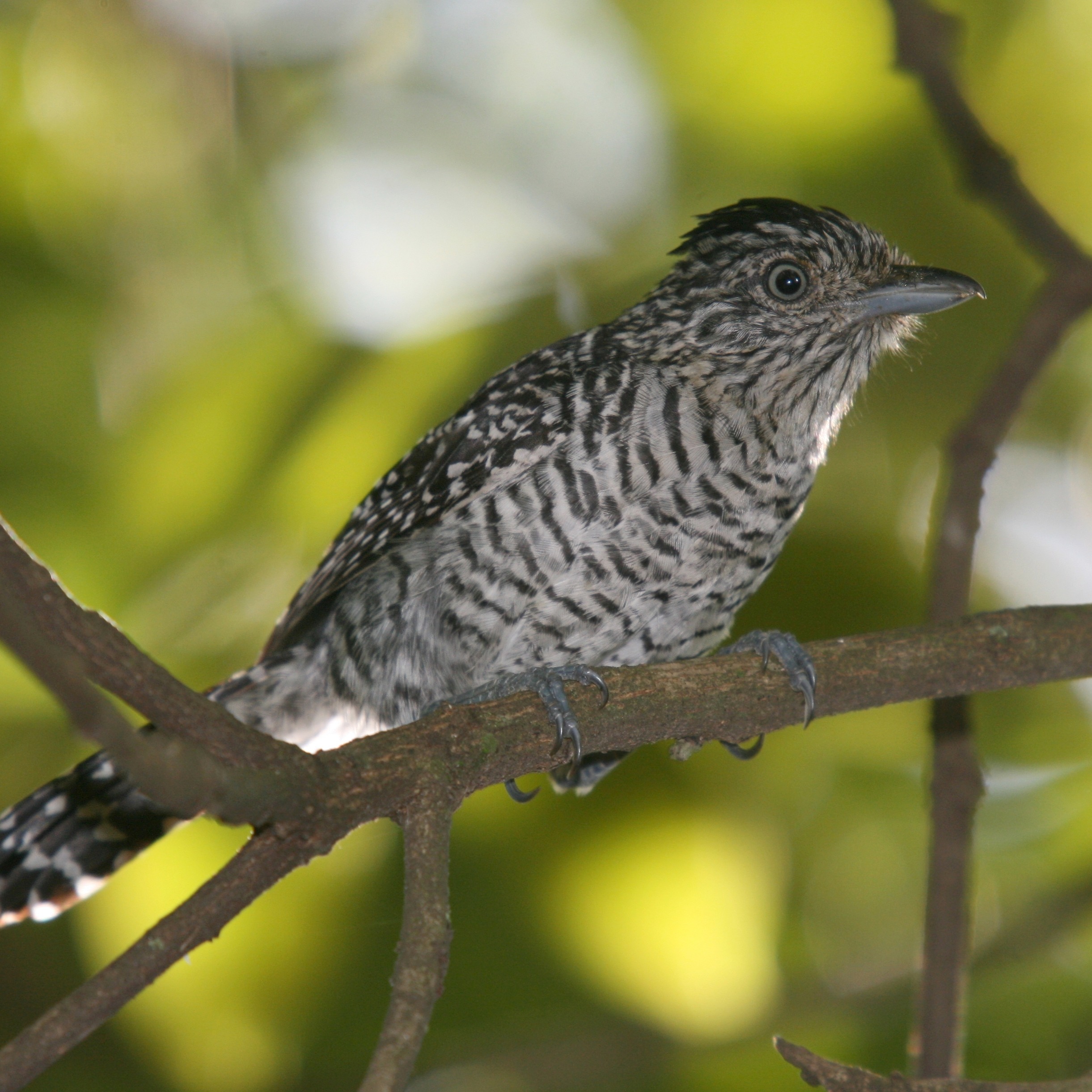
The Barred Antshrike (Thamnophilus doliatus) is a medium-sized passerine bird characterized by extraordinarily marked sexual dimorphism. The male is a visual spectacle: his entire body features a dense pattern of black and white barring (like a zebra), topped with a black erectile crest and pale yellow or whitish eyes. The female, in contrast, sports a warm and rich rufous (orange-chestnut) back, wings, and tail, with a rufous crest and a pale cinnamon belly, almost entirely lacking bars. Both sexes possess a strong, grayish bill that is broad at the base and ends in a distinct hook at the tip of the upper mandible, giving them a fierce shrike-like appearance.

Added by

Anonymous Curator

Reviewed by

Under Review

Last modified by

Julia Trouin

TaxonomyBiological classification ranks placing this species within the tree of life, from Kingdom down to Genus.

PhylumRank below Kingdom. Groups organisms sharing a fundamental body plan (e.g., Chordata = vertebrates and some invertebrates).Chordata
ClassRank below Phylum. Subdivides by structural traits (e.g., Mammalia, Aves, Reptilia, Insecta).Aves
OrderRank below Class. Groups related families sharing common ancestry (e.g., Carnivora, Primates).Passeriformes
FamilyRank below Order. Groups closely related genera (e.g., Felidae = cats, Canidae = dogs).Thamnophilidae
GenusRank just above Species. The first word in the two-part binomial scientific name.Thamnophilus
Taxonomic AuthorityThe scientist who first formally described and published this species, followed by the year of publication.(Linnaeus, 1764)
Record Completeness
85%
Coming soon

Ecology & StatusHow this species lives: habitat preferences, diet, behavior, population status, and role in its ecosystem.

OriginWhether the species is native (evolved here), endemic (found only here), or introduced by human activity.

Native

Population TrendDirection of change in population size over time: increasing, stable, decreasing, or unknown.

Stable

Breeding SeasonTime of year when this species typically reproduces or flowers.

Dry Season

Trophic RolePosition in the food chain: producer, herbivore, carnivore, omnivore, decomposer, or parasite.

Insectivore

Recent SightingsWhether this species has been observed in the wild in Costa Rica within recent years.

Yes

Habitat SummaryOverview of the specific ecosystems and environments where this species is found in Costa Rica. Multi-lang

It is a highly adaptable bird that thrives in semi-open and dense habitats. It is found in thickets, forest edges, dense secondary growth, overgrown gardens, and mangroves. It avoids the shady interior of dense primary forests. In Costa Rica and much of the Neotropics, it is very common in humid and dry lowlands, from sea level up to approximately 1,500 meters in elevation.

BehaviourDaily activity patterns, movement, territory use, foraging style, and seasonal behavioral changes. Multi-lang

They are birds of a stealthy but very vocal nature. They forage by methodically hopping between branches in the dense understory, often less than 5 meters from the ground. They examine rolled-up dead leaves, pry bark off small twigs, and comb vines for hidden insects. Despite remaining hidden in the thickets, their strong territorial instinct leads them to sing constantly and respond vigorously to intruders or playbacks of their call.

Social ActivitySocial structure: whether the species is solitary, paired, or colonial; hierarchy and communication. Multi-lang

They live strongly paired for life, maintaining constant visual and auditory contact in the brush. They often associate loosely with mixed-species understory flocks when these pass through their territory.

Feeding GuildWhat the species eats, how it forages or hunts, and its role as a consumer in the food web. Multi-lang

Insectivore / Dense foliage gleaner.

Trophic Chain DetailsSpecific interactions in local food webs: prey species, predators, competitors, and scavengers. Multi-lang

Carnivore (Primarily Insectivore). Its diet includes a wide variety of large invertebrates: beetles, grasshoppers, cicadas, centipedes, spiders, and butterfly larvae. They occasionally supplement their diet with small fruits or lizards. They are preyed upon by small forest falcons (like the Merlin or Bicolored Hawk), and their nests located in shrubs are frequently raided by snakes, weasels, and monkeys.

Reproductive BehaviourMating strategies, courtship displays, nesting or spawning behavior, and parental care. Multi-lang

Monogamous and fiercely territorial birds. They build a deep, hanging cup-shaped nest, very similar to an open pouch, woven with rootlets, grass blades, spider webs, and frequently thread-like black fungi (rhizomorphs). They suspend it in a horizontal fork of a shrub or thorny vine at a low height (between 1 and 4 meters). The female lays 2 or 3 white eggs with purple spots. Fascinatingly, the male assumes the vast majority of daytime incubation duties (around 14-15 days). Both parents feed the chicks, which leave the nest at 12-14 days.

Physical Measures

Length (cm)

15.0 - 16.5 cm

Weight (Grams)

24 g - 30 g

Offspring per cycleTypical number of young (live births, eggs, or seeds) produced by one adult in a single reproductive event or breeding season.2 - 3
Sexual DimorphismObservable physical differences between males and females of the same species (e.g., size, coloration, features).Yes

Lifespan

Sexual MaturityAge at which the individual becomes capable of reproducing for the first time.

12 - 18 Months

Gestation / IncubationDuration from fertilization to birth (mammals) or to hatching (egg-laying species).

14 - 15

Lifespan EstimatedExpected duration of life from birth to natural death under wild conditions.
Males4 - 8 Years
Females4 - 8 Years

Sexual DimorphismPhysical differences in size, coloration, or morphology between males and females of this species.

Males Multi-lang

The male features a complete pattern of black and white barring (zebra stripes) all over its body, with a solid black crest.

Females Multi-lang

The female possesses a solid rufous (coppery chestnut) back, wings, tail, and crest, with a pale cinnamon throat and belly lacking dark stripes (or very faint barring).

Evolutionary AdaptationsInherited traits and behaviors that improve the species' survival and reproduction in its specific environment. Multi-lang

Shrike-like Bill: Its robust and hooked bill is a lethal tool for a bird of its size. It works like sharp tweezers that allow it to grab, thrash, and tear apart difficult prey, such as armored beetles, centipedes, stinging caterpillars, and even small lizards that other passerines cannot process.
Expressive Crest: Both sexes possess elongated crown feathers that lie flat but can be erected vertically to form a large cockatoo-like crest. They use this to communicate visually during courtship, when alarmed, or to intimidate a rival.

Main ThreatsDocumented pressures reducing the population: habitat loss, hunting, disease, climate change, and invasive species. Multi-lang

Understory Clearing: Because they forage and nest exclusively in vines and dense scrub, the excessive cleaning of brush, vacant lots, and forest edges in suburban areas destroys their vital habitat.
Urban Predators and Agrochemicals: In agricultural and suburban edges, their nests (located at low heights) are very vulnerable to domestic cats, while pesticides reduce the abundance of the large insects they need for food.

Interesting FactsSurprising or notable facts that highlight what makes this species unique or ecologically important. Multi-lang

The Bouncing Ball Song: Its song is one of the most familiar sounds of the tropics. It is a series of nasal notes ('hu-hu-hu-hu-hu-hu...') that rapidly increase in pitch and tempo, resembling a bouncing ping-pong ball, ending in a harsh, raspy 'wah!' or 'hwaa!'. Male and female often sing this in a perfectly synchronized duet.
Opportunistic Ant Followers: Although they are not obligate antbirds, they are intelligent enough to opportunistically follow the terrifying columns of army ants, not to eat the ants, but to snatch the insects and spiders fleeing in terror from them.