
AnimaliaIUCN LCApproved Recent Sighting
Leptodeira septentrionalis
Cat-eyed Snake
Kennicott, 1859
Detailed Texts Multi-lang
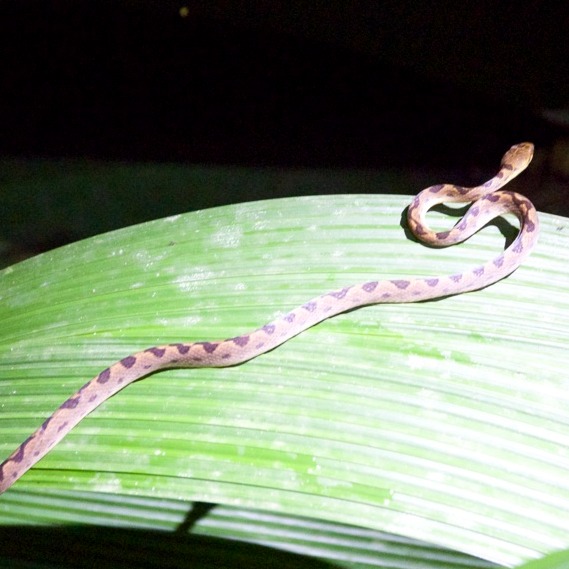
Medium-sized snake with large eyes and elliptical vertical pupils, reminiscent of a cat. It features a pattern of dark dorsal blotches on a beige or light brown background.
Added by
Anonymous Curator
Reviewed by
Julia Trouin
Last modified by
Julia Trouin
Taxonomy
PhylumChordata
ClassReptilia
OrderSquamata
FamilyDipsadidae
GenusLeptodeira
Taxonomic AuthorityKennicott, 1859
Ecology & Status
Origin
Native
Population Trend
Stable
Breeding Season
Year Round
Trophic Role
Carnivore
Recent Sightings
Yes
Habitat Summary Multi-lang
Highly adaptable, found in a wide range of habitats, from humid and dry forests to peri-urban zones and agricultural areas.Behaviour Multi-lang
Mainly nocturnal; often observed near water bodies searching for amphibians.Social Activity Multi-lang
Solitary; very active hunting habits during the night.Feeding Guild Multi-lang
Active predator; actively searches for prey on the ground or low branches.Trophic Chain Details Multi-lang
Carnivore; specialist in preying on amphibian eggs and tadpoles.Reproductive Behaviour Multi-lang
Oviparous; females deposit their eggs in protected cavities or under logs.Physical Measures
Length (cm)
60.0 - 100.0 cm
Weight (Grams)
50 g - 200 g
Offspring per cycle4 - 12
Sexual DimorphismYes
Lifespan
Sexual Maturity
1 - 2 Years
Gestation / Incubation
45 - 60
Lifespan Estimated
Males--
Females--
Sexual Dimorphism
Males Multi-lang
Males usually have longer and thinner tails.
Females Multi-lang
Females are more corpulent and heavy, ideal for egg production.
Evolutionary Adaptations Multi-lang
Vertical pupil: Adaptation for effective night vision, allowing it to hunt efficiently in dim light.
Main Threats Multi-lang
Mainly roadkill and human persecution due to misconceptions about its danger.
Interesting Facts Multi-lang
Possesses a mild venom used to immobilize small prey, but it is harmless to humans.