
Costa Rica Species
Orthogeomys matagalpae
AnimaliaHighest rank in taxonomy. Groups all life into domains: Animalia, Plantae, Fungi, etc.IUCN LCInternational Union for Conservation of Nature — the world authority on species extinction risk, using standardized criteria. — Least Concern — widespread and abundant; not at immediate risk of extinction.In ProgressCurrent stage of this record in the editorial review workflow. Recent Sighting

Orthogeomys matagalpae

Nicaraguan Pocket Gopher

J. A. Allen, 1910

Detailed Texts Multi-lang
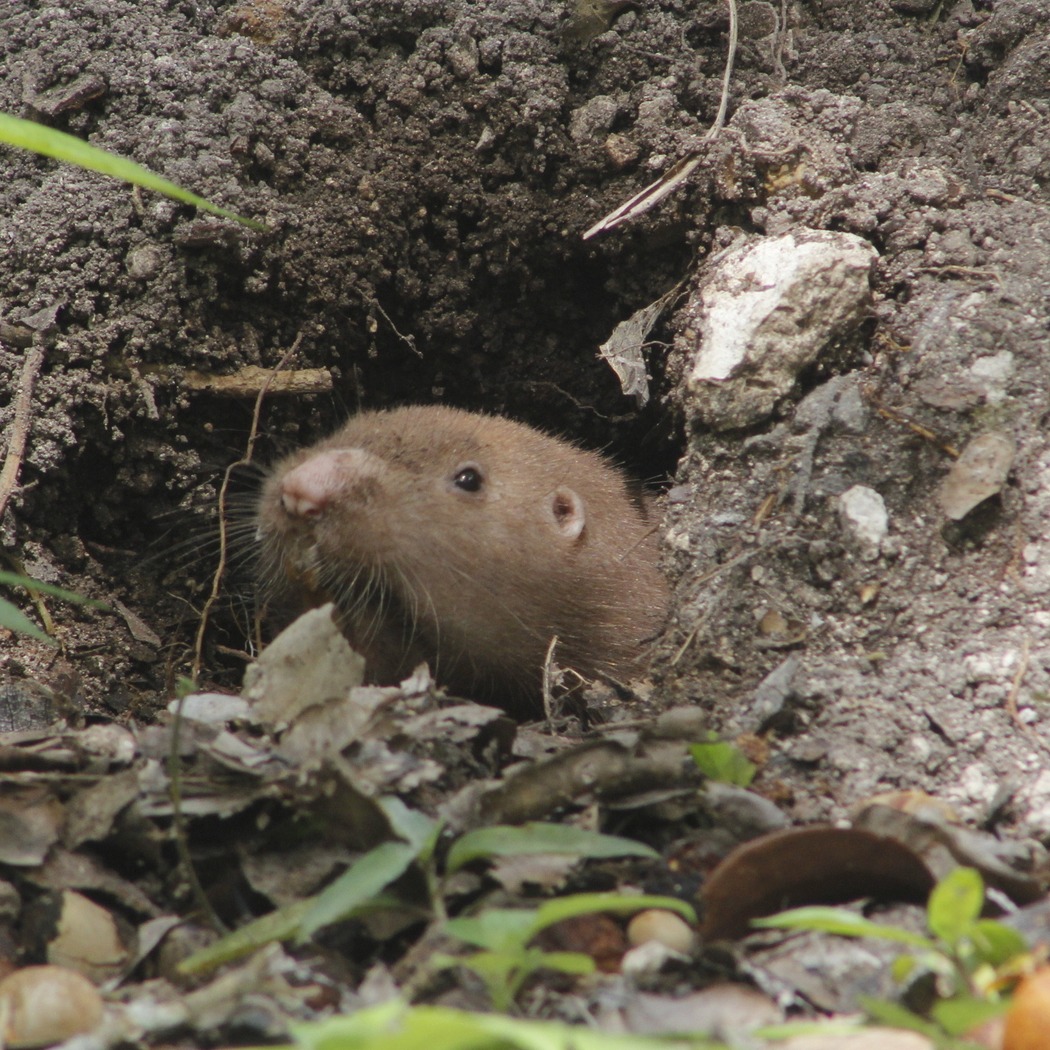
The Nicaraguan pocket gopher (Orthogeomys matagalpae), known locally as 'taltusa', is a robust and peculiar-looking subterranean rodent, heavily adapted to life underground (fossorial). Its body is cylindrical, with no visible neck, covered in short, dense, very dark brown or blackish fur that can be rubbed in any direction without resistance. It has extremely muscular front legs with long, strong claws designed to dig like excavator shovels. Its eyes and ears are minuscule to prevent them from filling with dirt. Most striking is its face: huge yellowish incisors protruding from the mouth, and large cheek pouches (fur-lined pockets) on the outside of its cheeks, which it uses to transport roots and soil. Its tail is short, pink, almost hairless, and highly sensitive.

Added by

Anonymous Curator

Reviewed by

Under Review

Last modified by

Julia Trouin

TaxonomyBiological classification ranks placing this species within the tree of life, from Kingdom down to Genus.

PhylumRank below Kingdom. Groups organisms sharing a fundamental body plan (e.g., Chordata = vertebrates and some invertebrates).Chordata
ClassRank below Phylum. Subdivides by structural traits (e.g., Mammalia, Aves, Reptilia, Insecta).Mammalia
OrderRank below Class. Groups related families sharing common ancestry (e.g., Carnivora, Primates).Rodentia
FamilyRank below Order. Groups closely related genera (e.g., Felidae = cats, Canidae = dogs).Geomyidae
GenusRank just above Species. The first word in the two-part binomial scientific name.Orthogeomys
Taxonomic AuthorityThe scientist who first formally described and published this species, followed by the year of publication.J. A. Allen, 1910
Record Completeness
85%
Coming soon

Ecology & StatusHow this species lives: habitat preferences, diet, behavior, population status, and role in its ecosystem.

OriginWhether the species is native (evolved here), endemic (found only here), or introduced by human activity.

Native

Population TrendDirection of change in population size over time: increasing, stable, decreasing, or unknown.

Stable

Breeding SeasonTime of year when this species typically reproduces or flowers.

Year Round

Trophic RolePosition in the food chain: producer, herbivore, carnivore, omnivore, decomposer, or parasite.

Herbivore

Recent SightingsWhether this species has been observed in the wild in Costa Rica within recent years.

Yes

Habitat SummaryOverview of the specific ecosystems and environments where this species is found in Costa Rica. Multi-lang

It is a strictly subterranean animal. It inhabits a variety of habitats ranging from tropical dry forests to lowland and low-montane wet forests, provided the soil is deep and friable (easy to dig) and not flooded. They are usually very common and noticeable in agricultural lands, pastures, orchards, and crop fields (cassava, sugarcane, tubers), where they find abundant food. In Costa Rica, their distribution is concentrated in the northern and northwestern zones, extending into Nicaragua.

BehaviourDaily activity patterns, movement, territory use, foraging style, and seasonal behavioral changes. Multi-lang

It is a strictly solitary, asocial, and aggressive animal. It spends 99% of its life underground. It builds a complex system of tunnels (which can span dozens of meters) composed of shallow foraging tunnels and deep nesting/storage chambers. They are rarely seen on the surface; their presence is betrayed by the 'mounds' of loose soil they push out while digging. They only come to the surface if their burrows flood or when juveniles must leave to find a new territory.

Social ActivitySocial structure: whether the species is solitary, paired, or colonial; hierarchy and communication. Multi-lang

Excessively territorial and aggressive. They have a 'one tunnel, one animal' policy. If two adult pocket gophers meet, they will fight viciously, often to the death using bites from their large incisors.

Feeding GuildWhat the species eats, how it forages or hunts, and its role as a consumer in the food web. Multi-lang

Herbivore (Root and tuber specialist).

Trophic Chain DetailsSpecific interactions in local food webs: prey species, predators, competitors, and scavengers. Multi-lang

Strict primary consumer (Herbivore/Folivore). Its greatest evolutionary predator in Central America is the long-tailed weasel (Mustela frenata), whose cylindrical body allows it to chase the pocket gopher through its own tunnels. They are also prey for snakes (like the fer-de-lance), owls, and coyotes when they manage to dig them up or if they come to the surface.

Reproductive BehaviourMating strategies, courtship displays, nesting or spawning behavior, and parental care. Multi-lang

Adult males temporarily leave their tunnels to enter the burrow systems of females during the mating season, being the only time they tolerate each other. After a short gestation (about 20 to 30 days), the female gives birth to a small litter of 1 to 4 pups in a deep chamber lined with dry grass. The pups are weaned at 40 days, at which point the mother becomes aggressive and kicks them out to dig their own territories.

Physical Measures

Length (cm)

20.0 - 30.0 cm

Weight (Grams)

250 g - 600 g

Offspring per cycleTypical number of young (live births, eggs, or seeds) produced by one adult in a single reproductive event or breeding season.1 - 4
Sexual DimorphismObservable physical differences between males and females of the same species (e.g., size, coloration, features).Yes

Lifespan

Sexual MaturityAge at which the individual becomes capable of reproducing for the first time.

6 - 8 Months

Gestation / IncubationDuration from fertilization to birth (mammals) or to hatching (egg-laying species).

20 - 30

Lifespan EstimatedExpected duration of life from birth to natural death under wild conditions.
Males1 - 3 Years
Females1 - 3 Years

Sexual DimorphismPhysical differences in size, coloration, or morphology between males and females of this species.

Males Multi-lang

Males are considerably larger and more robust than females, sometimes weighing twice as much.

Females Multi-lang

Smaller and slightly more delicately built, they raise the litter alone.

Evolutionary AdaptationsInherited traits and behaviors that improve the species' survival and reproduction in its specific environment. Multi-lang

Lips Behind the Teeth: Its large incisors are always exposed, even when the mouth is closed. Evolutionarily, its lips close behind the teeth, allowing it to bite through thick roots and dig into hard soil without getting dirt in its mouth.
Tactile Rear Tail: Spending their entire lives in narrow tunnels where they cannot easily turn around, pocket gophers can run backward almost as fast as they run forward. Their short, highly sensitive tail acts as an 'antenna' to guide their way in reverse through the dark tunnel.

Main ThreatsDocumented pressures reducing the population: habitat loss, hunting, disease, climate change, and invasive species. Multi-lang

Agricultural Extermination: Due to their diet, they are considered a severe agricultural pest. They can destroy entire crops of cassava, yams, plantains, and tubers, as well as damage the roots of fruit trees. Farmers pursue them relentlessly using specialized traps and poisons.

Interesting FactsSurprising or notable facts that highlight what makes this species unique or ecologically important. Multi-lang

Soil Engineers: Despite their conflict with humans, in natural environments they are fundamental to ecosystem health. Their constant digging plows, aerates, and mixes nutrients from deep layers of the earth, promoting the growth of forest flora.
Underground Plants: Instead of going up to forage, they sometimes dig their tunnels right below a tasty plant, bite its roots, and literally 'pull' the entire plant down, making it disappear into the earth before the incredulous eyes of farmers.