
Costa Rica Species
Brosimum utile
PlantaeHighest rank in taxonomy. Groups all life into domains: Animalia, Plantae, Fungi, etc.IUCN LCInternational Union for Conservation of Nature — the world authority on species extinction risk, using standardized criteria. — Least Concern — widespread and abundant; not at immediate risk of extinction.In ProgressCurrent stage of this record in the editorial review workflow. Recent Sighting

Brosimum utile

Cow Tree

(Kunth) Oken, 1841

Detailed Texts Multi-lang
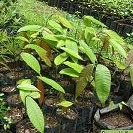
The cow tree (Brosimum utile) is an imposing emergent tree of the Moraceae family, world-famous for exuding an abundant, thick, sweet white latex that visually and tastefully resembles cow's milk. Reaching majestic heights of up to 50 meters (165 feet) in the upper forest canopy, it has a straight, cylindrical trunk that is branchless in its lower parts, supported by prominent buttress roots. Its bark is grayish to light brown. The leaves are simple, alternate, leathery in texture with entire margins, clustering towards the ends of the branches. It belongs to the same genus as the ramon or breadnut tree (Brosimum alicastrum), sharing its vital importance for frugivorous fauna. Historically, it astonished European explorers like Alexander von Humboldt, who documented how indigenous populations drank its nutritious sap. Its natural distribution spans the humid tropical forests from Honduras and Costa Rica to the Amazon basin in Brazil, Ecuador, and Peru.

Added by

Anonymous Curator

Reviewed by

Under Review

Last modified by

Julia Trouin

TaxonomyBiological classification ranks placing this species within the tree of life, from Kingdom down to Genus.

PhylumRank below Kingdom. Groups organisms sharing a fundamental body plan (e.g., Chordata = vertebrates and some invertebrates).Tracheophyta
ClassRank below Phylum. Subdivides by structural traits (e.g., Mammalia, Aves, Reptilia, Insecta).Magnoliopsida
OrderRank below Class. Groups related families sharing common ancestry (e.g., Carnivora, Primates).Rosales
FamilyRank below Order. Groups closely related genera (e.g., Felidae = cats, Canidae = dogs).Moraceae
GenusRank just above Species. The first word in the two-part binomial scientific name.Brosimum
Taxonomic AuthorityThe scientist who first formally described and published this species, followed by the year of publication.(Kunth) Oken, 1841
Record Completeness
91%
Coming soon

Ecology & StatusHow this species lives: habitat preferences, diet, behavior, population status, and role in its ecosystem.

OriginWhether the species is native (evolved here), endemic (found only here), or introduced by human activity.

Native

Population TrendDirection of change in population size over time: increasing, stable, decreasing, or unknown.

Decreasing

Trophic RolePosition in the food chain: producer, herbivore, carnivore, omnivore, decomposer, or parasite.

--

Growth HabitPhysical form and structure of the plant: tree, shrub, herb, vine, epiphyte, aquatic, etc.

--

Leaf TypeLeaf characteristics: deciduous (seasonal shed), evergreen, simple, compound, needle-like, etc.

--

Flowering SeasonTime of year when this species typically reproduces or flowers.

--

Recent SightingsWhether this species has been observed in the wild in Costa Rica within recent years.

Yes

Habitat SummaryOverview of the specific ecosystems and environments where this species is found in Costa Rica. Multi-lang

It inhabits exclusively very humid tropical lowland and premontane forests, typically at elevations ranging from sea level to 1,000 meters (3,300 feet) in altitude. It requires well-drained soils and does not tolerate prolonged flooded swampy areas, preferring hillsides and ridges where its buttress roots provide stability. In Costa Rica, it is a highly emblematic and prominent tree in the Southern Pacific, dominating the dense canopy of places like the Osa Peninsula and Corcovado National Park.

Light & Water NeedsSunlight intensity and moisture levels this plant needs to grow and reproduce successfully. Multi-lang

Information not available in English. Help us expand this record!

BehaviourDaily activity patterns, movement, territory use, foraging style, and seasonal behavioral changes. Multi-lang

As part of the upper canopy of very humid forests, the Cow Tree exhibits a decidedly vertical growth, pushing its crown above the average height of the jungle to assimilate the intense rays of the Neotropical sun. It displays a rhythmic renewal behavior: its inflorescences emerge during the seasonal transition. Although it has minuscule flowers, these develop in clusters to ensure the efficiency of pollinator flights in the canopy. When the tree fruits massively, its branches become a focal concentration point for jungle consumers who detect the nutritional abundance.

Toxicity / UsesToxic compounds present and their documented effects on humans or other organisms. Multi-lang

Information not available in English. Help us expand this record!

Physical Measures

Length (cm)

2000.0 - 5000.0 cm

Reproductive StructuresFlowers, fruits, and seeds — the reproductive organs and their seasonal appearance.

Flower Photos (Max 2)

No image

Fruit Photos (Max 2)

No image

Evolutionary AdaptationsInherited traits and behaviors that improve the species' survival and reproduction in its specific environment. Multi-lang

Sweet, drinkable latex: While most trees in the Moraceae family (and other jungle trees) exude a caustic, toxic, or incredibly bitter latex designed to repel herbivorous insects, Brosimum utile produces a thick, exceptionally sweet white sap. This sap is rich in waxes, gums, sugars, and proteins, lacking harmful toxic compounds, making it safe for human consumption.
Extreme buttress roots: To support an immense column of wood that can weigh tons and reach 50 meters in height in characteristically shallow, soggy tropical soils, the tree develops enormous buttress roots. These wooden fins extend like walls from the base of the trunk to the ground, providing mechanical support and anchorage against the gale-force winds of the canopy.
Condensed syconium inflorescence: As a close relative of figs, its tiny flowers are not exposed individually. They are densely grouped in a special globose receptacle. After being pollinated, this entire globose receptacle swells and becomes fleshy, forming a single compound fruit that concentrates valuable nutrients to ensure it is attractive to large seed dispersers.

Main ThreatsDocumented pressures reducing the population: habitat loss, hunting, disease, climate change, and invasive species. Multi-lang

Commercial timber extraction: Its wood (often marketed under the name 'Sande') is light, fine-textured, yellowish, and easy to process. Historically and currently, these forest colossi are primary targets of the logging industry for manufacturing plywood, moldings, light packaging, and indoor furniture, which has decimated their populations of reproductive adults.
General deforestation of the lowlands: As a species that requires the mature, undisturbed canopy of the humid tropical lowlands, the massive conversion of forests into vast palm, banana, or cattle pasture plantations irreparably fragments its ecosystems.

Interesting FactsSurprising or notable facts that highlight what makes this species unique or ecologically important. Multi-lang

Humboldt's amazed account: The common name and fame of this tree were born on March 1, 1800, when the legendary explorer and naturalist Alexander von Humboldt witnessed the inhabitants of Venezuela milking this tree. He wrote: 'They gave us to drink of that milk, and we found it exceedingly agreeable, very similar to cow's milk, somewhat viscous, which when left to stand forms a thick crust of casein...'.
It is a fraternal tree that shares its food. Historically, native populations made V-shaped cuts at the base of the trunk, collecting the thick milk that flowed generously to make soups, drinks, and to accompany cassava bread. Incredibly, extracting this latex does not harm the tree, which continues to heal its bark and produce sap without its growth stunting.
It is a secret relative of bread and figs. The genus Brosimum includes B. alicastrum (the ojoche or Maya nut), whose seeds were the staple food of the Maya empire. The Moraceae family encompasses all fig trees (Ficus) and the breadfruit tree (Artocarpus altilis), which genetically explains its incredible capacity to produce an astonishing nutrient-rich biomass.