
Costa Rica Species
AnimaliaHighest rank in taxonomy. Groups all life into domains: Animalia, Plantae, Fungi, etc.IUCN ENInternational Union for Conservation of Nature — the world authority on species extinction risk, using standardized criteria. — Endangered — faces a very high risk of extinction if threats are not urgently addressed.ApprovedCurrent stage of this record in the editorial review workflow. Recent Sighting

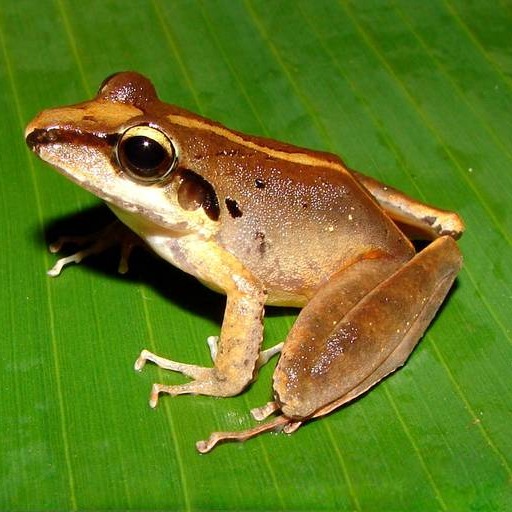
Craugastor andi

Andi's Robber Frog

(Savage, 1974)

Detailed Texts Multi-lang
A medium-sized nocturnal frog with cryptic coloration that perfectly mimics dead leaves. It features a finely granular dorsal texture, dark facial mask markings, and prominent digital discs adapted for low-vegetation climbing.

Added by

Anonymous Curator

Reviewed by

Under Review

Other Names (Global)Regional and multilingual names used for this species across different countries and languages.

Rana ladrona de AndiAndi robber frogAndis Laubfrosch

TaxonomyBiological classification ranks placing this species within the tree of life, from Kingdom down to Genus.

PhylumRank below Kingdom. Groups organisms sharing a fundamental body plan (e.g., Chordata = vertebrates and some invertebrates).Chordata
ClassRank below Phylum. Subdivides by structural traits (e.g., Mammalia, Aves, Reptilia, Insecta).Amphibia
OrderRank below Class. Groups related families sharing common ancestry (e.g., Carnivora, Primates).Anura
FamilyRank below Order. Groups closely related genera (e.g., Felidae = cats, Canidae = dogs).Craugastoridae
GenusRank just above Species. The first word in the two-part binomial scientific name.Craugastor
Taxonomic AuthorityThe scientist who first formally described and published this species, followed by the year of publication.(Savage, 1974)
Record Completeness
94%
Coming soon

Ecology & StatusHow this species lives: habitat preferences, diet, behavior, population status, and role in its ecosystem.

OriginWhether the species is native (evolved here), endemic (found only here), or introduced by human activity.

Native

Population TrendDirection of change in population size over time: increasing, stable, decreasing, or unknown.

Decreasing

Breeding SeasonTime of year when this species typically reproduces or flowers.

Year Round

Trophic RolePosition in the food chain: producer, herbivore, carnivore, omnivore, decomposer, or parasite.

Carnivore

Recent SightingsWhether this species has been observed in the wild in Costa Rica within recent years.

Yes

Habitat SummaryOverview of the specific ecosystems and environments where this species is found in Costa Rica. Multi-lang

Inhabits primary humid premontane and lower montane rainforests, strongly associated with undisturbed forest floors, damp leaf litter matrix, and low herbaceous understory plants near mountain streams.

BehaviourDaily activity patterns, movement, territory use, foraging style, and seasonal behavioral changes. Multi-lang

Exclusively nocturnal. They remain securely hidden deep inside the leaf litter matrix during high-temperature daytime hours, emerging at dusk to perch on low vegetation stems, ferns, or root buttresses to monitor for passing prey.

Social ActivitySocial structure: whether the species is solitary, paired, or colonial; hierarchy and communication. Multi-lang

Solitary and territorial. Males position themselves spaced out over low perches near forest streams, emitting subtle vocalizations to delineate territories and attract mates while avoiding calling density to bypass acoustic predators.

Feeding GuildWhat the species eats, how it forages or hunts, and its role as a consumer in the food web. Multi-lang

Nocturnal understory sit-and-wait insectivore.

Trophic Chain DetailsSpecific interactions in local food webs: prey species, predators, competitors, and scavengers. Multi-lang

Functions as a specialized invertivore consuming forest floor beetles, ants, small crickets, and spiders. Falls prey to macro-invertebrates like tarantulas and centipedes, as well as nocturnal birds and small terrestrial snakes.

Reproductive BehaviourMating strategies, courtship displays, nesting or spawning behavior, and parental care. Multi-lang

Features localized territorial male calling during wet conditions. Amplexus occurs on low leaves before the female descends to locate a cryptic, humid cavity under roots or logs to deposit the direct-developing terrestrial eggs.

Physical Measures

Length (cm)

3.5 - 7.8 cm

Weight (Grams)

4 g - 22 g

Offspring per cycleTypical number of young (live births, eggs, or seeds) produced by one adult in a single reproductive event or breeding season.15 - 40
Sexual DimorphismObservable physical differences between males and females of the same species (e.g., size, coloration, features).Yes

Lifespan

Sexual MaturityAge at which the individual becomes capable of reproducing for the first time.

10 - 14 Months

Gestation / IncubationDuration from fertilization to birth (mammals) or to hatching (egg-laying species).

28 - 42

Lifespan EstimatedExpected duration of life from birth to natural death under wild conditions.
Males3 - 6 Years
Females4 - 7 Years

Sexual DimorphismPhysical differences in size, coloration, or morphology between males and females of this species.

Males Multi-lang

Males are substantially smaller than females, averaging shorter snout-vent lengths, and possess internal vocal sacs and subgular vocal slits used for calling.

Females Multi-lang

Females reach significantly larger overall dimensions, presenting a more robust, wider abdominal build required to hold large, yolk-heavy terrestrial eggs.

Evolutionary AdaptationsInherited traits and behaviors that improve the species' survival and reproduction in its specific environment. Multi-lang

Cryptic leaf-mimic camouflage layout, displaying disruptive patterns and neutral brown-beige tones that allow it to disappear within the rainforest floor litter from visual predators.
Direct development reproductive strategy, bypassing the vulnerable free-swimming aquatic tadpole stage entirely by developing into fully formed froglets directly inside terrestrial eggs.

Main ThreatsDocumented pressures reducing the population: habitat loss, hunting, disease, climate change, and invasive species. Multi-lang

Severe habitat fragmentation and clearing due to agricultural expansion, cattle ranching, and localized deforestation of pristine premontane microhabitats.
Susceptibility to chytridiomycosis outbreaks, combined with microclimate alterations driven by global warming that dry out forest leaf litter moisture profiles.

Interesting FactsSurprising or notable facts that highlight what makes this species unique or ecologically important. Multi-lang

Unlike many conventional amphibians, this species does not lay eggs in water; clutches are deposited under damp forest debris, logs, or stones where the mother frequently remains close to deter micro-arthropod predators.