Costa Rica Species
Bromelia pinguin
PlantaeHighest rank in taxonomy. Groups all life into domains: Animalia, Plantae, Fungi, etc.IUCN LCInternational Union for Conservation of Nature — the world authority on species extinction risk, using standardized criteria. — Least Concern — widespread and abundant; not at immediate risk of extinction.In ProgressCurrent stage of this record in the editorial review workflow. Recent Sighting

Bromelia pinguin

Wild Pineapple / Pinguin

L., 1753

Detailed Texts Multi-lang
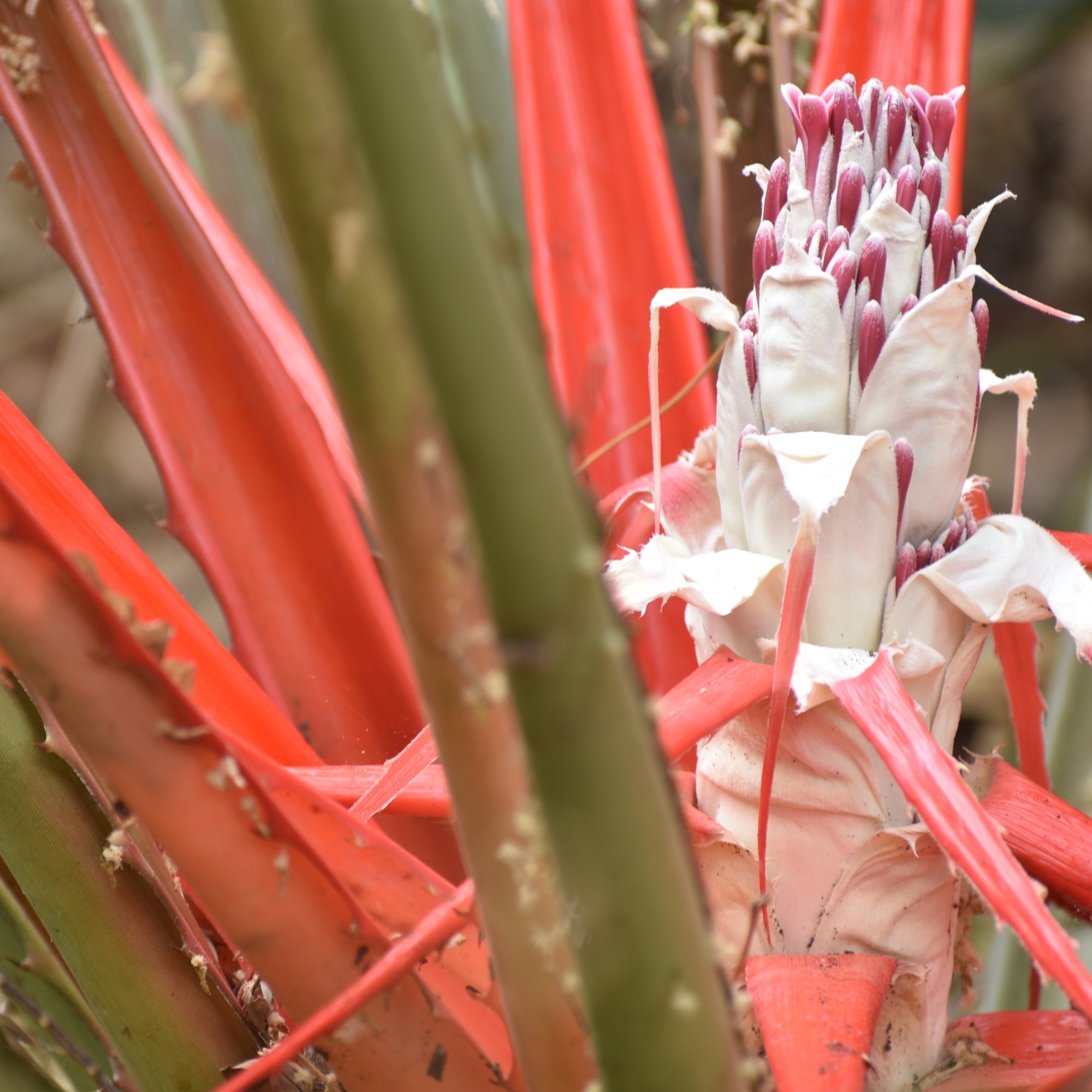
The pinguin or wild pineapple (Bromelia pinguin) is a robust, perennial terrestrial plant known for its dense, prickly rosettes that form impenetrable natural barriers. Its leaves are long and sword-shaped, with margins armed with extremely sharp, hooked, curved spines; toward the center of the rosette, the leaves often turn a brilliant red when the plant prepares to bloom. The inflorescence is an erect, dense, and mealy panicle with pink or pale lavender flowers. It produces clusters of ovoid, fleshy fruits that turn bright yellow when ripe, possessing a refreshing acidic flavor similar to small pineapples. It is a key architectural species in the understory of seasonal regions, providing shelter and food for a wide range of fauna.

Added by

Anonymous Curator

Reviewed by

Under Review

Last modified by

Julia Trouin

TaxonomyBiological classification ranks placing this species within the tree of life, from Kingdom down to Genus.

PhylumRank below Kingdom. Groups organisms sharing a fundamental body plan (e.g., Chordata = vertebrates and some invertebrates).Tracheophyta
ClassRank below Phylum. Subdivides by structural traits (e.g., Mammalia, Aves, Reptilia, Insecta).Liliopsida
OrderRank below Class. Groups related families sharing common ancestry (e.g., Carnivora, Primates).Poales
FamilyRank below Order. Groups closely related genera (e.g., Felidae = cats, Canidae = dogs).Bromeliaceae
GenusRank just above Species. The first word in the two-part binomial scientific name.Bromelia
Taxonomic AuthorityThe scientist who first formally described and published this species, followed by the year of publication.L., 1753
Record Completeness
91%
Coming soon

Ecology & StatusHow this species lives: habitat preferences, diet, behavior, population status, and role in its ecosystem.

OriginWhether the species is native (evolved here), endemic (found only here), or introduced by human activity.

Native

Population TrendDirection of change in population size over time: increasing, stable, decreasing, or unknown.

Stable

Trophic RolePosition in the food chain: producer, herbivore, carnivore, omnivore, decomposer, or parasite.

--

Growth HabitPhysical form and structure of the plant: tree, shrub, herb, vine, epiphyte, aquatic, etc.

--

Leaf TypeLeaf characteristics: deciduous (seasonal shed), evergreen, simple, compound, needle-like, etc.

--

Flowering SeasonTime of year when this species typically reproduces or flowers.

--

Recent SightingsWhether this species has been observed in the wild in Costa Rica within recent years.

Yes

Habitat SummaryOverview of the specific ecosystems and environments where this species is found in Costa Rica. Multi-lang

It thrives mainly in tropical dry forests, coastal zones, and arid scrublands. It is highly drought-tolerant and can grow in full sun or under the canopy shade. It prefers well-drained, stony soils where it forms dense colonies. In Costa Rica, it is extremely common in the lowlands of the Northern Pacific (Guanacaste) and in coastal areas on both slopes.

Light & Water NeedsSunlight intensity and moisture levels this plant needs to grow and reproduce successfully. Multi-lang

Information not available in English. Help us expand this record!

BehaviourDaily activity patterns, movement, territory use, foraging style, and seasonal behavioral changes. Multi-lang

It forms extensive colonies through stolons, creating dense ground cover. Its flowering attracts hummingbirds and butterflies, while its fruits are consumed by small mammals like coatis and agoutis, who act as seed dispersers. It is a plant that actively modifies its environment by preventing the growth of other competitive species under its dense shade.

Toxicity / UsesToxic compounds present and their documented effects on humans or other organisms. Multi-lang

Information not available in English. Help us expand this record!

Physical Measures

Length (cm)

100.0 - 200.0 cm

Reproductive StructuresFlowers, fruits, and seeds — the reproductive organs and their seasonal appearance.

Flower Photos (Max 2)

No image

Fruit Photos (Max 2)

No image

Evolutionary AdaptationsInherited traits and behaviors that improve the species' survival and reproduction in its specific environment. Multi-lang

'Tank' Morphology and Defensive Spines: The arrangement of its leaves allows rainwater to channel toward the base, while its hooked spines protect the plant from large herbivores. This structure not only ensures hydration in dry climates but turns the plant into a safety bunker for small animals.

Main ThreatsDocumented pressures reducing the population: habitat loss, hunting, disease, climate change, and invasive species. Multi-lang

Habitat fragmentation: The clearing of coastal scrub and dry forests for tourist developments and livestock farming reduces its presence. It is often removed because its spines hinder human movement.

Interesting FactsSurprising or notable facts that highlight what makes this species unique or ecologically important. Multi-lang

Impenetrable living fence: Due to its hooked spines, the piñuela has been traditionally used in rural areas of Costa Rica to create living fences that prevent the passage of livestock and intruders.