
Costa Rica Species
Hippocampus ingens
AnimaliaHighest rank in taxonomy. Groups all life into domains: Animalia, Plantae, Fungi, etc.IUCN VUInternational Union for Conservation of Nature — the world authority on species extinction risk, using standardized criteria. — Vulnerable — at high risk of extinction if the current adverse conditions continue.In ProgressCurrent stage of this record in the editorial review workflow. Recent Sighting

Hippocampus ingens

Pacific Seahorse

(Girard, 1858)

Detailed Texts Multi-lang
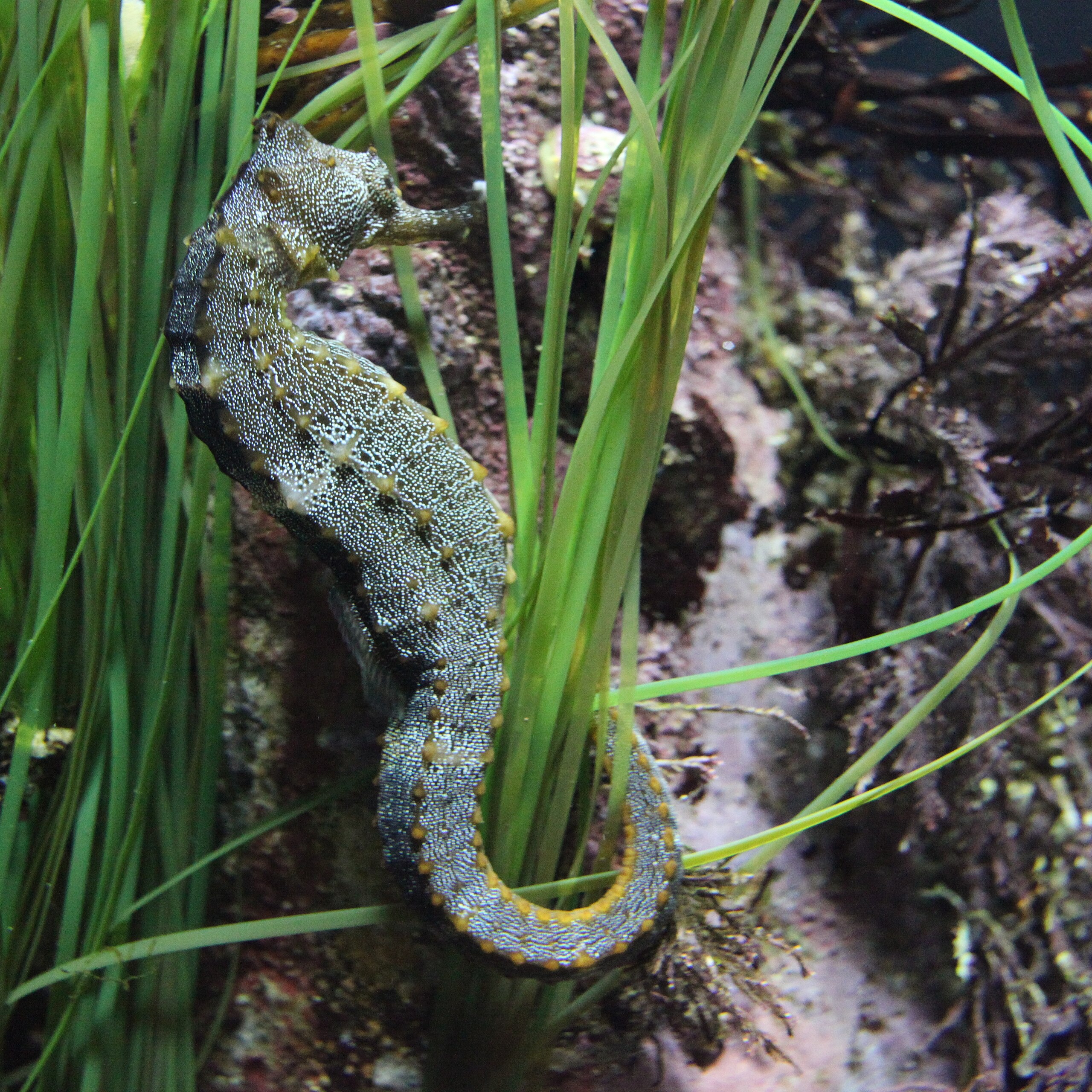
The Pacific seahorse (Hippocampus ingens) is one of the largest seahorse species in the world, reaching up to 30 cm in length. It is characterized by its upright posture, prehensile tail, elongated snout, and a body covered in bony rings instead of scales. It has a remarkable ability to change color to blend in with its surroundings.

Added by

Anonymous Curator

Reviewed by

Under Review

Last modified by

Julia Trouin

TaxonomyBiological classification ranks placing this species within the tree of life, from Kingdom down to Genus.

PhylumRank below Kingdom. Groups organisms sharing a fundamental body plan (e.g., Chordata = vertebrates and some invertebrates).Chordata
ClassRank below Phylum. Subdivides by structural traits (e.g., Mammalia, Aves, Reptilia, Insecta).Actinopterygii
OrderRank below Class. Groups related families sharing common ancestry (e.g., Carnivora, Primates).Syngnathiformes
FamilyRank below Order. Groups closely related genera (e.g., Felidae = cats, Canidae = dogs).Syngnathidae
GenusRank just above Species. The first word in the two-part binomial scientific name.Hippocampus
Taxonomic AuthorityThe scientist who first formally described and published this species, followed by the year of publication.(Girard, 1858)
Record Completeness
96%
Coming soon

Ecology & StatusHow this species lives: habitat preferences, diet, behavior, population status, and role in its ecosystem.

OriginWhether the species is native (evolved here), endemic (found only here), or introduced by human activity.

Native

Population TrendDirection of change in population size over time: increasing, stable, decreasing, or unknown.

Decreasing

Breeding SeasonTime of year when this species typically reproduces or flowers.

Year Round

Trophic RolePosition in the food chain: producer, herbivore, carnivore, omnivore, decomposer, or parasite.

Carnivore

Recent SightingsWhether this species has been observed in the wild in Costa Rica within recent years.

Yes

Habitat SummaryOverview of the specific ecosystems and environments where this species is found in Costa Rica. Multi-lang

Inhabits tropical and subtropical coastal waters, preferring coral reefs, mangrove roots, seagrass beds, and artificial structures, typically at depths between 1 and 20 meters.

BehaviourDaily activity patterns, movement, territory use, foraging style, and seasonal behavioral changes. Multi-lang

A diurnal and cryptic species that relies on camouflage to avoid predators and ambush prey. They are slow swimmers that move by rapidly fluttering their dorsal fin, but spend most of their time stationary and anchored.

Social ActivitySocial structure: whether the species is solitary, paired, or colonial; hierarchy and communication. Multi-lang

Generally solitary, but form monogamous pairs during the breeding season, performing daily interactions to reinforce their bond.

Feeding GuildWhat the species eats, how it forages or hunts, and its role as a consumer in the food web. Multi-lang

Ambush predator / Zooplanktivore. Feeds by rapidly sucking in small crustaceans through its tubular snout.

Trophic Chain DetailsSpecific interactions in local food webs: prey species, predators, competitors, and scavengers. Multi-lang

They act as ambush predators of small zooplankton. Their main natural predators include rays, crabs, and large pelagic fish that manage to spot them despite their camouflage.

Reproductive BehaviourMating strategies, courtship displays, nesting or spawning behavior, and parental care. Multi-lang

Reproduction involves an elaborate multi-day courtship where the pair synchronizes their movements and color changes. Finally, the female transfers the eggs into the male’s brood pouch, where they are fertilized and incubated.

Physical Measures

Length (cm)

13.0 - 30.0 cm

Weight (Grams)

5 g - 35 g

Offspring per cycleTypical number of young (live births, eggs, or seeds) produced by one adult in a single reproductive event or breeding season.200 - 1000
Sexual DimorphismObservable physical differences between males and females of the same species (e.g., size, coloration, features).Yes

Lifespan

Sexual MaturityAge at which the individual becomes capable of reproducing for the first time.

6 - 12 Months

Gestation / IncubationDuration from fertilization to birth (mammals) or to hatching (egg-laying species).

14 - 21

Lifespan EstimatedExpected duration of life from birth to natural death under wild conditions.
Males3 - 5 Years
Females3 - 5 Years

Sexual DimorphismPhysical differences in size, coloration, or morphology between males and females of this species.

Males Multi-lang

The male possesses an obvious brood pouch (marsupium) at the ventral base of the tail, which swells considerably when pregnant.

Females Multi-lang

The female lacks a brood pouch, presenting a much smoother abdominal profile and a straight edge where the trunk meets the tail.

Evolutionary AdaptationsInherited traits and behaviors that improve the species' survival and reproduction in its specific environment. Multi-lang

Prehensile tail: Used to anchor firmly to corals, gorgonians, or mangroves to avoid being swept away by currents.
Independent eyes: They have binocular vision and can move their eyes independently to track prey without moving their body.
Mimicry: Ability to quickly change color to camouflage with the background or during courtship.

Main ThreatsDocumented pressures reducing the population: habitat loss, hunting, disease, climate change, and invasive species. Multi-lang

Bycatch: Frequently caught as incidental bycatch in shrimp trawling nets.
Habitat degradation: Destruction of mangroves and reefs due to coastal development and pollution.

Interesting FactsSurprising or notable facts that highlight what makes this species unique or ecologically important. Multi-lang

Male pregnancy: Unlike most animals, the male incubates the eggs in a specialized brood pouch until giving birth to fully formed young.