
Costa Rica Species
Scarus guacamaia
AnimaliaHighest rank in taxonomy. Groups all life into domains: Animalia, Plantae, Fungi, etc.IUCN NTInternational Union for Conservation of Nature — the world authority on species extinction risk, using standardized criteria. — Near Threatened — close to qualifying as Vulnerable. Requires ongoing monitoring.ApprovedCurrent stage of this record in the editorial review workflow. Recent Sighting

Scarus guacamaia

Rainbow Parrotfish

Cuvier, 1829

Detailed Texts Multi-lang
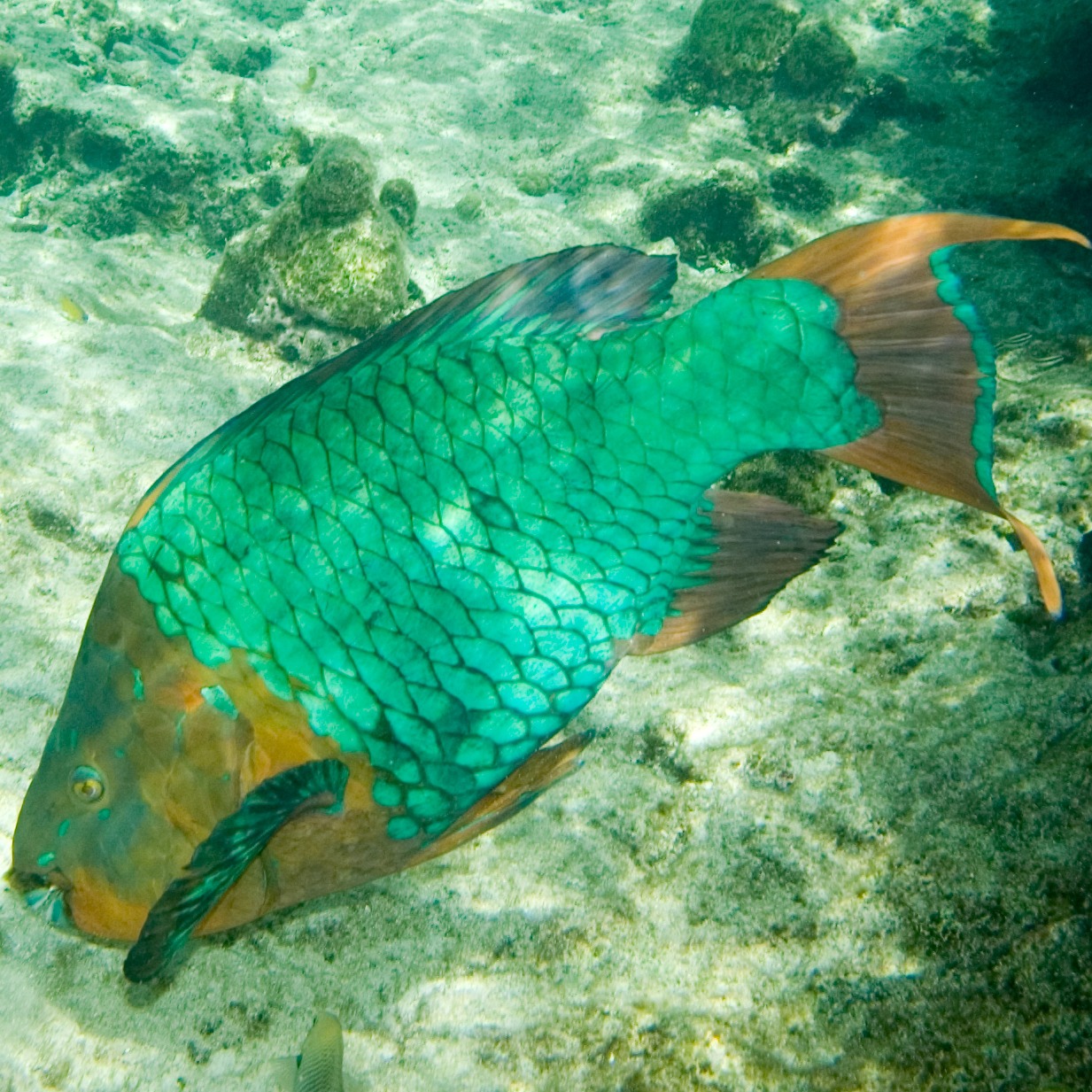
The largest parrotfish in the Western Atlantic, notable for its vibrant colors, large scales, and teeth fused into a powerful beak.

Added by

Anonymous Curator

Reviewed by

Julia Trouin

Last modified by

Julia Trouin

TaxonomyBiological classification ranks placing this species within the tree of life, from Kingdom down to Genus.

PhylumRank below Kingdom. Groups organisms sharing a fundamental body plan (e.g., Chordata = vertebrates and some invertebrates).Chordata
ClassRank below Phylum. Subdivides by structural traits (e.g., Mammalia, Aves, Reptilia, Insecta).Actinopterygii
OrderRank below Class. Groups related families sharing common ancestry (e.g., Carnivora, Primates).Labriformes
FamilyRank below Order. Groups closely related genera (e.g., Felidae = cats, Canidae = dogs).Scaridae
GenusRank just above Species. The first word in the two-part binomial scientific name.Scarus
Taxonomic AuthorityThe scientist who first formally described and published this species, followed by the year of publication.Cuvier, 1829
Record Completeness
94%
Coming soon

Ecology & StatusHow this species lives: habitat preferences, diet, behavior, population status, and role in its ecosystem.

OriginWhether the species is native (evolved here), endemic (found only here), or introduced by human activity.

Native

Population TrendDirection of change in population size over time: increasing, stable, decreasing, or unknown.

Decreasing

Breeding SeasonTime of year when this species typically reproduces or flowers.

Year Round

Trophic RolePosition in the food chain: producer, herbivore, carnivore, omnivore, decomposer, or parasite.

Herbivore

Recent SightingsWhether this species has been observed in the wild in Costa Rica within recent years.

Yes

Habitat SummaryOverview of the specific ecosystems and environments where this species is found in Costa Rica. Multi-lang

Inhabits coral reefs, mangroves, and seagrass beds in the tropical Western Atlantic.

BehaviourDaily activity patterns, movement, territory use, foraging style, and seasonal behavioral changes. Multi-lang

Diurnal, very active on the reef during the day.

Social ActivitySocial structure: whether the species is solitary, paired, or colonial; hierarchy and communication. Multi-lang

Usually form small groups or harems.

Feeding GuildWhat the species eats, how it forages or hunts, and its role as a consumer in the food web. Multi-lang

Active grazer of the coral substrate.

Trophic Chain DetailsSpecific interactions in local food webs: prey species, predators, competitors, and scavengers. Multi-lang

Herbivore specialized in epilithic algae.

Reproductive BehaviourMating strategies, courtship displays, nesting or spawning behavior, and parental care. Multi-lang

Pelagic spawning in the water column.

Physical Measures

Length (cm)

30.0 - 120.0 cm

Weight (Grams)

2.00 kg - 20.00 kg

Offspring per cycleTypical number of young (live births, eggs, or seeds) produced by one adult in a single reproductive event or breeding season.5000 - 100000
Sexual DimorphismObservable physical differences between males and females of the same species (e.g., size, coloration, features).Yes

Lifespan

Sexual MaturityAge at which the individual becomes capable of reproducing for the first time.

2 - 4 Years

Gestation / IncubationDuration from fertilization to birth (mammals) or to hatching (egg-laying species).

--

Lifespan EstimatedExpected duration of life from birth to natural death under wild conditions.
Males5 - 20 Years
Females5 - 20 Years

Sexual DimorphismPhysical differences in size, coloration, or morphology between males and females of this species.

Males Multi-lang

Terminal males have more intense and varied colors than females.

Females Multi-lang

Females usually have a more brownish or reddish base coloration.

Evolutionary AdaptationsInherited traits and behaviors that improve the species' survival and reproduction in its specific environment. Multi-lang

Its fused beak allows it to scrape algae from rocky and coral surfaces, grinding up calcareous material.

Main ThreatsDocumented pressures reducing the population: habitat loss, hunting, disease, climate change, and invasive species. Multi-lang

Loss of mangrove habitat and overfishing represent serious threats to its survival.

Interesting FactsSurprising or notable facts that highlight what makes this species unique or ecologically important. Multi-lang

At night, they secrete a layer of mucus that wraps them like a cocoon to protect themselves from parasites and predators.