
AnimaliaIUCN LCApproved Recent Sighting
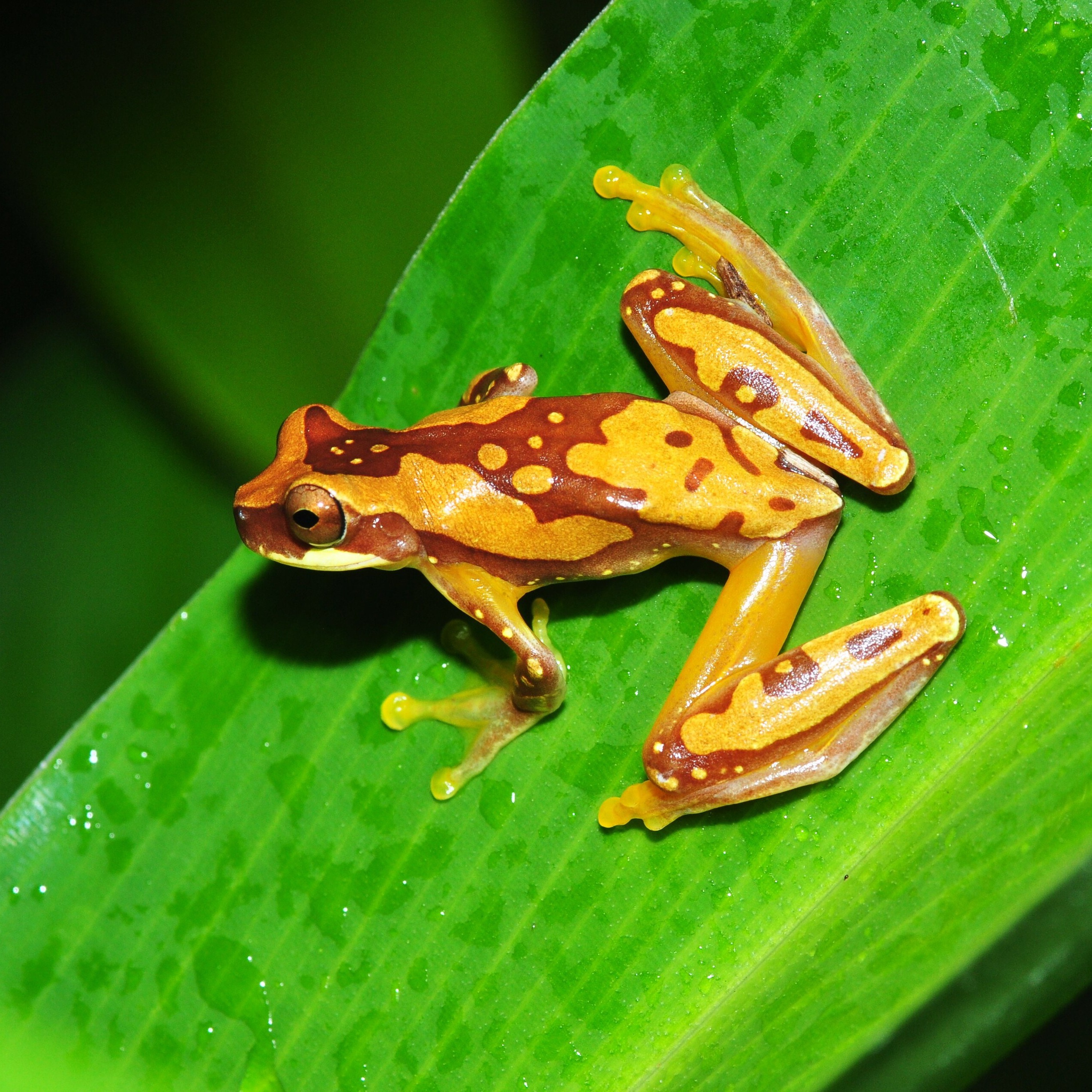
Dendropsophus ebraccatus
Hourglass tree frog
Cope, 1874
Detailed Texts Multi-lang
Small frog notable for its hourglass-shaped dorsal pattern, which can change in intensity according to light conditions.
Added by
Anonymous Curator
Reviewed by
Julia Trouin
Last modified by
Julia Trouin
Taxonomy
PhylumChordata
ClassAmphibia
OrderAnura
FamilyHylidae
GenusDendropsophus
Taxonomic AuthorityCope, 1874
Ecology & Status
Origin
Native
Population Trend
Stable
Breeding Season
Year Round
Trophic Role
Carnivore
Recent Sightings
Yes
Habitat Summary Multi-lang
Inhabits a wide variety of environments, from primary forests to open areas and disturbed zones near water bodies.Behaviour Multi-lang
Nocturnal and very active in shrubby vegetation near water.Social Activity Multi-lang
Quite sociable, usually found in groups during the breeding season.Feeding Guild Multi-lang
Hunts by ambushing prey that it detects visually.Trophic Chain Details Multi-lang
Feeds on various small insects and other invertebrates.Reproductive Behaviour Multi-lang
Presents unique plasticity: chooses between laying eggs in the water or on leaves over the water.Physical Measures
Length (cm)
2.0 - 3.0 cm
Weight (Grams)
2 g - 4 g
Offspring per cycle30 - 80
Sexual DimorphismYes
Lifespan
Sexual Maturity
1 Years
Gestation / Incubation
5 - 10
Lifespan Estimated
Males--
Females--
Sexual Dimorphism
Males Multi-lang
Visible vocal sacs to amplify its call during the night.
Females Multi-lang
Generally larger in size than males.
Evolutionary Adaptations Multi-lang
Ability for reproductive flexibility, being able to lay eggs both in the water and outside on leaves.
Main Threats Multi-lang
Although resilient, severe degradation of wetlands and chemical pollution can affect its population.
Interesting Facts Multi-lang
It is a fascinating study model due to its plasticity in egg-laying location, a strategy to avoid aquatic predators.