
Costa Rica Species
Lycoperdon pyriforme
FungiHighest rank in taxonomy. Groups all life into domains: Animalia, Plantae, Fungi, etc.IUCN NEInternational Union for Conservation of Nature — the world authority on species extinction risk, using standardized criteria. — Not Evaluated — not yet assessed against the IUCN Red List criteria.In ProgressCurrent stage of this record in the editorial review workflow. Recent Sighting

Lycoperdon pyriforme

Pear-shaped Puffball

Schaeff., 1774

Detailed Texts Multi-lang
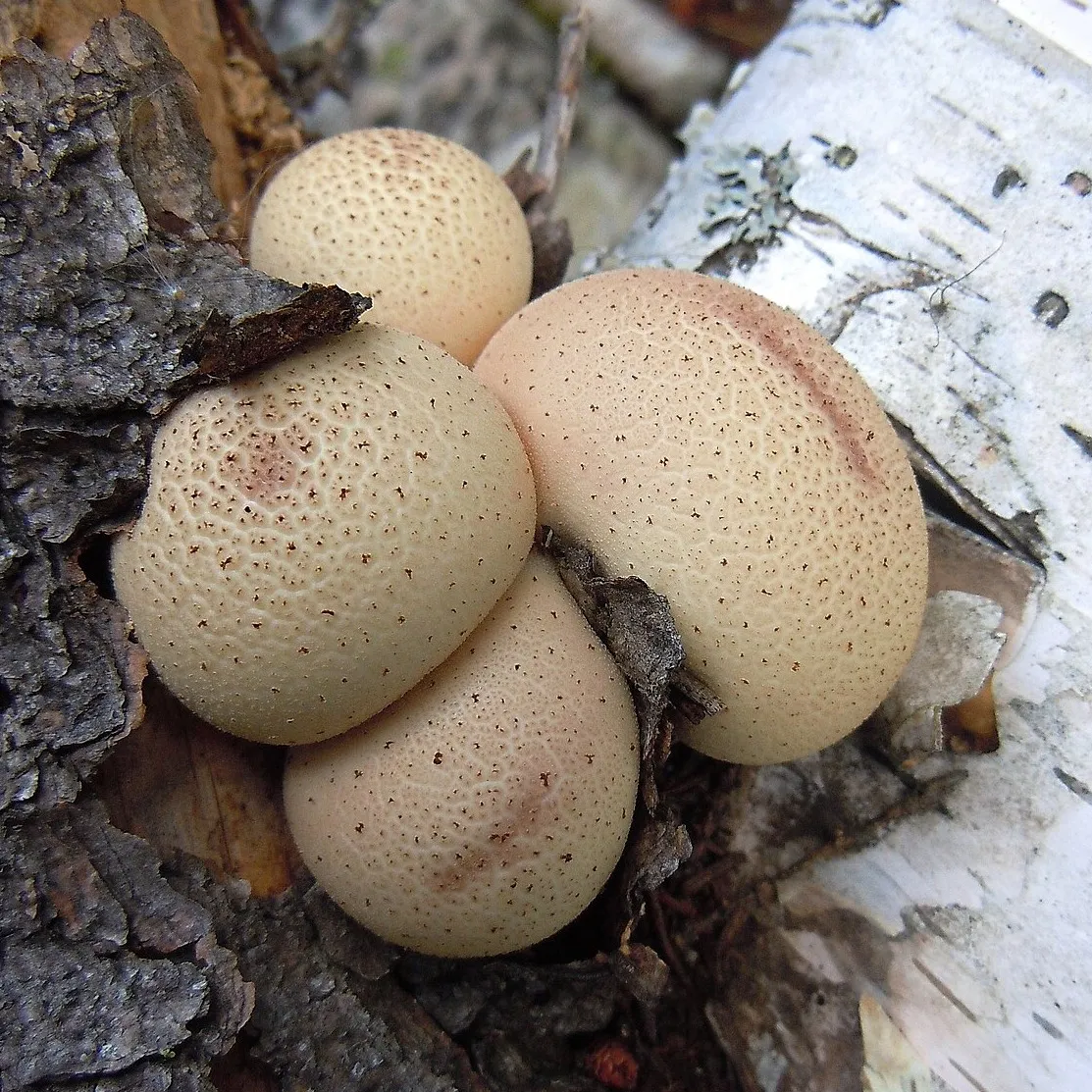
A small, pear-shaped or inverted pear-shaped fungus that often grows in dense, crowded clusters. The outer surface ranges from tan to yellowish-brown, covered in tiny, fine granules when young, which smooth out with age. A small, distinct pore develops at the top to release spores.

Added by

Anonymous Curator

Reviewed by

Under Review

Last modified by

Julia Trouin

TaxonomyBiological classification ranks placing this species within the tree of life, from Kingdom down to Genus.

PhylumRank below Kingdom. Groups organisms sharing a fundamental body plan (e.g., Chordata = vertebrates and some invertebrates).Basidiomycota
ClassRank below Phylum. Subdivides by structural traits (e.g., Mammalia, Aves, Reptilia, Insecta).Agaricomycetes
OrderRank below Class. Groups related families sharing common ancestry (e.g., Carnivora, Primates).Agaricales
FamilyRank below Order. Groups closely related genera (e.g., Felidae = cats, Canidae = dogs).Agaricaceae
GenusRank just above Species. The first word in the two-part binomial scientific name.Lycoperdon
Taxonomic AuthorityThe scientist who first formally described and published this species, followed by the year of publication.Schaeff., 1774
Record Completeness
85%
Coming soon

Ecology & StatusHow this species lives: habitat preferences, diet, behavior, population status, and role in its ecosystem.

OriginWhether the species is native (evolved here), endemic (found only here), or introduced by human activity.

Native

Population TrendDirection of change in population size over time: increasing, stable, decreasing, or unknown.

Stable

Trophic RolePosition in the food chain: producer, herbivore, carnivore, omnivore, decomposer, or parasite.

Decomposer

EdibilityWhether this mushroom is edible, toxic, hallucinogenic, or of unknown safety. Never eat based solely on this data.

--

Cap ShapeShape of the mushroom cap (pileus): convex, flat, umbonate, funnel-shaped, bell-shaped, etc.

--

Hymenium TypeThe spore-bearing surface of a fungus: gills, pores, teeth, ridges, smooth, or wrinkled.

--

Fruiting SeasonTime of year when this species typically reproduces or flowers.

Year Round

Recent SightingsWhether this species has been observed in the wild in Costa Rica within recent years.

Yes

Habitat SummaryOverview of the specific ecosystems and environments where this species is found in Costa Rica. Multi-lang

Widely distributed throughout the Northern Hemisphere. Unlike most other puffballs that grow on soil, this species is strictly saprobic on decaying wood, thriving on rotting logs, tree stumps, and buried timber of deciduous and coniferous trees.

SubstrateThe organic material or host organism this fungus colonizes and decomposes. Multi-lang

Information not available in English. Help us expand this record!

BehaviourDaily activity patterns, movement, territory use, foraging style, and seasonal behavioral changes. Multi-lang

Grows as an extensive network of wood-consuming saprobic mycelium within decaying timber. When autumn dampness arrives, hundreds of small pear-shaped units form simultaneously on the exterior surface of logs, turning into dry spore-dispensing mechanisms within a couple of weeks.

Physical Measures

Length (cm)

1.5 - 4.5 cm

Hymenium StructuresMacro photographs of the spore-bearing surfaces used for mushroom identification.

No hymenium surface images available.

Evolutionary AdaptationsInherited traits and behaviors that improve the species' survival and reproduction in its specific environment. Multi-lang

Possesses specialized white, root-like mycelial strands (rhizomorphs) attached to the base of the fruiting body, which extend deep into the wood to transport water and nutrients efficiently.
The elastic bellows-like design of the outer wall allows rain droplets hitting the surface to puff out clouds of mature spores through the apical pore into localized air currents.

Main ThreatsDocumented pressures reducing the population: habitat loss, hunting, disease, climate change, and invasive species. Multi-lang

Forest management practices that heavily clear dead wood, logs, and stumps remove the essential structural substrate this fungus relies on to feed and fruit.
Prolonged droughts and low atmospheric humidity reduce the decay rates of timber and dehydrate the mycelium, slowing down or preventing reproduction cycles.

Interesting FactsSurprising or notable facts that highlight what makes this species unique or ecologically important. Multi-lang

It is one of the few puffballs that grows on wood rather than soil; seeing a dense cluster of small puffballs on a mossy log is a definitive way to identify this species.
The scientific name 'pyriforme' literally means 'pear-shaped' in Latin, directly referencing the characteristic anatomy of its small fruiting bodies.