Costa Rica Species
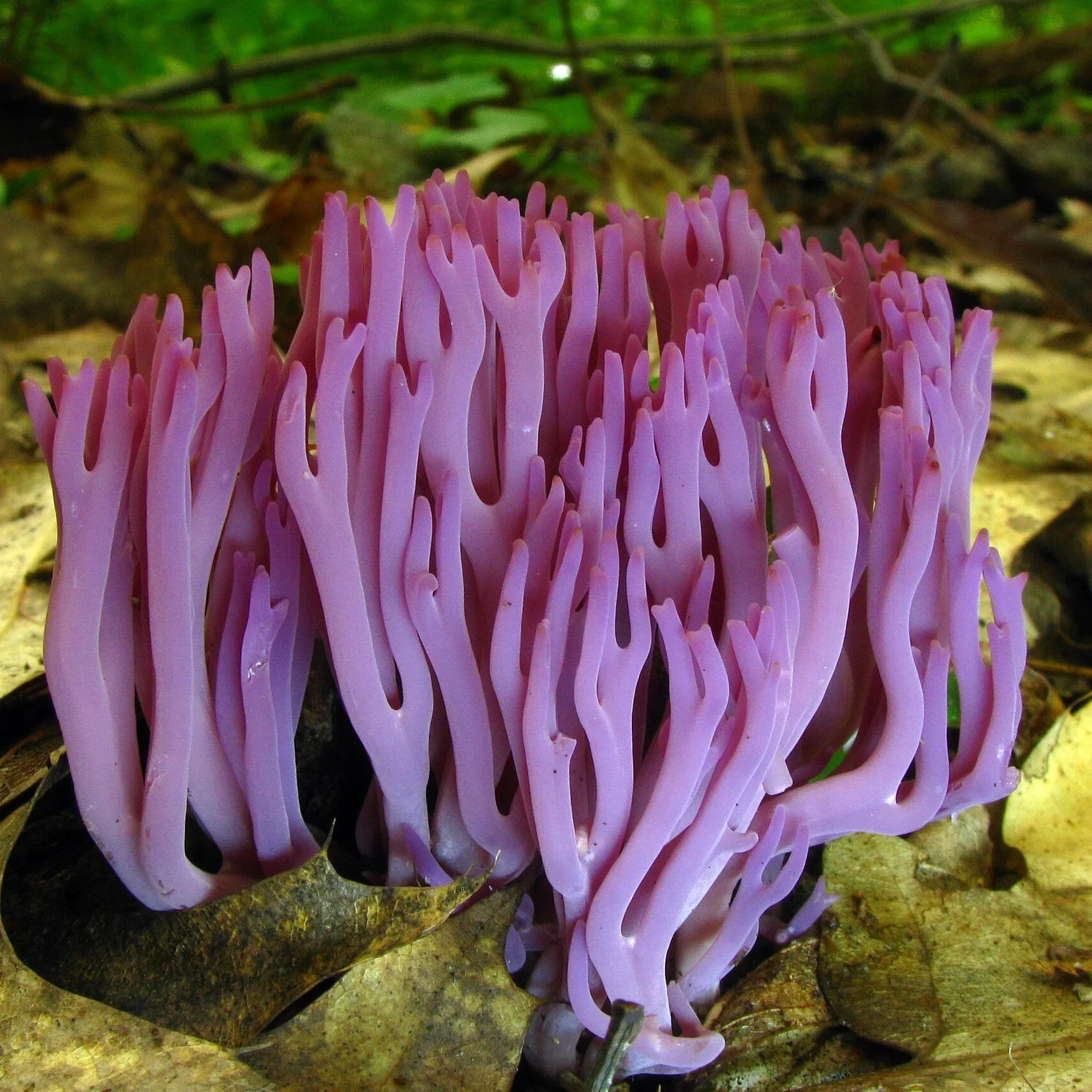
Clavaria zollingeri
FungiHighest rank in taxonomy. Groups all life into domains: Animalia, Plantae, Fungi, etc.IUCN NTInternational Union for Conservation of Nature — the world authority on species extinction risk, using standardized criteria. — Near Threatened — close to qualifying as Vulnerable. Requires ongoing monitoring.In ProgressCurrent stage of this record in the editorial review workflow. Recent Sighting

Clavaria zollingeri

Violet Coral

Lév., 1846

Detailed Texts Multi-lang
A striking, amethyst to violet-colored coral fungus that forms brittle, branched structures. The fruiting bodies are solitary or clustered, with tubular, smooth, and hollow branches that divide dichotomously, tapering toward tip extensions that often become brownish or dingy with age. The flesh is thin, very fragile, and structurally brittle, lacking any distinctive odor or taste.

Added by

Anonymous Curator

Reviewed by

Under Review

Last modified by

Julia Trouin

TaxonomyBiological classification ranks placing this species within the tree of life, from Kingdom down to Genus.

PhylumRank below Kingdom. Groups organisms sharing a fundamental body plan (e.g., Chordata = vertebrates and some invertebrates).Basidiomycota
ClassRank below Phylum. Subdivides by structural traits (e.g., Mammalia, Aves, Reptilia, Insecta).Agaricomycetes
OrderRank below Class. Groups related families sharing common ancestry (e.g., Carnivora, Primates).Agaricales
FamilyRank below Order. Groups closely related genera (e.g., Felidae = cats, Canidae = dogs).Clavariaceae
GenusRank just above Species. The first word in the two-part binomial scientific name.Clavaria
Taxonomic AuthorityThe scientist who first formally described and published this species, followed by the year of publication.Lév., 1846
Record Completeness
85%
Coming soon

Ecology & StatusHow this species lives: habitat preferences, diet, behavior, population status, and role in its ecosystem.

OriginWhether the species is native (evolved here), endemic (found only here), or introduced by human activity.

Native

Population TrendDirection of change in population size over time: increasing, stable, decreasing, or unknown.

Decreasing

Trophic RolePosition in the food chain: producer, herbivore, carnivore, omnivore, decomposer, or parasite.

Decomposer

EdibilityWhether this mushroom is edible, toxic, hallucinogenic, or of unknown safety. Never eat based solely on this data.

--

Cap ShapeShape of the mushroom cap (pileus): convex, flat, umbonate, funnel-shaped, bell-shaped, etc.

--

Hymenium TypeThe spore-bearing surface of a fungus: gills, pores, teeth, ridges, smooth, or wrinkled.

--

Fruiting SeasonTime of year when this species typically reproduces or flowers.

Year Round

Recent SightingsWhether this species has been observed in the wild in Costa Rica within recent years.

Yes

Habitat SummaryOverview of the specific ecosystems and environments where this species is found in Costa Rica. Multi-lang

Grows terrestrially on the ground, deeply embedded in moss or leaf litter within deciduous and coniferous woodland ecosystems. It is primarily found in old-growth forests, showing a strong affinity for damp soils near broadleaf trees like oak (Quercus) or pine trees (Pinus) across parts of North America, Europe, Asia, and Oceania.

SubstrateThe organic material or host organism this fungus colonizes and decomposes. Multi-lang

Information not available in English. Help us expand this record!

BehaviourDaily activity patterns, movement, territory use, foraging style, and seasonal behavioral changes. Multi-lang

Operating as a delicate humicolous saprotroph, it slowly digests dense woodland organic matter accumulated in the upper soil layers. Fructification occurs during high-moisture periods from late summer to late autumn, materializing as short-lived violet structures that exist briefly to spread genetic material before wilting down.

Physical Measures

Length (cm)

2.0 - 10.0 cm

Hymenium StructuresMacro photographs of the spore-bearing surfaces used for mushroom identification.

No hymenium surface images available.

Evolutionary AdaptationsInherited traits and behaviors that improve the species' survival and reproduction in its specific environment. Multi-lang

The intense violaceous pigment, caused by unique fungal chemical compounds, provides biochemical cell protection against lipid peroxidation and heavy radiation from accidental gaps in the high forest canopy layers.
The fragile, highly branched vertical geometry optimizes the available total surface area for hymenial development, enabling a compact basidioma to maximize baseline spore release without demanding excessive structural biomass.

Main ThreatsDocumented pressures reducing the population: habitat loss, hunting, disease, climate change, and invasive species. Multi-lang

High sensitivity to nitrogen deposition and chemical agricultural run-off, which disrupts local soil chemical compositions and degrades the sensitive woodland ecosystems this indicator species relies upon.

Interesting FactsSurprising or notable facts that highlight what makes this species unique or ecologically important. Multi-lang

Clavaria zollingeri is widely treated as an ecological health indicator species for ancient, undisturbed woodlands because it rarely fruits or survives in secondary forests or replanted commercial lumber plots.