PlantaeIUCN NEIn Progress Recent Sighting
Heliconia pogonantha
Beefsteak Heliconia
Cufod., 1933
Detailed Texts Multi-lang
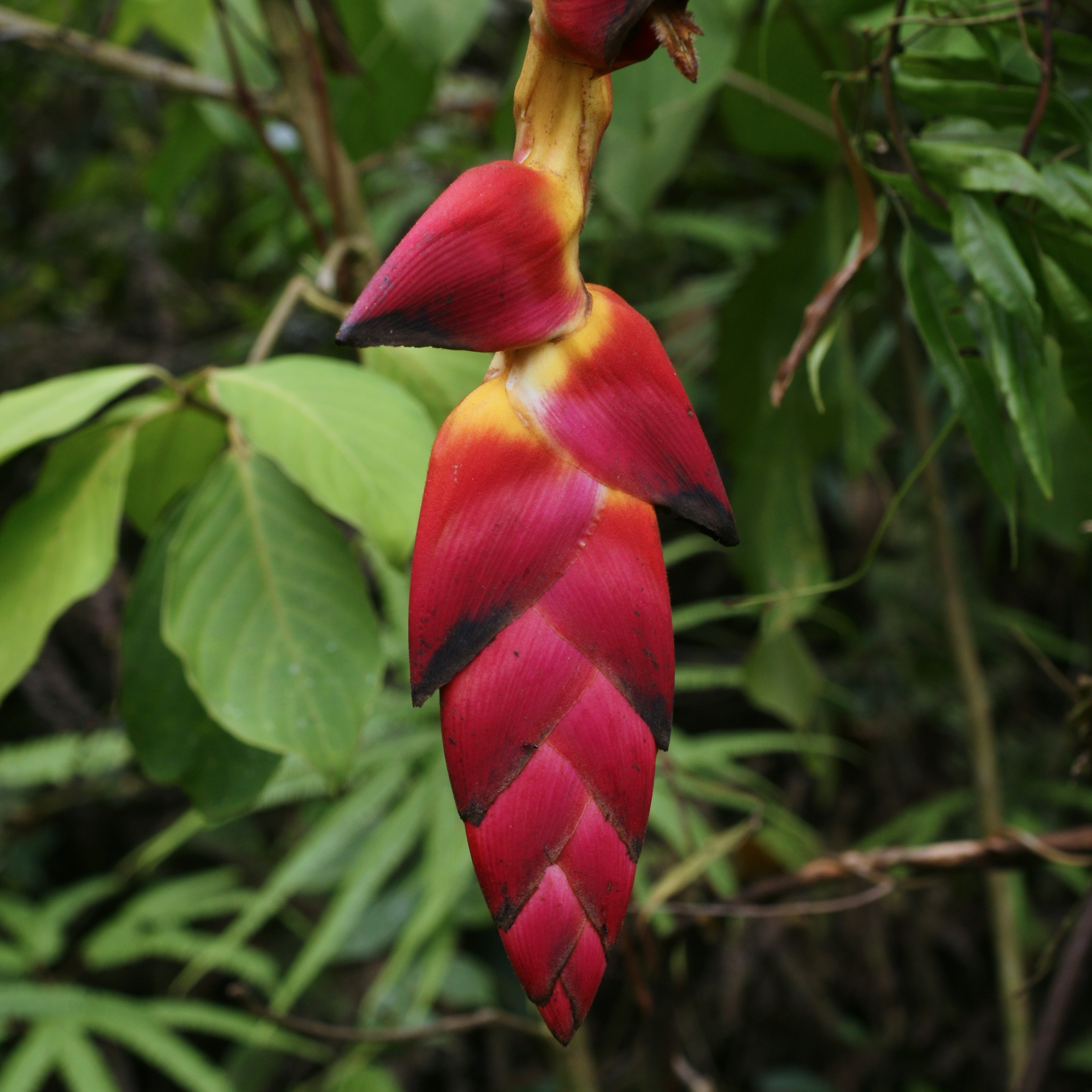
Giant herbaceous plant that can reach 7 meters in height. It is distinguished by its enormous hanging (pendulous) inflorescences up to 2 meters long, composed of intense red bracts covered in a dense velvety or woolly fuzz.
Added by
Anonymous Curator
Reviewed by
Under Review
Last modified by
Julia Trouin
Other Names (Global)
 PlatanilloPico de parika
 Hairy heliconiaHeliconia lanuda
Taxonomy
PhylumTracheophyta
ClassLiliopsida
OrderZingiberales
FamilyHeliconiaceae
GenusHeliconia
Taxonomic AuthorityCufod., 1933
Ecology & Status
Origin
Native
Population Trend
Stable
Growth Habit
--
Leaf Type
--
Flowering Season
Wet Season
Recent Sightings
Yes
Habitat Summary Multi-lang
Native to low-lying tropical rainforests of Central America and northwestern South America. It prefers roadsides, forest clearings, and riverbanks with high humidity and partial sunlight.Light & Water Needs Multi-lang
Information not available in English. Help us expand this record!Behaviour Multi-lang
It is a fast-growing species that blooms year-round in stable climates. Its bracts accumulate rainwater (phytotelmata), creating microhabitats for various aquatic organisms.Toxicity / Uses Multi-lang
Information not available in English. Help us expand this record!Physical Measures
Length (cm)
300.0 - 700.0 cm
Reproductive Structures
Flower Photos (Max 2)
No imageFruit Photos (Max 2)
No imageEvolutionary Adaptations Multi-lang
Dense fuzz on the bracts that may serve as protection against herbivory or excess water.
Large surface area leaves to maximize light capture in the lower levels of the rainforest.
Main Threats Multi-lang
Destruction of riparian habitats and fragmentation of humid forests.
Excessive harvesting of inflorescences for the ornamental market due to its exotic appearance.
Interesting Facts Multi-lang
It is nicknamed 'Beefsteak' or 'Monkey Head' due to the hairy and voluminous appearance of its hanging bracts.
The flowers of pendulous heliconias tend to produce more diluted nectar than erect species to adapt to hermit hummingbirds.