
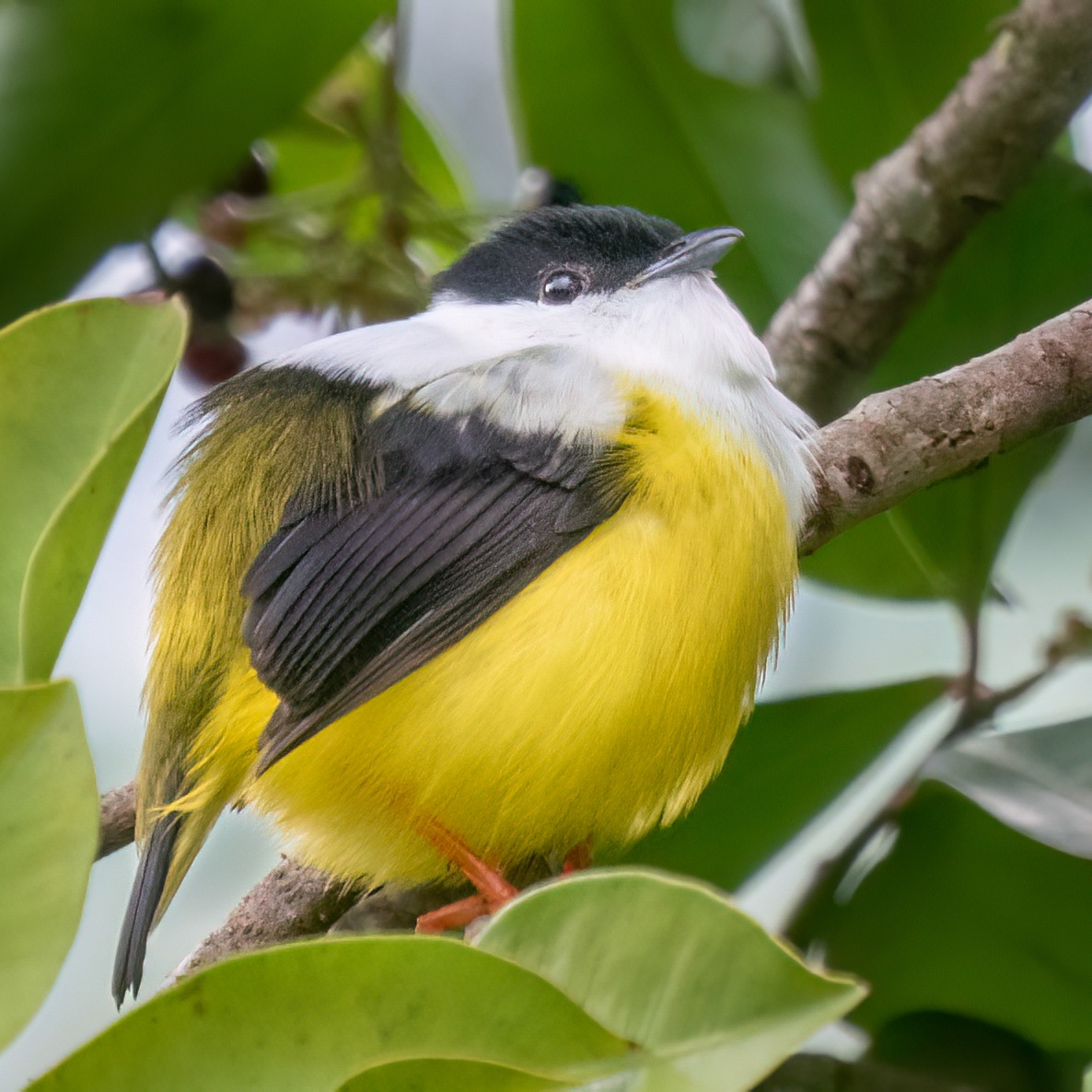
Manacus candei
White-collared Manakin
(Parzudaki, 1841)
Added by
Anonymous Curator
Reviewed by
Under Review
Last modified by
Julia Trouin
TaxonomyBiological classification ranks placing this species within the tree of life, from Kingdom down to Genus.
Ecology & StatusHow this species lives: habitat preferences, diet, behavior, population status, and role in its ecosystem.
OriginWhether the species is native (evolved here), endemic (found only here), or introduced by human activity.
Native
Population TrendDirection of change in population size over time: increasing, stable, decreasing, or unknown.
Decreasing
Breeding SeasonTime of year when this species typically reproduces or flowers.
--
Trophic RolePosition in the food chain: producer, herbivore, carnivore, omnivore, decomposer, or parasite.
Insectivore
Recent SightingsWhether this species has been observed in the wild in Costa Rica within recent years.
Yes
Habitat SummaryOverview of the specific ecosystems and environments where this species is found in Costa Rica. Multi-lang
It shows a strong preference for the Caribbean slope of Central America, inhabiting from southern Mexico to northeastern Costa Rica. It is a common resident of lowland rainforests, but unlike other manakins that prefer deep primary forest, this species particularly thrives in dense thickets, forest edges, secondary growth, abandoned cacao plantations, and humid scrub along rivers.BehaviourDaily activity patterns, movement, territory use, foraging style, and seasonal behavioral changes. Multi-lang
Males invest almost all their energy and waking hours maintaining the neatness of their ground display areas and engaging in group acoustic and visual competitions. Females, much more elusive, remain in the upper strata of the thicket and only descend to the males' areas to inspect the quality of the courtship.Social ActivitySocial structure: whether the species is solitary, paired, or colonial; hierarchy and communication. Multi-lang
They exhibit an organized lek behavior. Several males (usually 3 to 5, though sometimes more) establish their display 'courts' very close to each other in a defined forest zone, creating a front of fierce competition where they sing and snap their wings in a coordinated manner when a female approaches.Feeding GuildWhat the species eats, how it forages or hunts, and its role as a consumer in the food web. Multi-lang
Primarily frugivores of small berries, but they incorporate a large number of insects into their diet. They catch insects on the wing in the dark understory and also glean spiders from leaves. This protein is essential for the altricial chicks and for replenishing the male's energy after his demanding dances.Trophic Chain DetailsSpecific interactions in local food webs: prey species, predators, competitors, and scavengers. Multi-lang
They are essential seed dispersers in early stages of forest succession, feeding on small fruits of pioneer shrubs (such as Conostegia and Miconia). Their low, cryptic nests, as well as males distracted by their dances, fall prey to various hunting snakes, understory raptors, and mammals like coatis (Nasua narica).Reproductive BehaviourMating strategies, courtship displays, nesting or spawning behavior, and parental care. Multi-lang
The system is entirely polygynous. After the spectacular courtship in the cleared 'court' and copulation, the male completely dissociates. The female single-handedly builds a shallow cup nest using fine fibers and roots woven between the branches of a low shrub (1-2 meters above the ground). She typically lays 2 brown-speckled white eggs and incubates them for 18 to 19 days. She provides food (insects and regurgitated fruit) to the blind chicks, which leave the nest at 13-15 days.Physical Measures
Length (cm)
10.0 - 12.0 cm
Weight (Grams)
15 g - 20 g
Lifespan
Sexual MaturityAge at which the individual becomes capable of reproducing for the first time.
1 - 2 Years
Gestation / IncubationDuration from fertilization to birth (mammals) or to hatching (egg-laying species).
18 - 19