
FungiIUCN NEIn Progress Recent Sighting
Phallus ravenelii
Ravenel's Stinkhorn
Berk. & M.A.Curtis, 1873
Detailed Texts Multi-lang
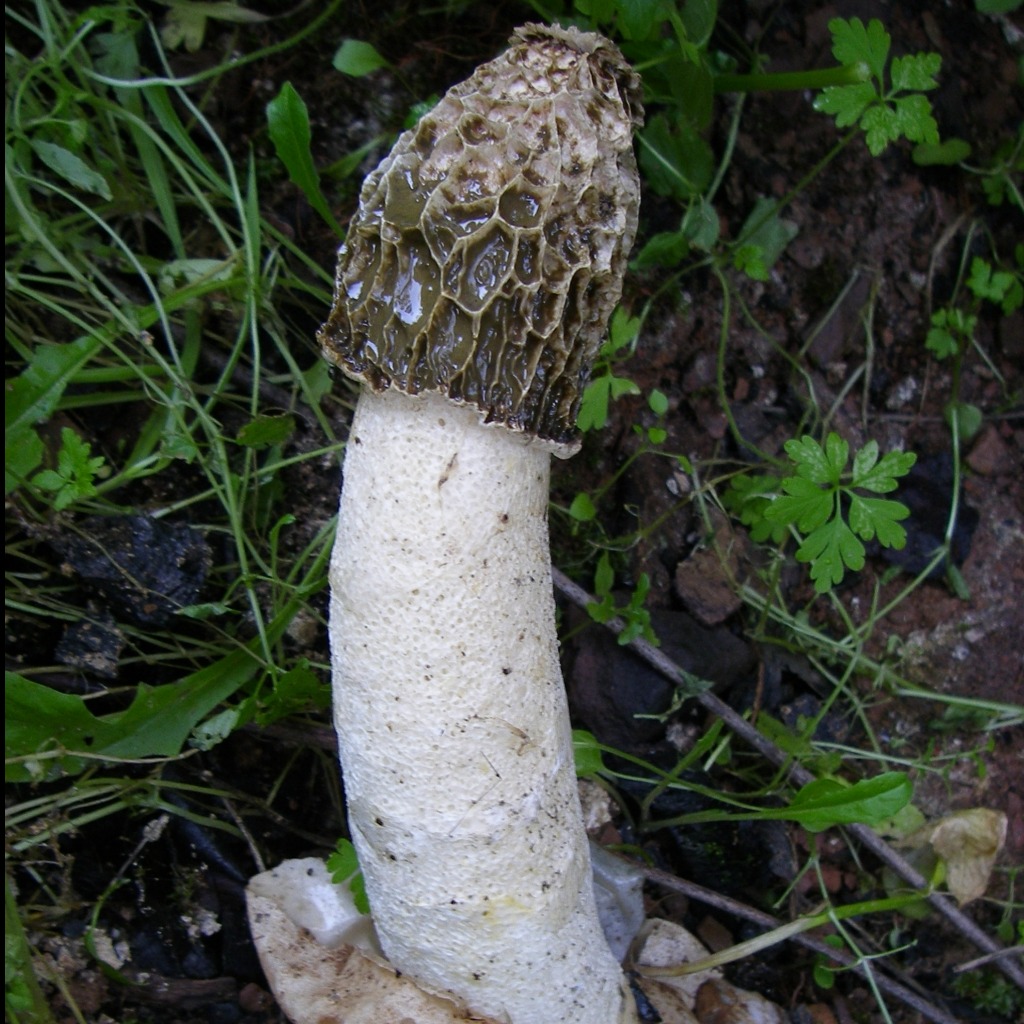
Phallus ravenelii is a saprophytic fungus iconic for its phallic shape and penetrating foul odor. It emerges from a buried white or pinkish egg-shaped structure (volva). Upon maturity, the fruiting body expands rapidly, forming a hollow, spongy, white to cream-colored stalk topped by a thimble-shaped head or receptacle. This head is covered by a dark olive-green slimy mass called gleba, which contains the spores and emits an odor of decaying meat to attract flies. Unlike other members of its genus, the surface of the receptacle under the gleba is smooth or slightly granular, not reticulated. It is an ephemeral organism that appears suddenly after heavy rains, decomposing organic matter on the forest floor.
Added by
Anonymous Curator
Reviewed by
Under Review
Last modified by
Julia Trouin
Taxonomy
PhylumBasidiomycota
ClassAgaricomycetes
OrderPhallales
FamilyPhallaceae
GenusPhallus
Taxonomic AuthorityBerk. & M.A.Curtis, 1873
Ecology & Status
Origin
Native
Population Trend
Stable
Edibility
--
Cap Shape
--
Hymenium Type
--
Fruiting Season
Wet Season
Recent Sightings
Yes
Habitat Summary Multi-lang
It inhabits the soil of mixed forests, areas rich in mulch, gardens, and decaying wood. It prefers humid and shaded environments with abundant organic matter. It is commonly found in both primary forests and urban areas on wood chips or compost. In Costa Rica, its presence is frequently reported during the rainy season across various climatic zones, from lowlands to montane forests.Substrate Multi-lang
Information not available in English. Help us expand this record!Behaviour Multi-lang
It is a vital saprotroph that recycles nutrients in the ecosystem, breaking down cellulose and lignin from dead wood and plant remains. Its aerial life cycle is extremely short (1-2 days), but the underground mycelium can live for years spreading through the soil. Its relationship with flies is a mutualistic symbiosis: the fungus offers food (gleba) and the insect disperses the offspring.Physical Measures
Length (cm)
10.0 - 20.0 cm
Hymenium Structures
No hymenium surface images available.
Evolutionary Adaptations Multi-lang
Zoochorous Dispersal by Deception: Unlike fungi that depend on wind, Phallus ravenelii uses chemical mimicry to attract dipterans (flies). Its putrid smell is an evolutionary adaptation for insects to ingest or carry the sticky gleba, dispersing spores to new organic substrates.
Rapid Hydraulic Expansion: The fruiting body can grow 10 to 15 cm in just a few hours through massive water absorption. This speed allows it to take advantage of short windows of high humidity to release its spores before drying out.
Main Threats Multi-lang
Fungicide use and human removal: Due to its appearance and unpleasant odor to humans, it is often removed from gardens and parks, affecting its reproductive cycle in developed areas.
Interesting Facts Multi-lang
The Devil's Egg: In its immature stage, the fungus looks like a soft, rubbery buried egg. In some cultures, they are considered edible in this pre-expansion phase, though they lose all interest once the stalk emerges and the smell appears.