
Costa Rica Species
Melipona beecheii
AnimaliaHighest rank in taxonomy. Groups all life into domains: Animalia, Plantae, Fungi, etc.IUCN NEInternational Union for Conservation of Nature — the world authority on species extinction risk, using standardized criteria. — Not Evaluated — not yet assessed against the IUCN Red List criteria.In ProgressCurrent stage of this record in the editorial review workflow. Recent Sighting

Melipona beecheii

Stingless Bee

Bennett, 1831

Detailed Texts Multi-lang
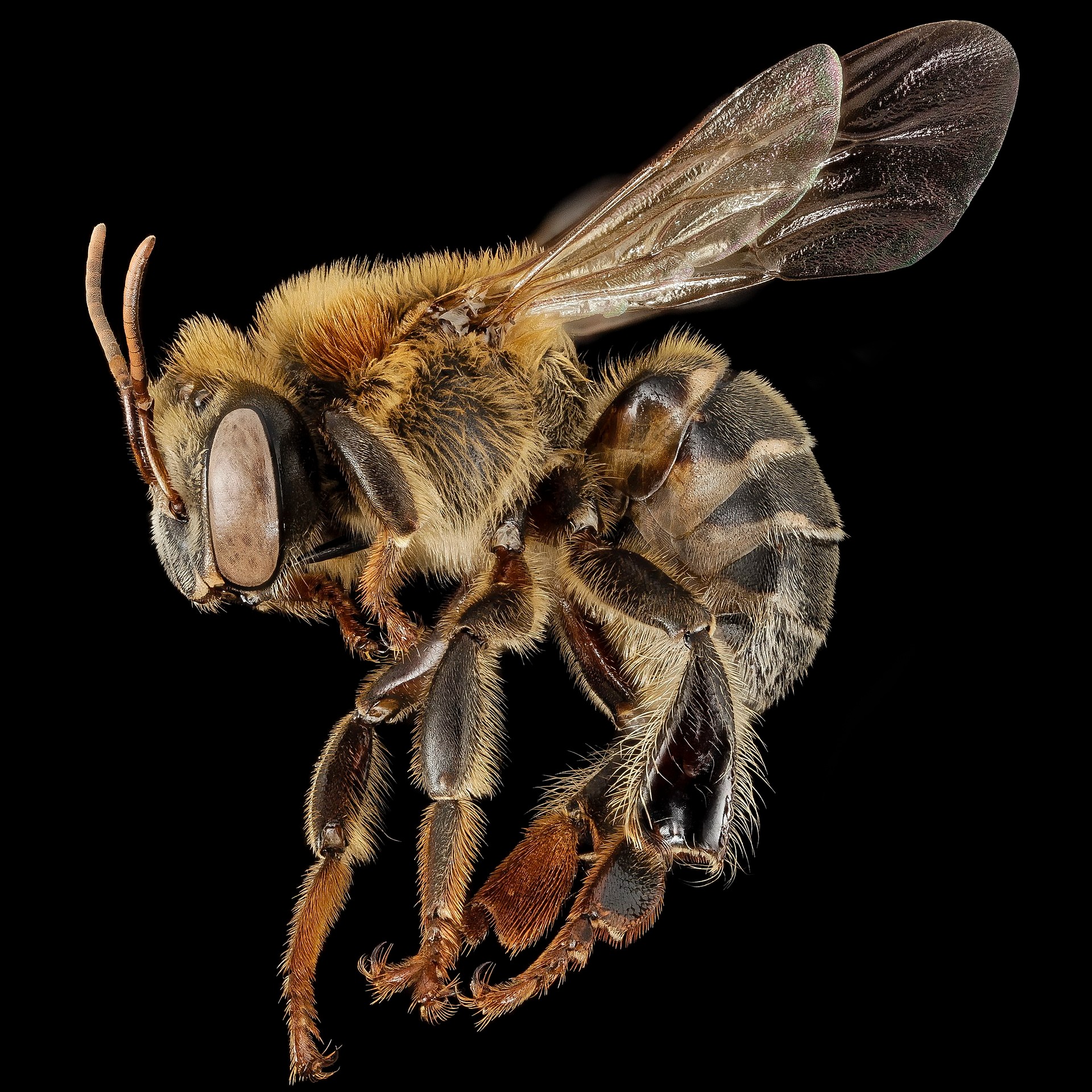
Melipona beecheii is a highly eusocial stingless bee species (Meliponini tribe) native to Mesoamerica. Although the popular term 'Mariola' is sometimes used generically for stingless bees, in Costa Rica this name usually refers to the smaller species Tetragonisca angustula, while M. beecheii is locally known as 'Jicote gato' or 'Jicote estrella', and 'Xunan kab' (Royal Lady) by the Maya. It has a robust body, densely covered in golden or orange-brown fuzz on the thorax, and a black abdomen with distinct pale hair bands. Its most distinctive feature is its vestigial, non-functional stinger, meaning it cannot sting; instead, it defends itself by biting with its mandibles. They are extremely docile bees that produce a highly liquid, citrusy honey, highly valued in traditional medicine. They play a critical ecological role as keystone pollinators of the Neotropical forest canopy.

Added by

Anonymous Curator

Reviewed by

Under Review

Last modified by

Julia Trouin

TaxonomyBiological classification ranks placing this species within the tree of life, from Kingdom down to Genus.

PhylumRank below Kingdom. Groups organisms sharing a fundamental body plan (e.g., Chordata = vertebrates and some invertebrates).Arthropoda
ClassRank below Phylum. Subdivides by structural traits (e.g., Mammalia, Aves, Reptilia, Insecta).Insecta
OrderRank below Class. Groups related families sharing common ancestry (e.g., Carnivora, Primates).Hymenoptera
FamilyRank below Order. Groups closely related genera (e.g., Felidae = cats, Canidae = dogs).Apidae
GenusRank just above Species. The first word in the two-part binomial scientific name.Melipona
Taxonomic AuthorityThe scientist who first formally described and published this species, followed by the year of publication.Bennett, 1831
Record Completeness
96%
Coming soon

Ecology & StatusHow this species lives: habitat preferences, diet, behavior, population status, and role in its ecosystem.

OriginWhether the species is native (evolved here), endemic (found only here), or introduced by human activity.

Native

Population TrendDirection of change in population size over time: increasing, stable, decreasing, or unknown.

Decreasing

Breeding SeasonTime of year when this species typically reproduces or flowers.

Year Round

Trophic RolePosition in the food chain: producer, herbivore, carnivore, omnivore, decomposer, or parasite.

Herbivore

Recent SightingsWhether this species has been observed in the wild in Costa Rica within recent years.

Yes

Habitat SummaryOverview of the specific ecosystems and environments where this species is found in Costa Rica. Multi-lang

It is a strictly forest-dwelling species that requires large, mature trees in the tropical humid or dry forest (from sea level to 1,000 meters) for nesting. Its wild colonies are established exclusively in the natural cavities of large-diameter living or dead tree trunks. Historically and currently, they also inhabit anthropogenic 'meliponaries', where they are housed in hollowed-out log sections (corchos) or wooden rearing boxes designed for the sustainable management and harvesting of their honey.

BehaviourDaily activity patterns, movement, territory use, foraging style, and seasonal behavioral changes. Multi-lang

They have strictly diurnal behavior. Their ecology is defined by an intense passive defensive structure. Because they have no functional stinger, the entrance to their hive is a small, perfectly sculpted hole of mud and resin (often star-shaped, hence their nickname Jicote estrella in Costa Rica). During the day, there is always one single guard bee stationed right at the entrance, whose only job is to watch and retreat inwards to block the tunnel with her head if an ant, spider, or parasitic wasp approaches. Foragers fly out during the heat of the day to seek nectar from plants like guava, avocado, and timber trees.

Social ActivitySocial structure: whether the species is solitary, paired, or colonial; hierarchy and communication. Multi-lang

It is a eusocial insect that lives in highly cohesive colonies. A mature hive usually has between 1,000 and 3,000 worker bees (a small number compared to the 50,000 of a European honey bee). The society is a matriarchy structured in three castes: sterile female workers, male drones, and the physogastric queen. Workers perform an age-based progression of duties throughout their short lives: first cleaning the nest, then building cerumen and feeding larvae, later becoming guards at the door, and in their old age, they become foragers facing the dangers of the outside world.

Feeding GuildWhat the species eats, how it forages or hunts, and its role as a consumer in the food web. Multi-lang

Specialist herbivore (Nectarivore and Palynivore). They depend on flower nectar as their primary source of energy (carbohydrates) and plant pollen as their only vital source of protein. They have mouthparts designed to efficiently lap up liquids and ingest solid pollen grains. They pack their pollen into dense capsules inside the nest (the famous bee bread) covering it with cerumen, where it beneficially ferments to become more digestible for the colony.

Trophic Chain DetailsSpecific interactions in local food webs: prey species, predators, competitors, and scavengers. Multi-lang

It is an herbivorous consumer of vital importance to Neotropical ecosystems, sustaining forest genetic diversity by pollinating thousands of native plant species. In the secondary consumer food web, these bees are frequently intercepted mid-air by insectivorous birds (such as flycatchers or tyrant flycatchers), as well as by stealthy predatory insects on flowers, such as assassin bugs, praying mantises, and crab spiders. The highly concentrated calorie content of the nest is the primary target of formidable vertebrate predators like the collared anteater (Tamandua mexicana) and the tayra, who can tear apart a log to access the wax, brood, and honey.

Reproductive BehaviourMating strategies, courtship displays, nesting or spawning behavior, and parental care. Multi-lang

The queen does not directly care for the larvae. The reproductive behavior is called 'Mass Provisioning'. Young worker bees construct a cylindrical brood cell out of cerumen. Then, several workers rapidly regurgitate large amounts of liquid pollen and nectar into the cell until it is almost completely full (creating a food soup). Subsequently, the mother queen immediately arrives, lays a single white egg directly floating on this liquid paste, and the workers hermetically seal the cell in a matter of seconds. The larva hatches and, in total isolation and darkness, progressively eats all its provisions, spins a cocoon, and emerges about 5 weeks later as a fully formed adult bee that bites through the cap to exit.

Physical Measures

Length (cm)

0.9 - 1.2 cm

Weight (Grams)

0.05 g - 0.1 g

Offspring per cycleTypical number of young (live births, eggs, or seeds) produced by one adult in a single reproductive event or breeding season.100 - 500
Sexual DimorphismObservable physical differences between males and females of the same species (e.g., size, coloration, features).Yes

Lifespan

Sexual MaturityAge at which the individual becomes capable of reproducing for the first time.

30 - 40 Days

Gestation / IncubationDuration from fertilization to birth (mammals) or to hatching (egg-laying species).

35 - 40

Lifespan EstimatedExpected duration of life from birth to natural death under wild conditions.
Males1 - 2 Months
Females1 - 36 Months

Sexual DimorphismPhysical differences in size, coloration, or morphology between males and females of this species.

Males Multi-lang

Adult males (drones) are very similar to sterile workers in length (about 10 millimeters), but are distinguished anatomically from them in the field because they lack 'corbiculae' (the concave baskets on their hind legs that females use to massively transport pollen). They have a slightly more tapered abdomen, lack the robust mandibles required to manipulate wax, and have antennae with one extra segment. Their sole purpose in the colony is reproduction; they never work or forage for nectar. They leave the maternal nest permanently, congregating in large, buzzing clouds in the tropical forests near virgin colonies to mate with a princess, after which they die quickly.

Females Multi-lang

Females exhibit the most extreme level of biological dimorphism through irreversible social castes. The vast majority of the hive are worker bees (infertile, fuzzy-bodied females of 10mm). However, the single dominant female, the Mother Queen (once fertilized), undergoes 'physogastry': a drastic transformation where her ovaries mature uncontrollably causing the volume of her abdomen to swell enormously, completely losing her ability to fly and giving her the appearance of a plump, segmented grub. She is thus completely relegated to walking across the combs, laying an average of hundreds of eggs daily for life.

Evolutionary AdaptationsInherited traits and behaviors that improve the species' survival and reproduction in its specific environment. Multi-lang

Wax and cerumen architecture: Unlike the honey bee that builds hanging pure wax combs, M. beecheii uses a dark material called 'cerumen' (a mixture of tree resins, wax from abdominal glands, and mud). With this material, they build separate circular amphorae or little pots to store honey and pollen, as well as layers of 'involucrum' to thermally insulate the brood zone.
Buzz Pollination: They are highly efficient pollinators capable of performing 'buzz pollination'. They bite the flower and rapidly vibrate their powerful wing muscles (without flying), forcing the flower to expel the tightly held pollen from its anthers. This is crucial for key Neotropical plants like tomatoes, chili peppers, and orchids that European honey bees cannot efficiently pollinate.
Resource-based colony propagation: Unlike Apis mellifera where the swarm leaves quickly, stingless bees establish a new nest gradually. Swarming workers progressively transport cerumen, honey, and pollen from the mother nest to the new tree hollow over several weeks. Only when the new nest is secured does a virgin queen fly over to inhabit it, ensuring a high swarm survival rate.

Main ThreatsDocumented pressures reducing the population: habitat loss, hunting, disease, climate change, and invasive species. Multi-lang

Indiscriminate deforestation: The loss of dense tropical forests not only removes the endemic flowers they depend on but, more critically, eliminates the old, mature trees that have trunks thick and hollow enough to house their massive colonies.
Agricultural pesticides: The intensive use of neonicotinoids and other toxic pesticides in monocultures poisons foraging bees. Because Meliponas do not process and purify pollen with the same chemical aggressiveness as European bees, they are highly vulnerable to contaminated pollen collapsing the entire hive from the inside.
Phorid Flies (Pseudohypocera): The greatest predator of domesticated or exposed stingless bees. If the bee's nest is weakened or damaged during honey harvesting, this small parasitic fly infiltrates the hive, laying thousands of eggs. The maggots rapidly devour the pollen supplies, honey, and the bee larvae themselves, completely destroying the colony in a matter of days and leaving a pestilent mass.

Interesting FactsSurprising or notable facts that highlight what makes this species unique or ecologically important. Multi-lang

In Maya cosmology, this bee (Xunan kab) was considered a sacred entity. They were protected by the descending god Ah Muzen Cab, the guardian of honey. The Maya have kept this species for over 3,000 years using traditional hollow logs, and the harvesting of M. beecheii honey was the subject of elaborate religious ceremonies, considered a medicinal elixir that cured eye diseases, gastric, and respiratory problems.
Unlike European honey bees, where diet (royal jelly) dictates which larva becomes a queen, in M. beecheii the determination of the royal caste is strictly genetic. Approximately 10% to 20% of all females are genetically born as virgin queens (princesses). Since the nest only needs one queen, the workers systematically kill or expel these surplus princesses by tearing off their wings.
M. beecheii produces a spectacularly lower volume of honey compared to Apis mellifera; a strong hive only produces 1 to 2 liters of honey per year. However, their honey contains a significantly higher water content (around 26%), giving it a thin, syrupy texture with a distinctive, delicious sweet-and-sour floral flavor that is sold at premium prices as natural medicine.