Costa Rica Species
Chlorophonia callophrys
AnimaliaHighest rank in taxonomy. Groups all life into domains: Animalia, Plantae, Fungi, etc.IUCN LCInternational Union for Conservation of Nature — the world authority on species extinction risk, using standardized criteria. — Least Concern — widespread and abundant; not at immediate risk of extinction.ApprovedCurrent stage of this record in the editorial review workflow. Recent Sighting

Chlorophonia callophrys

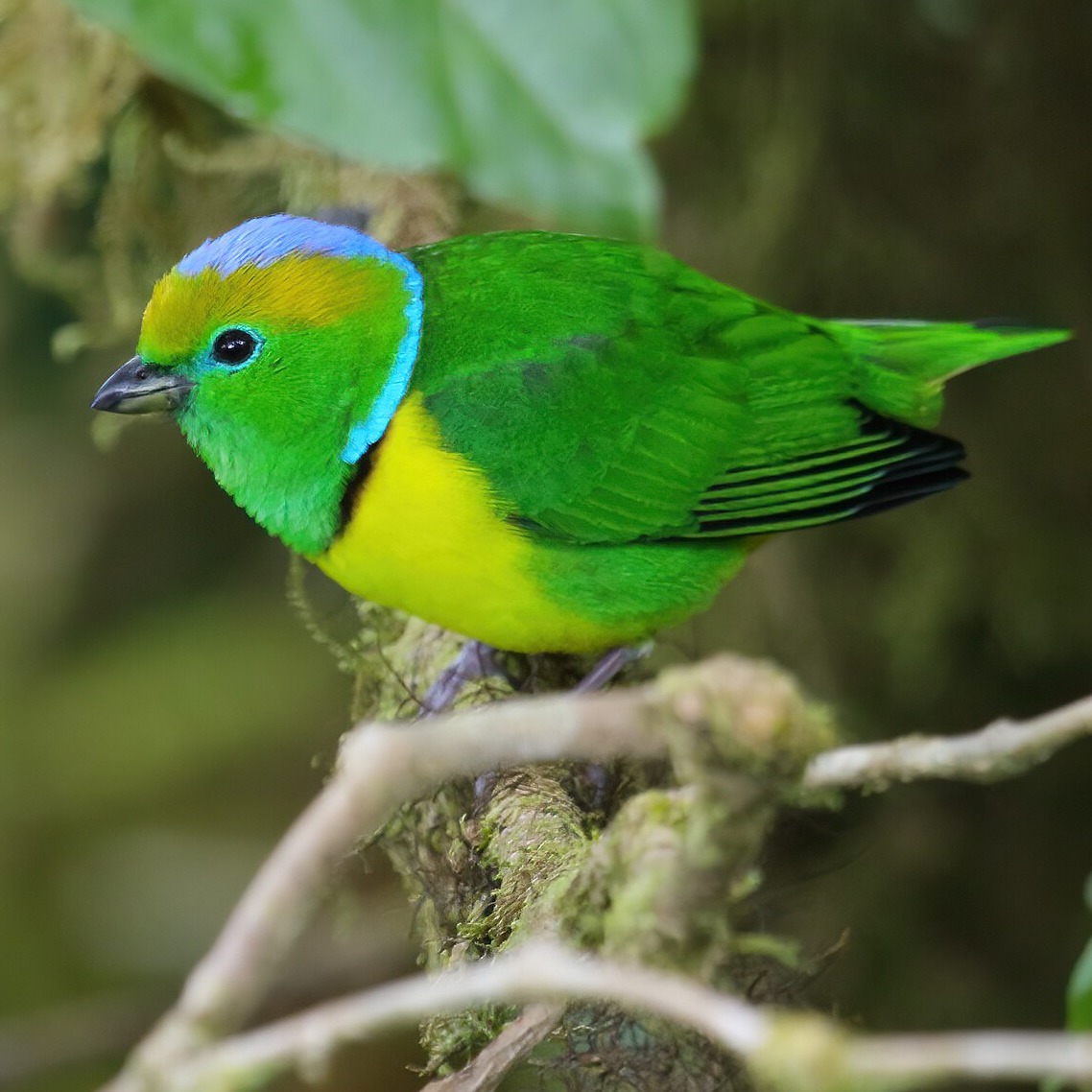
Golden-browed Chlorophonia

Cabanis, 1861

Detailed Texts Multi-lang
Small bird, highlighted by its bright green plumage and a distinctive golden band above the eyes.

Added by

Anonymous Curator

Reviewed by

Julia Trouin

Last modified by

Julia Trouin

TaxonomyBiological classification ranks placing this species within the tree of life, from Kingdom down to Genus.

PhylumRank below Kingdom. Groups organisms sharing a fundamental body plan (e.g., Chordata = vertebrates and some invertebrates).Chordata
ClassRank below Phylum. Subdivides by structural traits (e.g., Mammalia, Aves, Reptilia, Insecta).Aves
OrderRank below Class. Groups related families sharing common ancestry (e.g., Carnivora, Primates).Passeriformes
FamilyRank below Order. Groups closely related genera (e.g., Felidae = cats, Canidae = dogs).Fringillidae
GenusRank just above Species. The first word in the two-part binomial scientific name.Chlorophonia
Taxonomic AuthorityThe scientist who first formally described and published this species, followed by the year of publication.Cabanis, 1861
Record Completeness
94%
Coming soon

Ecology & StatusHow this species lives: habitat preferences, diet, behavior, population status, and role in its ecosystem.

OriginWhether the species is native (evolved here), endemic (found only here), or introduced by human activity.

Native

Population TrendDirection of change in population size over time: increasing, stable, decreasing, or unknown.

Stable

Breeding SeasonTime of year when this species typically reproduces or flowers.

Spring

Trophic RolePosition in the food chain: producer, herbivore, carnivore, omnivore, decomposer, or parasite.

Frugivore

Recent SightingsWhether this species has been observed in the wild in Costa Rica within recent years.

Yes

Habitat SummaryOverview of the specific ecosystems and environments where this species is found in Costa Rica. Multi-lang

Inhabits cloud forests and high-mountain jungles, preferring the forest canopy.

BehaviourDaily activity patterns, movement, territory use, foraging style, and seasonal behavioral changes. Multi-lang

Generally observed in pairs or mixed flocks while foraging.

Social ActivitySocial structure: whether the species is solitary, paired, or colonial; hierarchy and communication. Multi-lang

Relatively social species, which maintains constant vocal communication.

Feeding GuildWhat the species eats, how it forages or hunts, and its role as a consumer in the food web. Multi-lang

Feeds primarily on fruits, exploring different levels of the forest.

Trophic Chain DetailsSpecific interactions in local food webs: prey species, predators, competitors, and scavengers. Multi-lang

Specialized frugivore that assists in the dispersal of seeds of various epiphytic plants.

Reproductive BehaviourMating strategies, courtship displays, nesting or spawning behavior, and parental care. Multi-lang

Reproduction in dome-shaped nests hidden among moss and epiphytes.

Physical Measures

Length (cm)

11.0 - 13.0 cm

Weight (Grams)

14 g - 18 g

Offspring per cycleTypical number of young (live births, eggs, or seeds) produced by one adult in a single reproductive event or breeding season.2 - 4
Sexual DimorphismObservable physical differences between males and females of the same species (e.g., size, coloration, features).Yes

Lifespan

Sexual MaturityAge at which the individual becomes capable of reproducing for the first time.

1 Years

Gestation / IncubationDuration from fertilization to birth (mammals) or to hatching (egg-laying species).

12 - 14

Lifespan EstimatedExpected duration of life from birth to natural death under wild conditions.
Males--
Females--

Sexual DimorphismPhysical differences in size, coloration, or morphology between males and females of this species.

Males Multi-lang

Males with bright green plumage, golden eyebrow, and blue facial mask.

Females Multi-lang

Females have a more uniform green tone and lack the striking facial mask.

Evolutionary AdaptationsInherited traits and behaviors that improve the species' survival and reproduction in its specific environment. Multi-lang

Anatomical adaptation to an almost exclusively frugivorous diet that allows for rapid processing of small fruits.

Main ThreatsDocumented pressures reducing the population: habitat loss, hunting, disease, climate change, and invasive species. Multi-lang

Sensitive to cloud forest degradation and the loss of fruit trees essential for its nutrition.

Interesting FactsSurprising or notable facts that highlight what makes this species unique or ecologically important. Multi-lang

It is one of the most attractive species of chlorophonias and highly sought after by birdwatchers in Central America.