
Costa Rica Species
Noctilio leporinus
AnimaliaHighest rank in taxonomy. Groups all life into domains: Animalia, Plantae, Fungi, etc.IUCN LCInternational Union for Conservation of Nature — the world authority on species extinction risk, using standardized criteria. — Least Concern — widespread and abundant; not at immediate risk of extinction.In ProgressCurrent stage of this record in the editorial review workflow. Recent Sighting

Noctilio leporinus

Greater Bulldog Bat / Fisherman Bat

(Linnaeus, 1758)

Detailed Texts Multi-lang
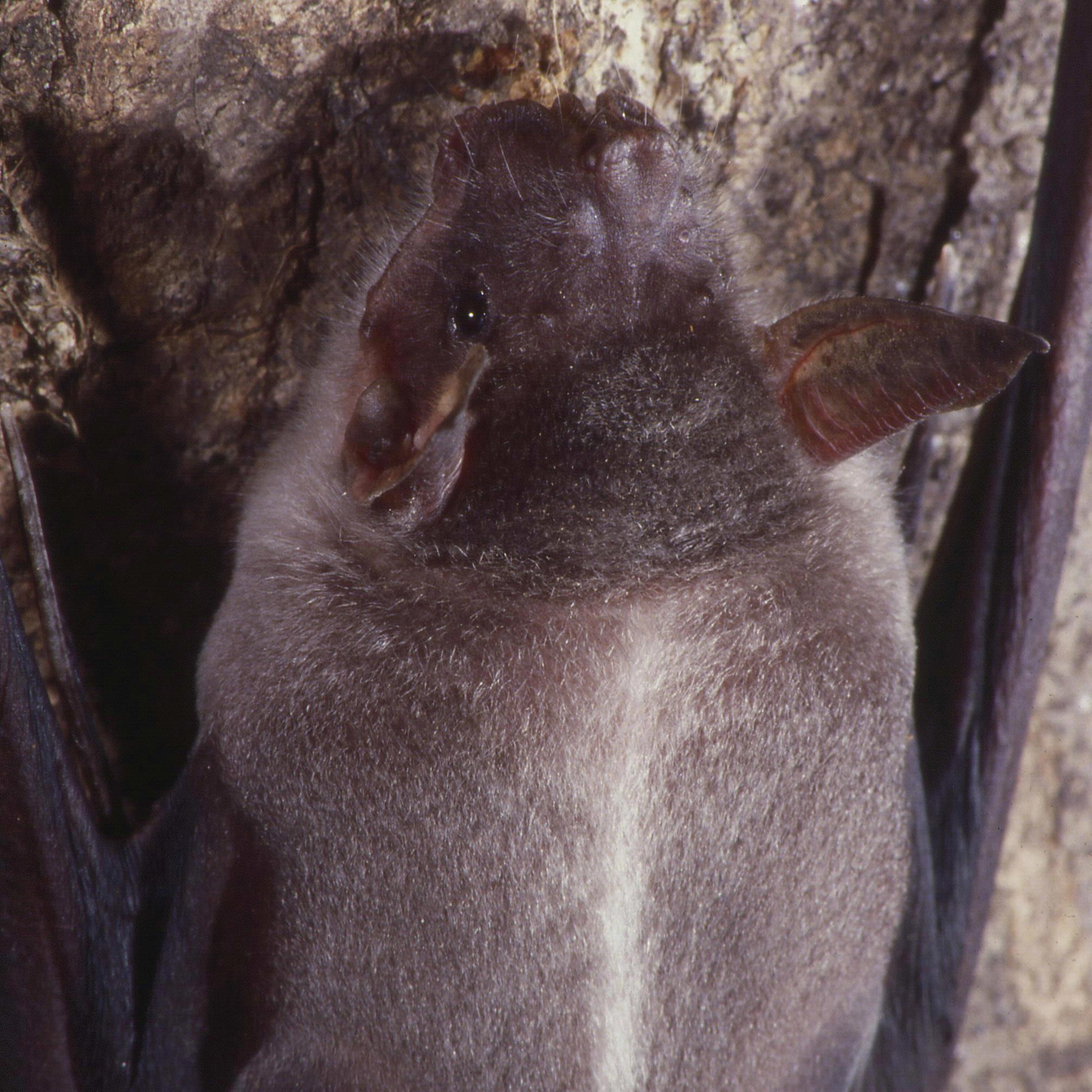
Noctilio leporinus is a large, robust bat, world-famous for its incredible fishing ability. Its face is very distinctive and gives it the 'bulldog' nickname: it has swollen, drooping lips, bulging cheeks that form pouches to store food, and pointed ears directed forward. Its most impressive adaptation is found in its hind limbs, which are unusually long and end in enormous feet equipped with long, sharp, hook-like claws. Its fur is short and water-resistant, showing strong sexual dimorphism in color. It has very long, narrow wings that allow for powerful, low-level flight over the water's surface.

Added by

Anonymous Curator

Reviewed by

Under Review

Last modified by

Julia Trouin

TaxonomyBiological classification ranks placing this species within the tree of life, from Kingdom down to Genus.

PhylumRank below Kingdom. Groups organisms sharing a fundamental body plan (e.g., Chordata = vertebrates and some invertebrates).Chordata
ClassRank below Phylum. Subdivides by structural traits (e.g., Mammalia, Aves, Reptilia, Insecta).Mammalia
OrderRank below Class. Groups related families sharing common ancestry (e.g., Carnivora, Primates).Chiroptera
FamilyRank below Order. Groups closely related genera (e.g., Felidae = cats, Canidae = dogs).Noctilionidae
GenusRank just above Species. The first word in the two-part binomial scientific name.Noctilio
Taxonomic AuthorityThe scientist who first formally described and published this species, followed by the year of publication.(Linnaeus, 1758)
Record Completeness
85%
Coming soon

Ecology & StatusHow this species lives: habitat preferences, diet, behavior, population status, and role in its ecosystem.

OriginWhether the species is native (evolved here), endemic (found only here), or introduced by human activity.

Native

Population TrendDirection of change in population size over time: increasing, stable, decreasing, or unknown.

Stable

Breeding SeasonTime of year when this species typically reproduces or flowers.

Dry Season

Trophic RolePosition in the food chain: producer, herbivore, carnivore, omnivore, decomposer, or parasite.

Carnivore

Recent SightingsWhether this species has been observed in the wild in Costa Rica within recent years.

Yes

Habitat SummaryOverview of the specific ecosystems and environments where this species is found in Costa Rica. Multi-lang

It is a species strictly linked to freshwater bodies and estuaries. It inhabits lowland tropical wet and dry forests, always near large rivers, slow streams, lakes, lagoons, estuaries, and mangroves. It uses sea caves, deep rock crevices, or the interior of large hollow trees as daytime roosts. In Costa Rica, it is common to see it flying low over the water in wetlands like Palo Verde, Tortuguero, Corcovado, and along the Pacific and Caribbean coasts.

BehaviourDaily activity patterns, movement, territory use, foraging style, and seasonal behavioral changes. Multi-lang

They leave their roosts in groups just at dusk to forage. They fly in predictable patterns about 20-50 cm over the water in complete darkness. Although fishing is their specialty, they also catch large aquatic beetles, moths, and crustaceans floating on the surface. When flying, they often drag their claws intermittently in areas where fish density is high to catch prey randomly.

Social ActivitySocial structure: whether the species is solitary, paired, or colonial; hierarchy and communication. Multi-lang

Highly gregarious. They form colonies ranging from a few dozen to hundreds of individuals. There is strong social cohesion; they often forage in small groups flying in single file over the river.

Feeding GuildWhat the species eats, how it forages or hunts, and its role as a consumer in the food web. Multi-lang

Piscivore / Aquatic insectivore.

Trophic Chain DetailsSpecific interactions in local food webs: prey species, predators, competitors, and scavengers. Multi-lang

Aquatic predator (Piscivore/Carnivore). Consumes small fish, crustaceans, and large aquatic insects. It is potential prey for large owls, crocodiles, caimans, and constrictor snakes ambushing from riparian branches.

Reproductive BehaviourMating strategies, courtship displays, nesting or spawning behavior, and parental care. Multi-lang

They have a polygynous mating system where a male defends a group of females within the roost. The reproductive season is synchronized so that lactation coincides with the end of the dry season and the beginning of the rains, when food is abundant. They have a single offspring per year after about 60 to 70 days of gestation. The pup remains in the cave, being nursed until it can fly and learn to fish.

Physical Measures

Length (cm)

11.0 - 14.0 cm

Weight (Grams)

50 g - 90 g

Offspring per cycleTypical number of young (live births, eggs, or seeds) produced by one adult in a single reproductive event or breeding season.1 - 1
Sexual DimorphismObservable physical differences between males and females of the same species (e.g., size, coloration, features).Yes

Lifespan

Sexual MaturityAge at which the individual becomes capable of reproducing for the first time.

8 - 12 Months

Gestation / IncubationDuration from fertilization to birth (mammals) or to hatching (egg-laying species).

60 - 70

Lifespan EstimatedExpected duration of life from birth to natural death under wild conditions.
Males5 - 12 Years
Females5 - 12 Years

Sexual DimorphismPhysical differences in size, coloration, or morphology between males and females of this species.

Males Multi-lang

Males are slightly larger, heavier, and distinguished by a bright orange or deep rufous color in their back fur.

Females Multi-lang

Usually smaller and much duller in color, predominantly grayish or dull brown.

Evolutionary AdaptationsInherited traits and behaviors that improve the species' survival and reproduction in its specific environment. Multi-lang

Aquatic Echolocation: It emits extremely powerful ultrasonic pulses that bounce off the water. Although sound doesn't penetrate the surface, the bat can detect millimeter-sized ripples created by a fish swimming just below the surface, pinpointing its exact location.
Fishing Morphology: Its hind claws are elongated and curved like hooks. Upon detecting a fish, it drags its claws through the water at high speed, gaffing the prey, then brings it to its mouth and stores it in its cheek pouches while continuing to fly.

Main ThreatsDocumented pressures reducing the population: habitat loss, hunting, disease, climate change, and invasive species. Multi-lang

Water Pollution: The accumulation of heavy metals and pesticides in rivers and lakes biomagnifies through the fish they consume, affecting their reproductive health and neurological system.
Loss of Roosts: The logging of large old-growth trees on riverbanks (which provide hollow logs) and uncontrolled development in coastal areas reduce suitable sites for their colonies.

Interesting FactsSurprising or notable facts that highlight what makes this species unique or ecologically important. Multi-lang

Deafening Cry: It is one of the bats emitting the loudest echolocation pulses in the world (up to 140 decibels, louder than a jet takeoff), which is necessary to overcome sound loss when bouncing off water.
Musky Odor: Noctilio leporinus colonies produce a very strong, distinctive odor, akin to decaying fish mixed with musk, which often allows humans to detect their roost before seeing them.