
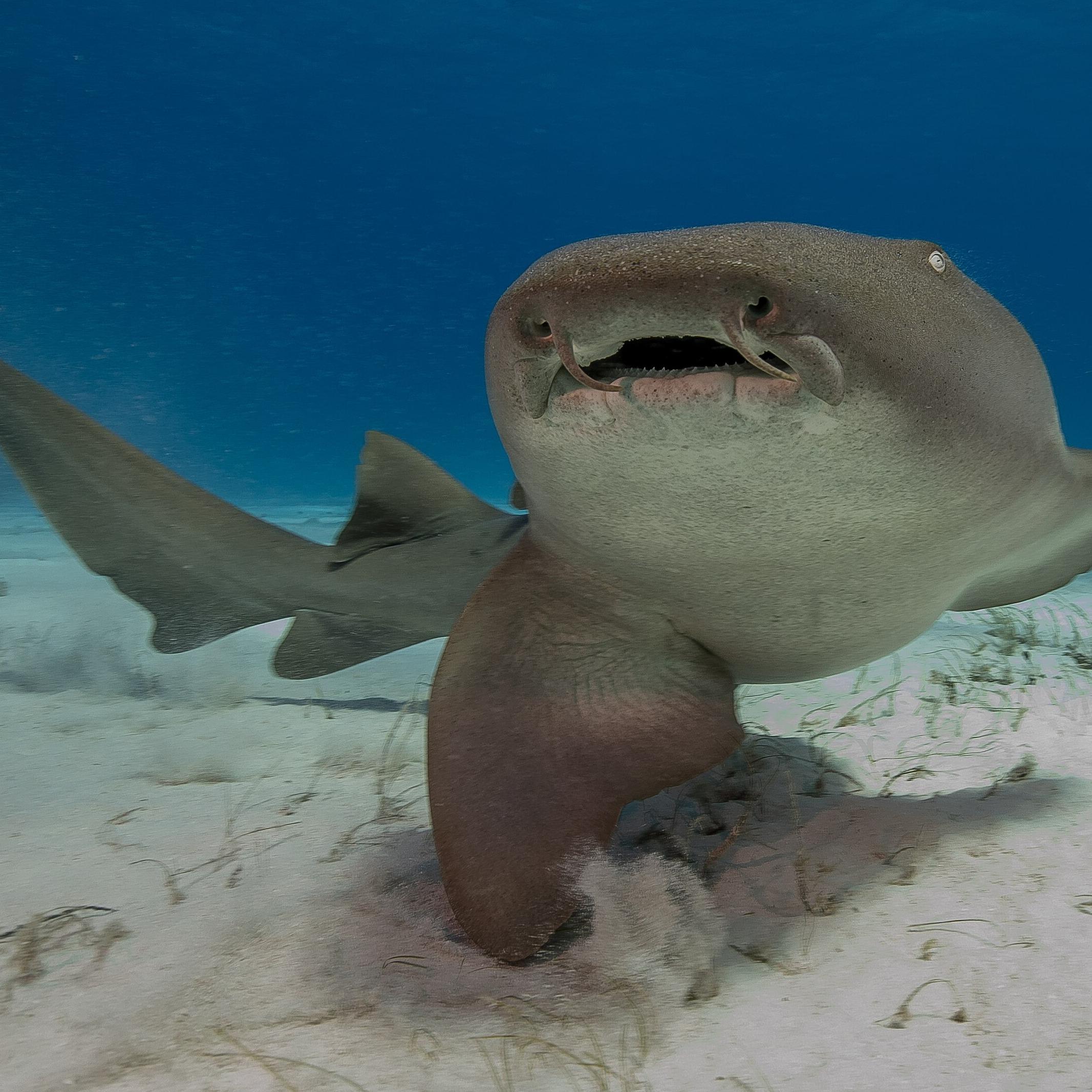
Ginglymostoma cirratum
Nurse Shark
(Bonnaterre, 1788)
Added by
Anonymous Curator
Reviewed by
Under Review
Last modified by
Julia Trouin
TaxonomyBiological classification ranks placing this species within the tree of life, from Kingdom down to Genus.
Ecology & StatusHow this species lives: habitat preferences, diet, behavior, population status, and role in its ecosystem.
OriginWhether the species is native (evolved here), endemic (found only here), or introduced by human activity.
Native
Population TrendDirection of change in population size over time: increasing, stable, decreasing, or unknown.
Decreasing
Breeding SeasonTime of year when this species typically reproduces or flowers.
Summer
Trophic RolePosition in the food chain: producer, herbivore, carnivore, omnivore, decomposer, or parasite.
Carnivore
Recent SightingsWhether this species has been observed in the wild in Costa Rica within recent years.
Yes
Habitat SummaryOverview of the specific ecosystems and environments where this species is found in Costa Rica. Multi-lang
In the Neotropical region and the coasts of the Greater Caribbean, this species is a dominant dweller of warm, shallow-water ecosystems, inhabiting from the intertidal zone down to depths of 130 meters. It shows a strong preference for intricate coral reefs, dense mangroves, seagrass meadows, and sandy channels bordered by volcanic rocks on the Pacific coast of Costa Rica. It demands areas with abundant crevices and underwater caves that offer safe refuge during its long periods of diurnal rest.BehaviourDaily activity patterns, movement, territory use, foraging style, and seasonal behavioral changes. Multi-lang
The ecology of this species is defined by a deeply ingrained circadian rhythm alternating between absolute diurnal lethargy and meticulous nocturnal patrolling. During sunlight hours, they rest in a state of torpor on the sandy substrates of caves or piled atop one another under rocky ledges, demonstrating remarkable placidity unless directly provoked. As night falls, their physiology is drastically activated; they leave the safety of the refuge and transform into formidable olfactory and tactile hunters. They use their sensitive nasal barbels to sweep the seabed, tracking the biochemical fluids of prey buried in the sand or hidden in intricate coral branching. Their undulating and hypnotic swimming allows them to navigate calcareous labyrinths that rigid-bodied sharks simply cannot access.Social ActivitySocial structure: whether the species is solitary, paired, or colonial; hierarchy and communication. Multi-lang
It is one of the most intensely gregarious elasmobranchs documented during the diurnal period. The specimens actively and physically seek bodily contact with other individuals of the same species. In the largest and most protected underwater caves, it is not uncommon to find pyramids or dense clusters of up to 40 individuals piled tightly upon one another, sharing the meager space peacefully, mutually supporting each other to evade currents and maximize collective sensory protection; however, at dusk, the camaraderie ends and they disperse as relentlessly solitary hunters.Feeding GuildWhat the species eats, how it forages or hunts, and its role as a consumer in the food web. Multi-lang
Benthic carnivore and hard-substrate invertivore.Trophic Chain DetailsSpecific interactions in local food webs: prey species, predators, competitors, and scavengers. Multi-lang
It functions as a secondary apex predator in complex benthic food webs. Its presence exerts critical demographic control over booming populations of reef crustaceans, sea urchins (which it crushes without hesitation), elusive octopuses, stingrays, and slow-moving bony fishes inhabiting the substrate. Although as bulky adults they rarely suffer natural predation, pups and smaller juvenile specimens are sporadically devoured by squads of large predatory sharks patrolling perimeter reefs, such as the feared bull shark (Carcharhinus leucas), the massive tiger shark (Galeocerdo cuvier), and the great lemon shark (Negaprion brevirostris).Reproductive BehaviourMating strategies, courtship displays, nesting or spawning behavior, and parental care. Multi-lang
The reproductive dynamic is as fascinating as it is exhausting and complex. They possess an ovoviviparous (aplacental viviparous) development system, where embryos hatch from their horny capsules and develop internally within the mother, feeding purely from their rich yolk sacs before being born alive. Courtship is surprisingly violent and choreographed: multiple males often besiege a single female, swimming vigorously after her and delivering relentless, sustained bites to her tough pectoral fins, dragging or pinning her against the seabed sand. Once the physical submission required to align their bodies is achieved, the male inserts a clasper to execute internal fertilization. Following this prolonged ritual, the female enters an internal gestation period of about 5 to 6 months. Ultimately, she ventures into shallow estuaries or highly sheltered mangroves to give birth to a live litter comprising 20 to 30 miniature pups, spotted replicas barely 30 centimeters long that are immediately abandoned to their primal survival instinct, as the parents offer absolutely no parental care.Physical Measures
Length (cm)
27.0 - 430.0 cm
Weight (Grams)
150 g - 330.00 kg
Lifespan
Sexual MaturityAge at which the individual becomes capable of reproducing for the first time.
10 - 20 Years
Gestation / IncubationDuration from fertilization to birth (mammals) or to hatching (egg-laying species).
5 - 6