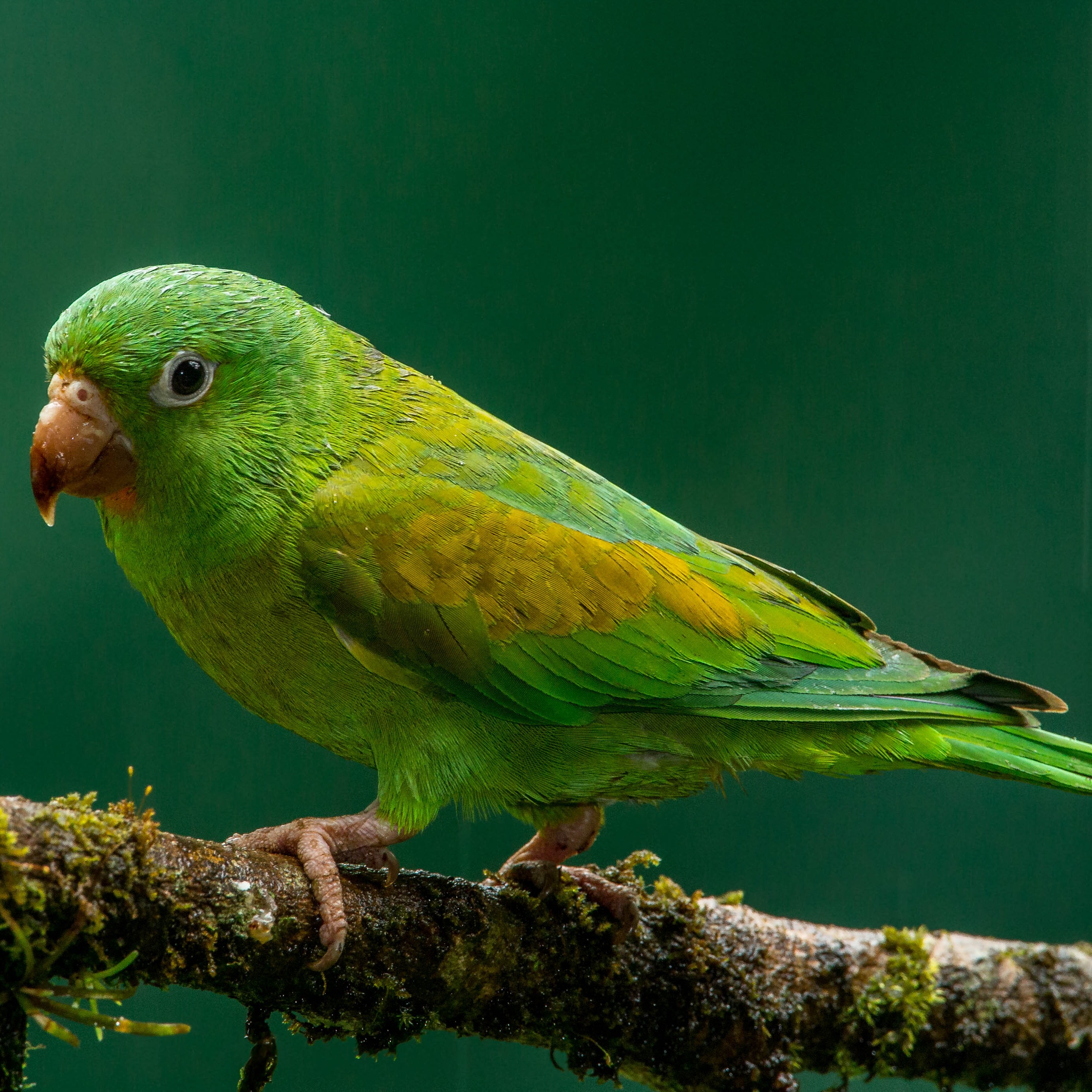
Brotogeris jugularis
Orange-chinned Parakeet
(Müller, 1776)
Added by
Anonymous Curator
Reviewed by
Under Review
Last modified by
Julia Trouin
TaxonomyBiological classification ranks placing this species within the tree of life, from Kingdom down to Genus.
Ecology & StatusHow this species lives: habitat preferences, diet, behavior, population status, and role in its ecosystem.
OriginWhether the species is native (evolved here), endemic (found only here), or introduced by human activity.
Native
Population TrendDirection of change in population size over time: increasing, stable, decreasing, or unknown.
Decreasing
Breeding SeasonTime of year when this species typically reproduces or flowers.
Dry Season
Trophic RolePosition in the food chain: producer, herbivore, carnivore, omnivore, decomposer, or parasite.
Herbivore
Recent SightingsWhether this species has been observed in the wild in Costa Rica within recent years.
Yes
Habitat SummaryOverview of the specific ecosystems and environments where this species is found in Costa Rica. Multi-lang
It is a highly adaptable bird to semi-open and disturbed environments. It prefers forest edges, tropical dry forest, wooded savannas, agricultural areas, and scrublands. It is a frequent and dominant visitor in urban areas, colonizing squares, parks, and gardens with large fruit trees. In Costa Rica, it is ubiquitous and enormously abundant throughout the Pacific slope and the Central Valley, but tends to avoid the dark depths of the very dense rainforests of the Caribbean.BehaviourDaily activity patterns, movement, territory use, foraging style, and seasonal behavioral changes. Multi-lang
It is a highly gregarious and diurnal bird. The noise of a flock feeding in a fig, mango, or balsa tree is deafening; they chatter incessantly with high-pitched, sharp chirps (like 'chree-chree-chree!'). They spend the hot hours sheltered in the foliage, where their green color makes them almost invisible. They are very affectionate with each other (allopreening behavior), mutually preening the feathers on their heads to strengthen social and pair bonds within the flock.Social ActivitySocial structure: whether the species is solitary, paired, or colonial; hierarchy and communication. Multi-lang
Highly social. They sleep in tightly packed communal roosts and fly, feed, and rest in compact, noisy flocks that can range from 10 to over 100 individuals, depending on food availability.Feeding GuildWhat the species eats, how it forages or hunts, and its role as a consumer in the food web. Multi-lang
Herbivore / Canopy Frugivore.Trophic Chain DetailsSpecific interactions in local food webs: prey species, predators, competitors, and scavengers. Multi-lang
Herbivore (Frugivore / Granivore / Nectarivore). Its diet is broad: they consume fleshy fruits (ficus, mangos, nances), weed seeds, flowers, and nectar. They are frequent prey for small forest hawks (like Accipiter striatus), bat falcons, owls, and constrictor snakes that raid their nests or roosts.Reproductive BehaviourMating strategies, courtship displays, nesting or spawning behavior, and parental care. Multi-lang
They are monogamous birds. To nest, they do not collect branches; they strictly depend on existing cavities (old woodpecker holes in dead trunks) or excavate their own nests in arboreal termite mounds. The female lays 4 to 6 white eggs. Incubation is performed almost entirely by the female for about 21 to 25 days, while the male stands guard nearby and feeds her by regurgitation. The chicks are altricial (born blind and featherless) and are devotedly cared for in the dark tunnel until they fledge and fly out, around 6 weeks after hatching.Physical Measures
Length (cm)
17.0 - 20.0 cm
Weight (Grams)
50 g - 65 g
Lifespan
Sexual MaturityAge at which the individual becomes capable of reproducing for the first time.
12 - 24 Months
Gestation / IncubationDuration from fertilization to birth (mammals) or to hatching (egg-laying species).
21 - 25