Costa Rica Species
PlantaeHighest rank in taxonomy. Groups all life into domains: Animalia, Plantae, Fungi, etc.IUCN VUInternational Union for Conservation of Nature — the world authority on species extinction risk, using standardized criteria. — Vulnerable — at high risk of extinction if the current adverse conditions continue.ApprovedCurrent stage of this record in the editorial review workflow. Recent Sighting

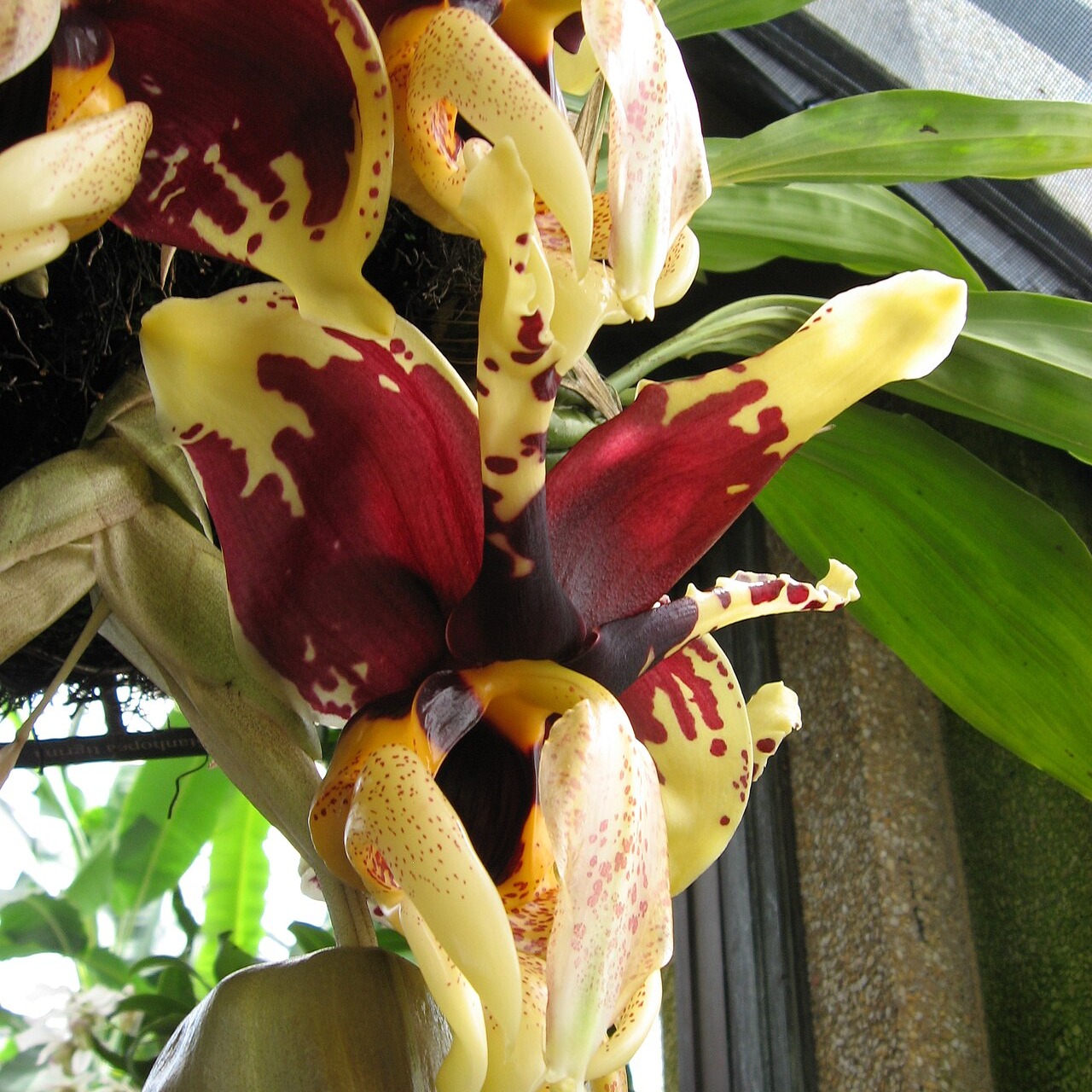
Stanhopea tigrina

Tiger Orchid

Bateman, 1838

Detailed Texts Multi-lang
A visually arresting and structurally mind-bending epiphytic orchid featuring clustered, darkly green, ovoid, and strongly furrowed pseudobulbs, each topped with a single large, leathery, and prominently veined leaf blade. The plant produces sensational, pendulous, downward-growing inflorescences that burst into massive, fleshy flowers up to 20 cm across; these possess pale cream-yellow to rich amber tepals heavily mottled with bold, blood-red to deep maroon-purple tiger stripes, and an incredibly complex, polished, three-part lip that features prominent, curved, horn-like appendages resembling a tiny bull.

Added by

Anonymous Curator

Reviewed by

Under Review

Other Names (Global)Regional and multilingual names used for this species across different countries and languages.

Tiger OrchidToritoEl ToroTiger-Spotted StanhopeaOrquídea Tigre

TaxonomyBiological classification ranks placing this species within the tree of life, from Kingdom down to Genus.

PhylumRank below Kingdom. Groups organisms sharing a fundamental body plan (e.g., Chordata = vertebrates and some invertebrates).Tracheophyta
ClassRank below Phylum. Subdivides by structural traits (e.g., Mammalia, Aves, Reptilia, Insecta).Magnoliopsida
OrderRank below Class. Groups related families sharing common ancestry (e.g., Carnivora, Primates).Asparagales
FamilyRank below Order. Groups closely related genera (e.g., Felidae = cats, Canidae = dogs).Orchidaceae
GenusRank just above Species. The first word in the two-part binomial scientific name.Stanhopea
Taxonomic AuthorityThe scientist who first formally described and published this species, followed by the year of publication.Bateman, 1838
Record Completeness
93%
Coming soon

Ecology & StatusHow this species lives: habitat preferences, diet, behavior, population status, and role in its ecosystem.

OriginWhether the species is native (evolved here), endemic (found only here), or introduced by human activity.

Native

Population TrendDirection of change in population size over time: increasing, stable, decreasing, or unknown.

Decreasing

Trophic RolePosition in the food chain: producer, herbivore, carnivore, omnivore, decomposer, or parasite.

Herbivore

Growth HabitPhysical form and structure of the plant: tree, shrub, herb, vine, epiphyte, aquatic, etc.

--

Leaf TypeLeaf characteristics: deciduous (seasonal shed), evergreen, simple, compound, needle-like, etc.

--

Flowering SeasonTime of year when this species typically reproduces or flowers.

Year Round

Recent SightingsWhether this species has been observed in the wild in Costa Rica within recent years.

Yes

Habitat SummaryOverview of the specific ecosystems and environments where this species is found in Costa Rica. Multi-lang

Endemic to the damp, humid, mid-elevation cloud forests and seasonally moist subtropical montane oak-pine canopy zones of eastern Mexico, primarily distributed along the eastern slopes of the Sierra Madre Oriental in states like Veracruz, Hidalgo, and Puebla. It grows strictly as an epiphyte rooted in mossy mats and rough, humus-rich bark forks of mature hardwood host trees, thriving in heavy shade with high ambient humidity and significant night-to-day temperature drops at elevations between 600 and 1,700 meters.

Light & Water NeedsSunlight intensity and moisture levels this plant needs to grow and reproduce successfully. Multi-lang

Information not available in English. Help us expand this record!

BehaviourDaily activity patterns, movement, territory use, foraging style, and seasonal behavioral changes. Multi-lang

Grows as massive, tightly packed clumps of pseudobulbs that trap falling leaf litter and organic detritus, forming an interactive micro-ecosystem with local canopy invertebrates. The synchronous, explosive summer flowering event yields intense chocolate-vanilla fragrance emissions focused primarily around dawn and midday hours to match euglossine bee thermoregulation flight flights.

Toxicity / UsesToxic compounds present and their documented effects on humans or other organisms. Multi-lang

Information not available in English. Help us expand this record!

Physical Measures

Length (cm)

30.0 - 55.0 cm

Reproductive StructuresFlowers, fruits, and seeds — the reproductive organs and their seasonal appearance.

Flower Photos (Max 2)

No image

Fruit Photos (Max 2)

No image

Evolutionary AdaptationsInherited traits and behaviors that improve the species' survival and reproduction in its specific environment. Multi-lang

Employs an obligate downward-growing (geotropic) inflorescence stalk that drills directly through the bottom of its root-clumping organic debris substrate to suspend flowers out in free space, bypassing thick moss barriers that would choke standard upright spikes.
Produces an overwhelming, highly volatile floral fragrance profile dominated by heavy concentrations of vanillin, phenylethyl alcohol, and lipids, allowing the scent to penetrate dense cloud forest fog banks across vast distances.

Main ThreatsDocumented pressures reducing the population: habitat loss, hunting, disease, climate change, and invasive species. Multi-lang

Severe, direct threat from illegal poaching for local and international black-market collector trade due to its status as arguably the most prized and iconographic species within the genus Stanhopea.
Widespread habitat devastation from clearing of Mexican cloud forests for coffee plantations, cattle ranching, and timber logging, which completely destroys the old-growth canopy structures and hosts required for settlement.

Interesting FactsSurprising or notable facts that highlight what makes this species unique or ecologically important. Multi-lang

The spectacular, heavy flowers exhibit an astonishingly brief individual bloom lifespan, lasting for only 2 to 4 days before structural collapse; the plant offsets this short window via ultra-potent, rapid chemical signaling to its precise pollinators.
Its pollination dynamic involves a physical fall: male orchid bees gathering wax oils lose their footing on the frictionless hypochile hypodermis, fall into the center of the flower, and slide downward, wedging under the column to carry off or deposit the sticky pollinia structure.