
AnimaliaIUCN NEApproved Recent Sighting
Ascalapha odorata
Black witch moth
Linnaeus, 1758
Detailed Texts Multi-lang
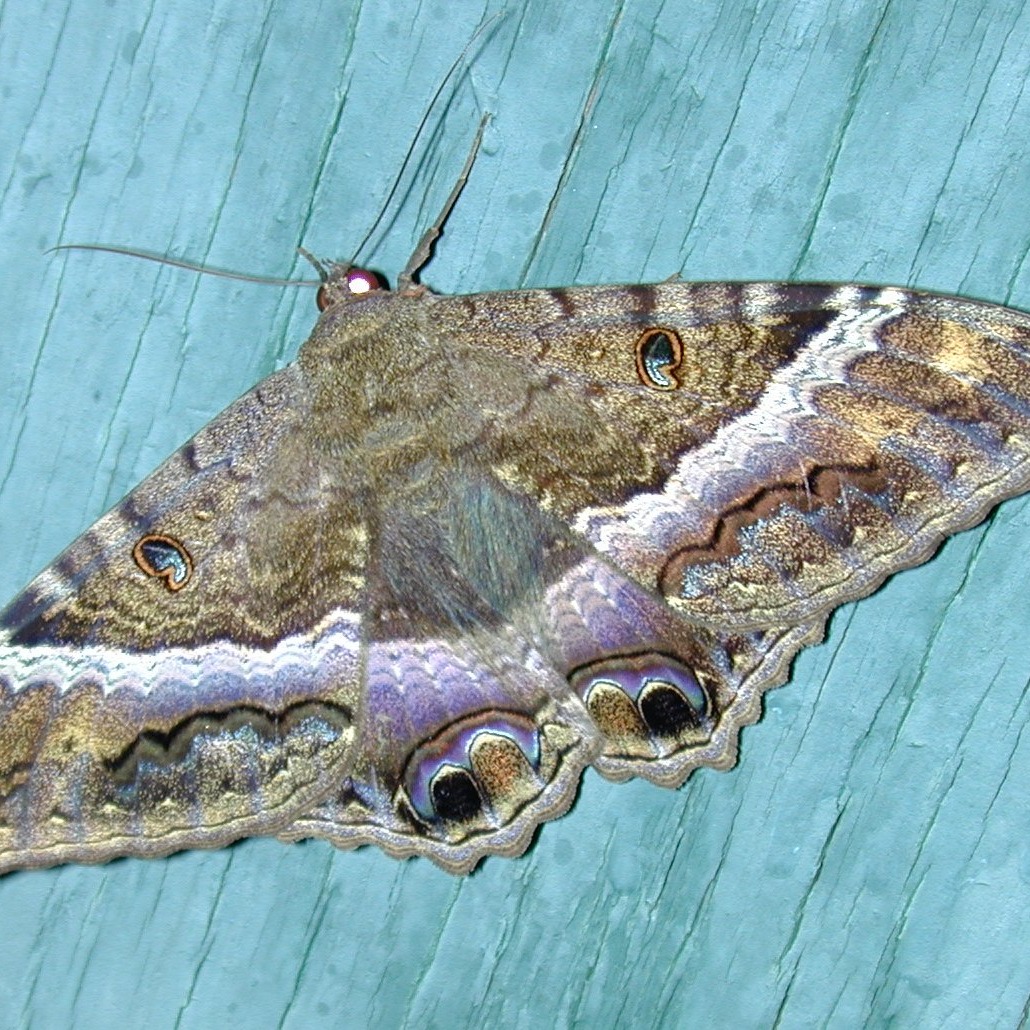
Large nocturnal moth, with dark brown to black wings with iridescent reflections. It is known in many cultures for local superstitions.
Added by
Anonymous Curator
Reviewed by
Julia Trouin
Last modified by
Julia Trouin
Taxonomy
PhylumArthropoda
ClassInsecta
OrderLepidoptera
FamilyErebidae
GenusAscalapha
Taxonomic AuthorityLinnaeus, 1758
Ecology & Status
Origin
Native
Population Trend
Stable
Breeding Season
Year Round
Trophic Role
Herbivore
Recent Sightings
Yes
Habitat Summary Multi-lang
Widely distributed from South America to southern Canada. Inhabits jungles, gardens, and urban areas due to its great migratory capacity.Behaviour Multi-lang
Primarily nocturnal, very active around artificial lights.Social Activity Multi-lang
Generally solitary, although it migrates in large groups.Feeding Guild Multi-lang
Forages on fermented tree sap and ripe fruits.Trophic Chain Details Multi-lang
Larvae feed on legume plants.Reproductive Behaviour Multi-lang
Complete metamorphosis; nocturnal reproductive habits.Physical Measures
Length (cm)
12.0 - 16.0 cm
Offspring per cycle200 - 500
Sexual DimorphismYes
Lifespan
Sexual Maturity
--
Gestation / Incubation
14 - 20
Lifespan Estimated
Males--
Females--
Sexual Dimorphism
Males Multi-lang
Distinctively shaped wing spots and slimmer abdomen.
Females Multi-lang
Larger and with broader wings.
Evolutionary Adaptations Multi-lang
Long-distance migration: Capable of flying hundreds of kilometers to find favorable climatic conditions.
Main Threats Multi-lang
Vulnerable to light pollution and destruction of host plants like acacias.
Interesting Facts Multi-lang
In many regions of Mexico and Central America, it is mistakenly believed that its appearance heralds bad luck or death.