
PlantaeIUCN LCIn Progress Recent Sighting
Tabebuia rosea
Pink Trumpet Tree
(Bertol.) Bertero ex A.DC., 1845
Detailed Texts Multi-lang
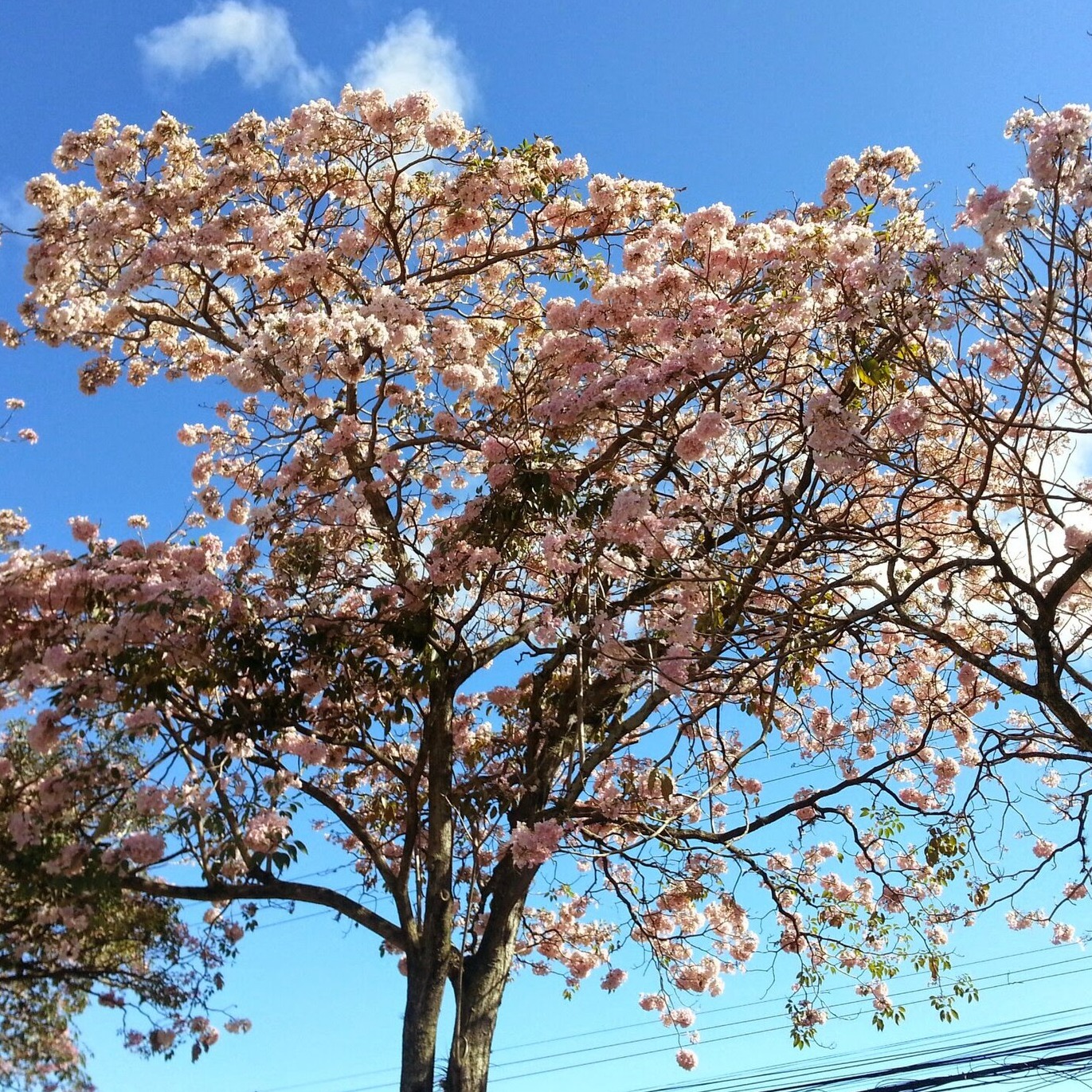
Large tree with a broad crown and bell-shaped flowers ranging from pale pink to lavender. It is one of the most ornamental trees in the region.
Added by
Anonymous Curator
Reviewed by
Under Review
Last modified by
Julia Trouin
Other Names (Global)
 MaquilishuatApamate
 Rosy trumpet treePalo de rosa
Taxonomy
PhylumTracheophyta
ClassMagnoliopsida
OrderLamiales
FamilyBignoniaceae
GenusTabebuia
Taxonomic Authority(Bertol.) Bertero ex A.DC., 1845
Ecology & Status
Origin
Native
Population Trend
Stable
Growth Habit
--
Leaf Type
--
Flowering Season
Dry Season
Recent Sightings
Yes
Habitat Summary Multi-lang
Inhabits dry and humid lowland forests, from sea level up to 1,200 meters. It is common in pastures and urban parks.Light & Water Needs Multi-lang
Information not available in English. Help us expand this record!Behaviour Multi-lang
Deciduous tree that blooms massively during the dry season; its fallen flowers often create colorful carpets on the ground.Toxicity / Uses Multi-lang
Information not available in English. Help us expand this record!Physical Measures
Length (cm)
2000.0 - 3000.0 cm
Reproductive Structures
Flower Photos (Max 2)
No imageFruit Photos (Max 2)
No imageEvolutionary Adaptations Multi-lang
Ability to shed foliage to reduce water loss through transpiration during summer.
Anemochorous seeds adapted for long-distance dispersal via wind.
Main Threats Multi-lang
Intensive use of its wood for light construction and carpentry.
Habitat loss due to extensive urbanization.
Interesting Facts Multi-lang
It is the national tree of El Salvador, where it is known as Maquilishuat.
Its wood is highly prized for being easy to work with and having a color similar to European oak.