
Costa Rica Species
Amazona farinosa
AnimaliaHighest rank in taxonomy. Groups all life into domains: Animalia, Plantae, Fungi, etc.IUCN NTInternational Union for Conservation of Nature — the world authority on species extinction risk, using standardized criteria. — Near Threatened — close to qualifying as Vulnerable. Requires ongoing monitoring.In ProgressCurrent stage of this record in the editorial review workflow. Recent Sighting

Amazona farinosa

Mealy Amazon

(Boddaert, 1783)

Detailed Texts Multi-lang
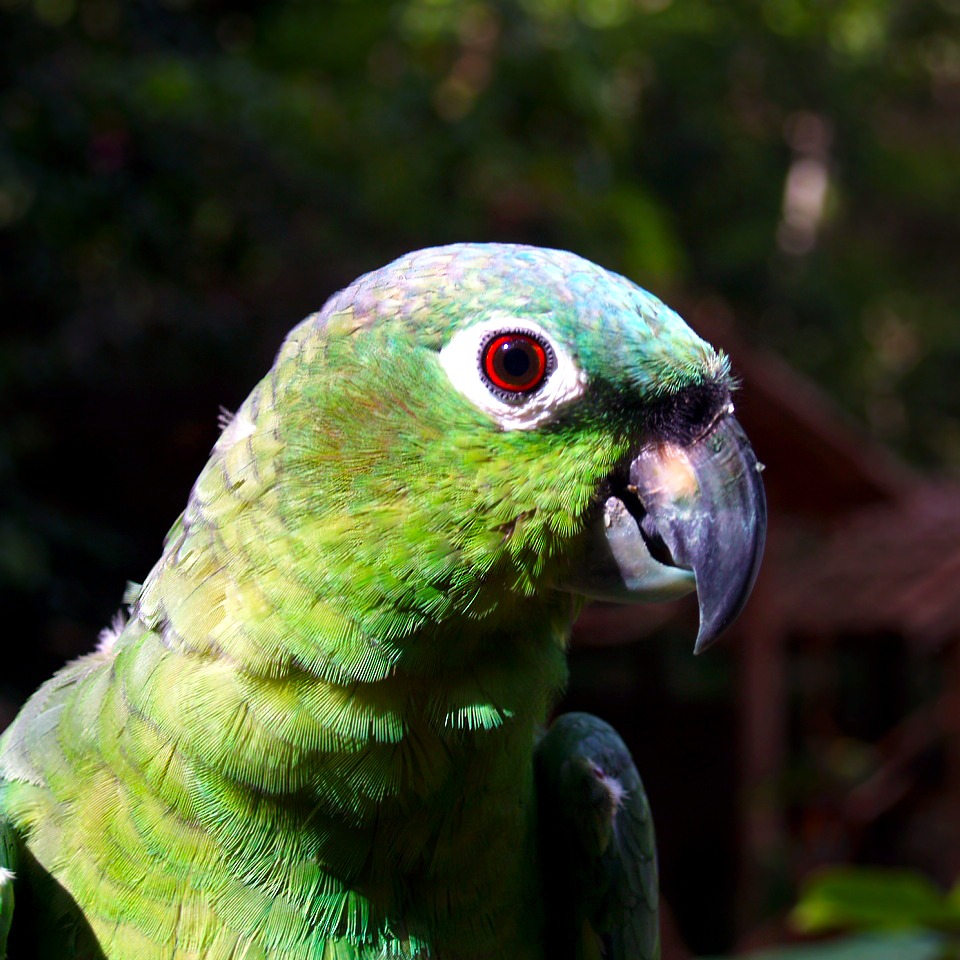
It is the largest parrot of its genus in the Americas. Its plumage is predominantly green, but it is distinguished by a characteristic 'mealy' or powdery grayish-blue dusting on the nape and upper back, giving it a floury appearance. It has a very prominent bare white eye-ring, and a massive, strong dark horn or grayish-colored beak. Depending on the subspecies, it may feature a small yellow patch on the crown. During flight, a vibrant red speculum is visible on the secondary feathers of its wings. Its grey zygodactyl feet are thick and extremely muscular.

Added by

Anonymous Curator

Reviewed by

Under Review

Last modified by

Julia Trouin

TaxonomyBiological classification ranks placing this species within the tree of life, from Kingdom down to Genus.

PhylumRank below Kingdom. Groups organisms sharing a fundamental body plan (e.g., Chordata = vertebrates and some invertebrates).Chordata
ClassRank below Phylum. Subdivides by structural traits (e.g., Mammalia, Aves, Reptilia, Insecta).Aves
OrderRank below Class. Groups related families sharing common ancestry (e.g., Carnivora, Primates).Psittaciformes
FamilyRank below Order. Groups closely related genera (e.g., Felidae = cats, Canidae = dogs).Psittacidae
GenusRank just above Species. The first word in the two-part binomial scientific name.Amazona
Taxonomic AuthorityThe scientist who first formally described and published this species, followed by the year of publication.(Boddaert, 1783)
Record Completeness
93%
Coming soon

Ecology & StatusHow this species lives: habitat preferences, diet, behavior, population status, and role in its ecosystem.

OriginWhether the species is native (evolved here), endemic (found only here), or introduced by human activity.

Native

Population TrendDirection of change in population size over time: increasing, stable, decreasing, or unknown.

Decreasing

Breeding SeasonTime of year when this species typically reproduces or flowers.

--

Trophic RolePosition in the food chain: producer, herbivore, carnivore, omnivore, decomposer, or parasite.

Frugivore

Recent SightingsWhether this species has been observed in the wild in Costa Rica within recent years.

Yes

Habitat SummaryOverview of the specific ecosystems and environments where this species is found in Costa Rica. Multi-lang

It thrives in the canopy of extensive, pristine humid lowland rainforests and tall gallery forests, generally below 1,000 meters in altitude. In Costa Rica, it is deeply associated with the mature forests of the Caribbean and southern Pacific (such as the Osa Peninsula), requiring vast tracts of continuous woodland to sustain its foraging and nesting needs.

BehaviourDaily activity patterns, movement, territory use, foraging style, and seasonal behavioral changes. Multi-lang

They are strongly gregarious birds with habits confined to the canopy. They are rarely seen in the understory. They spend the day foraging in small groups or pairs, but at dusk, they converge in formidable communal roosts that can gather hundreds of individuals, creating a deafening racket before sleeping.

Social ActivitySocial structure: whether the species is solitary, paired, or colonial; hierarchy and communication. Multi-lang

They exhibit a high degree of sociability. Pairs form lifelong monogamous bonds and are inseparable, often flying with wings almost touching in perfect synchrony. Within the large flock, family units maintain their structure and engage in continuous mutual preening.

Feeding GuildWhat the species eats, how it forages or hunts, and its role as a consumer in the food web. Multi-lang

Primarily an upper-canopy frugivore and granivore. Its diet includes a vast diversity of hard seeds, nuts, berries, flowers, and fruits from emergent trees, showing a preference for palm fruits, figs (Ficus), and ceibas. They use their feet like dexterous hands to manipulate food.

Trophic Chain DetailsSpecific interactions in local food webs: prey species, predators, competitors, and scavengers. Multi-lang

They play a crucial role as pre-dispersal seed predators of large canopy fruits. However, their sloppy eating habits (dropping half-eaten pieces of fruit and seeds) are vital to subsidizing the diet of terrestrial herbivores like peccaries, tapirs, and agoutis. They are preyed upon by large forest raptors like the Harpy Eagle (Harpia harpyja).

Reproductive BehaviourMating strategies, courtship displays, nesting or spawning behavior, and parental care. Multi-lang

They nest in deep natural cavities that form in the trunks of very large dead or living trees. They do not build a nest per se; the female deposits 2 to 3 white eggs directly on the wood dust at the bottom of the cavity. The female is solely responsible for incubation (approx. 28 days), during which the male brings her regurgitated food. The altricial chicks remain in the nest for about 8 weeks before fledging.

Physical Measures

Length (cm)

38.0 - 41.0 cm

Weight (Grams)

540 g - 790 g

Offspring per cycleTypical number of young (live births, eggs, or seeds) produced by one adult in a single reproductive event or breeding season.2 - 3
Sexual DimorphismObservable physical differences between males and females of the same species (e.g., size, coloration, features).No

Lifespan

Sexual MaturityAge at which the individual becomes capable of reproducing for the first time.

4 - 5 Years

Gestation / IncubationDuration from fertilization to birth (mammals) or to hatching (egg-laying species).

25 - 28

Lifespan EstimatedExpected duration of life from birth to natural death under wild conditions.
Males40 - 60 Years
Females40 - 60 Years

Evolutionary AdaptationsInherited traits and behaviors that improve the species' survival and reproduction in its specific environment. Multi-lang

Powder Down: Their feathers produce a fine keratin powder that covers their body, providing a unique 'floury' camouflage against lichen-covered branches and acting as a powerful waterproofing agent in dense, humid rainforests.
High-Torque Beak: Equipped with a massive, highly leveraged beak capable of exerting immense pressure, allowing them to crack open extremely hard seed pods (like those of Lecythis trees) that are impenetrable to most fauna.

Main ThreatsDocumented pressures reducing the population: habitat loss, hunting, disease, climate change, and invasive species. Multi-lang

Habitat Loss via Deforestation: Being a species so dependent on uninterrupted tracts of primary forest and giant trees for nesting, commercial logging and agricultural expansion destroy their basic biological requirements.
Illegal Wildlife Trade: Although not as colorful as macaws, their impressive size and docile, calm temperament make them highly coveted in the domestic and international black market for pets.

Interesting FactsSurprising or notable facts that highlight what makes this species unique or ecologically important. Multi-lang

The Gentle Giant: In aviculture and among field biologists, they are known as the 'gentle giants' due to their surprisingly relaxed and less aggressive behavior compared to other, more high-strung parrot species.
Long-Distance Communication: They have a powerful vocal repertoire; their resonant, rolling calls, often described phonetically as a loud 'cho-co-la-te', can travel several kilometers across the canopy to coordinate the flock.