
Costa Rica Species
AnimaliaHighest rank in taxonomy. Groups all life into domains: Animalia, Plantae, Fungi, etc.IUCN EXInternational Union for Conservation of Nature — the world authority on species extinction risk, using standardized criteria. — Extinct — no individual of the species has been found after exhaustive surveys. Gone permanently.ApprovedCurrent stage of this record in the editorial review workflow.

Incilius periglenes

Golden Toad

Savage, 1966

Detailed Texts Multi-lang
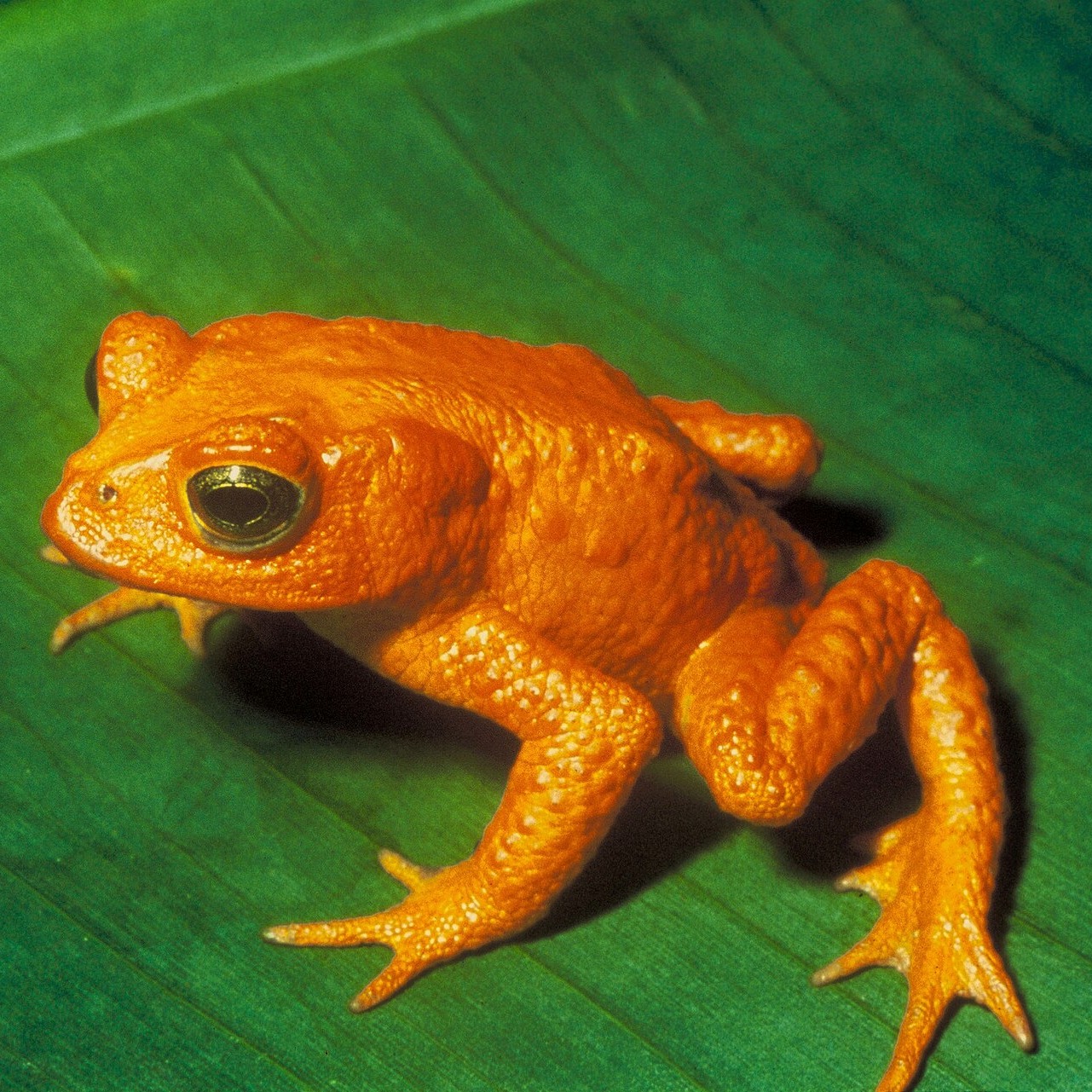
A small, extinct true toad famous for its extreme and brilliant color differences between sexes. The body surface was relatively smooth with warty granules, and they lacked a tympanum (external ear membrane) and vocal sacs.

Added by

Anonymous Curator

Reviewed by

Under Review

Other Names (Global)Regional and multilingual names used for this species across different countries and languages.

Sapo dorado de MonteverdeMonte Verde toadAlajuela toadOrange toad

TaxonomyBiological classification ranks placing this species within the tree of life, from Kingdom down to Genus.

PhylumRank below Kingdom. Groups organisms sharing a fundamental body plan (e.g., Chordata = vertebrates and some invertebrates).Chordata
ClassRank below Phylum. Subdivides by structural traits (e.g., Mammalia, Aves, Reptilia, Insecta).Amphibia
OrderRank below Class. Groups related families sharing common ancestry (e.g., Carnivora, Primates).Anura
FamilyRank below Order. Groups closely related genera (e.g., Felidae = cats, Canidae = dogs).Bufonidae
GenusRank just above Species. The first word in the two-part binomial scientific name.Incilius
Taxonomic AuthorityThe scientist who first formally described and published this species, followed by the year of publication.Savage, 1966
Record Completeness
94%
Coming soon

Ecology & StatusHow this species lives: habitat preferences, diet, behavior, population status, and role in its ecosystem.

OriginWhether the species is native (evolved here), endemic (found only here), or introduced by human activity.

Native

Population TrendDirection of change in population size over time: increasing, stable, decreasing, or unknown.

Stable

Breeding SeasonTime of year when this species typically reproduces or flowers.

Year Round

Trophic RolePosition in the food chain: producer, herbivore, carnivore, omnivore, decomposer, or parasite.

Carnivore

Recent SightingsWhether this species has been observed in the wild in Costa Rica within recent years.

No

Habitat SummaryOverview of the specific ecosystems and environments where this species is found in Costa Rica. Multi-lang

Endemic to an extremely restricted tropical montane region, specifically elfin cloud forests characterized by high humidity, constant mist, dense mosses, ferns, and epiphytes.

BehaviourDaily activity patterns, movement, territory use, foraging style, and seasonal behavioral changes. Multi-lang

Secretive and subterranean for most of the year. They only emerged during the onset of the wet spring season to breed in temporary pools formed by heavy rains and forest tree roots.

Social ActivitySocial structure: whether the species is solitary, paired, or colonial; hierarchy and communication. Multi-lang

Solitary for over 90% of the year while underground. They became intensely gregarious and highly competitive exclusively during the few weeks of the explosive spring mating assemblies.

Feeding GuildWhat the species eats, how it forages or hunts, and its role as a consumer in the food web. Multi-lang

Terrestrial forest-floor insectivore.

Trophic Chain DetailsSpecific interactions in local food webs: prey species, predators, competitors, and scavengers. Multi-lang

As small predators, they fed on a variety of small forest floor invertebrates, including insects and spiders. They were preyed upon by birds, larger reptiles, and small forest mammals.

Reproductive BehaviourMating strategies, courtship displays, nesting or spawning behavior, and parental care. Multi-lang

Explosive seasonal breeders. Mating occurred via amplexus in shallow temporary rain pools. Competition was fierce due to intense male-biased numbers, with random scramble scrambles for scarce females.

Physical Measures

Length (cm)

3.9 - 5.6 cm

Weight (Grams)

8 g - 15 g

Offspring per cycleTypical number of young (live births, eggs, or seeds) produced by one adult in a single reproductive event or breeding season.200 - 400
Sexual DimorphismObservable physical differences between males and females of the same species (e.g., size, coloration, features).Yes

Lifespan

Sexual MaturityAge at which the individual becomes capable of reproducing for the first time.

12 - 24 Months

Gestation / IncubationDuration from fertilization to birth (mammals) or to hatching (egg-laying species).

35

Lifespan EstimatedExpected duration of life from birth to natural death under wild conditions.
Males6 - 12 Years
Females6 - 12 Years

Sexual DimorphismPhysical differences in size, coloration, or morphology between males and females of this species.

Males Multi-lang

Males were noticeably smaller, possessed slightly longer limbs, and displayed a spectacular, uniform fluorescent bright orange-yellow coloration across their entire body.

Females Multi-lang

Females were larger and drastically different in color, presenting a dark olive-green to black dorsal coat mottled with large, bright scarlet spots outlined in yellow.

Evolutionary AdaptationsInherited traits and behaviors that improve the species' survival and reproduction in its specific environment. Multi-lang

Fossorial lifestyle, spending most of the year underground inside burrows or root systems to survive the dry periods in the elfin forest.
Development of prominent, sharp mating claws and elongated hindlimbs in males to successfully secure females during explosive scramble competition.

Main ThreatsDocumented pressures reducing the population: habitat loss, hunting, disease, climate change, and invasive species. Multi-lang

Climate change and extreme regional droughts (such as the 1987 El Niño event) that dried out vital breeding pools, causing reproductive failure.
Chytridiomycosis, a devastating fungal infection caused by Batrachochytrium dendrobatidis, which severely affected small, isolated amphibian populations.

Interesting FactsSurprising or notable facts that highlight what makes this species unique or ecologically important. Multi-lang

Due to a severe imbalance in the operational sex ratio (up to 8 males per female), desperate males would form 'toad balls' of 4 to 10 individuals, clinging together to compete for a single female.
The last verified individual ever seen alive in the wild was a single, solitary brilliant orange male, spotted on May 15, 1989.