
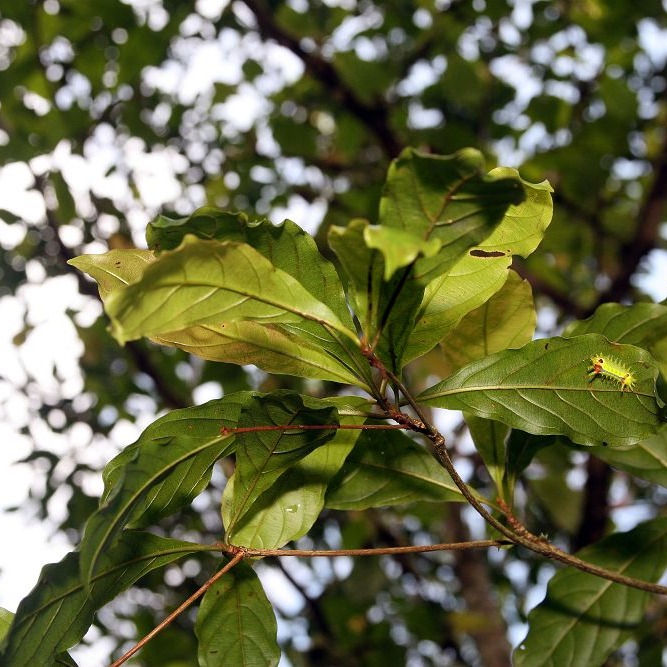
Terminalia amazonia
Coral Oak / Nargusta
(J.F.Gmel.) Exell, 1935
Added by
Anonymous Curator
Reviewed by
Under Review
Last modified by
Julia Trouin
TaxonomyBiological classification ranks placing this species within the tree of life, from Kingdom down to Genus.
Ecology & StatusHow this species lives: habitat preferences, diet, behavior, population status, and role in its ecosystem.
OriginWhether the species is native (evolved here), endemic (found only here), or introduced by human activity.
Native
Population TrendDirection of change in population size over time: increasing, stable, decreasing, or unknown.
Decreasing
Trophic RolePosition in the food chain: producer, herbivore, carnivore, omnivore, decomposer, or parasite.
--
Growth HabitPhysical form and structure of the plant: tree, shrub, herb, vine, epiphyte, aquatic, etc.
--
Leaf TypeLeaf characteristics: deciduous (seasonal shed), evergreen, simple, compound, needle-like, etc.
--
Flowering SeasonTime of year when this species typically reproduces or flowers.
--
Recent SightingsWhether this species has been observed in the wild in Costa Rica within recent years.
Yes
Habitat SummaryOverview of the specific ecosystems and environments where this species is found in Costa Rica. Multi-lang
It is a highly versatile tree that thrives in both undisturbed primary forests and advanced secondary forest areas. It reaches its maximum development in humid and very humid tropical lowland forests, typically from sea level up to 1,200 meters (4,000 feet) in elevation. It possesses a remarkable tolerance to different soil types, growing vigorously on both well-drained, steep slopes and in valleys with heavy, occasionally waterlogged clay soils. In Costa Rica, it forms part of the dominant upper canopy in vast areas of the Southern Pacific, the Northern Zone, and the Caribbean.Light & Water NeedsSunlight intensity and moisture levels this plant needs to grow and reproduce successfully. Multi-lang
Information not available in English. Help us expand this record!BehaviourDaily activity patterns, movement, territory use, foraging style, and seasonal behavioral changes. Multi-lang
The phenology of the Amarillón is an ecosystem reset event. During the harsh dry season (February to May), this emergent tree drops its old reddish leaves for a short period (becoming semi-deciduous) as a water-saving strategy. At that exact moment of bareness, the tree bursts into yellow inflorescences that completely cover the crown, producing a sudden feast of nectar during the most famine-stricken time of the forest for flying insects. As soon as flowering ends, its five-winged samaras are released exactly during the most intensely windy months of the year (the 'trade winds'), guaranteeing that they fall on distant deforested lands ready to germinate with the burst of the May rains.Toxicity / UsesToxic compounds present and their documented effects on humans or other organisms. Multi-lang
Information not available in English. Help us expand this record!Physical Measures
Length (cm)
2000.0 - 5000.0 cm