
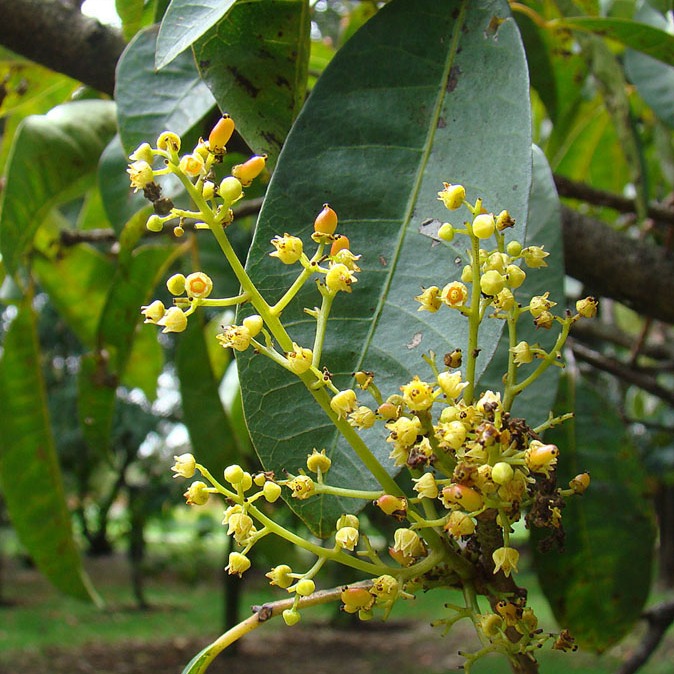
Mauria heterophylla
Copalchí
Ruiz & Pav., 1802
Added by
Anonymous Curator
Reviewed by
Under Review
Last modified by
Julia Trouin
TaxonomyBiological classification ranks placing this species within the tree of life, from Kingdom down to Genus.
Ecology & StatusHow this species lives: habitat preferences, diet, behavior, population status, and role in its ecosystem.
OriginWhether the species is native (evolved here), endemic (found only here), or introduced by human activity.
Native
Population TrendDirection of change in population size over time: increasing, stable, decreasing, or unknown.
Decreasing
Trophic RolePosition in the food chain: producer, herbivore, carnivore, omnivore, decomposer, or parasite.
--
Growth HabitPhysical form and structure of the plant: tree, shrub, herb, vine, epiphyte, aquatic, etc.
--
Leaf TypeLeaf characteristics: deciduous (seasonal shed), evergreen, simple, compound, needle-like, etc.
--
Flowering SeasonTime of year when this species typically reproduces or flowers.
--
Recent SightingsWhether this species has been observed in the wild in Costa Rica within recent years.
Yes
Habitat SummaryOverview of the specific ecosystems and environments where this species is found in Costa Rica. Multi-lang
It is a characteristic tree of premontane and lower montane forests, inhabiting an altitudinal range that generally oscillates between 1,000 and 2,500 meters above sea level. It thrives in the cold, misty, and moisture-saturated environment of cloud forests. It is often found on steep slopes, forest edges, and areas of advanced secondary regeneration, where its branches are usually densely covered in mosses, bromeliads, and other epiphytes. It requires well-drained volcanic soils rich in organic matter.Light & Water NeedsSunlight intensity and moisture levels this plant needs to grow and reproduce successfully. Multi-lang
Information not available in English. Help us expand this record!BehaviourDaily activity patterns, movement, territory use, foraging style, and seasonal behavioral changes. Multi-lang
In the cloud forest ecosystem, flowering and fruiting occur with strict seasonal synchrony. The flowers emerge at the end of the dry season (or the short dry window in the mountains), allowing insect pollinators to work freely. The fruits ripen mid-year, coinciding with heavy rains. The tree grows upright, aggressively competing for light in the dense mid-stratum of the mountainous jungle. Despite its toxicity, its rough bark serves as an indispensable anchoring support for miniature orchids, ferns, and thick mosses.Toxicity / UsesToxic compounds present and their documented effects on humans or other organisms. Multi-lang
Information not available in English. Help us expand this record!Physical Measures
Length (cm)
500.0 - 2000.0 cm