Buteogallus anthracinus
Common Black Hawk
(Deppe, 1830)
Added by
Anonymous Curator
Reviewed by
Under Review
Last modified by
Julia Trouin
TaxonomyBiological classification ranks placing this species within the tree of life, from Kingdom down to Genus.
Ecology & StatusHow this species lives: habitat preferences, diet, behavior, population status, and role in its ecosystem.
OriginWhether the species is native (evolved here), endemic (found only here), or introduced by human activity.
Native
Population TrendDirection of change in population size over time: increasing, stable, decreasing, or unknown.
Decreasing
Breeding SeasonTime of year when this species typically reproduces or flowers.
Dry Season
Trophic RolePosition in the food chain: producer, herbivore, carnivore, omnivore, decomposer, or parasite.
Carnivore
Recent SightingsWhether this species has been observed in the wild in Costa Rica within recent years.
Yes
Habitat SummaryOverview of the specific ecosystems and environments where this species is found in Costa Rica. Multi-lang
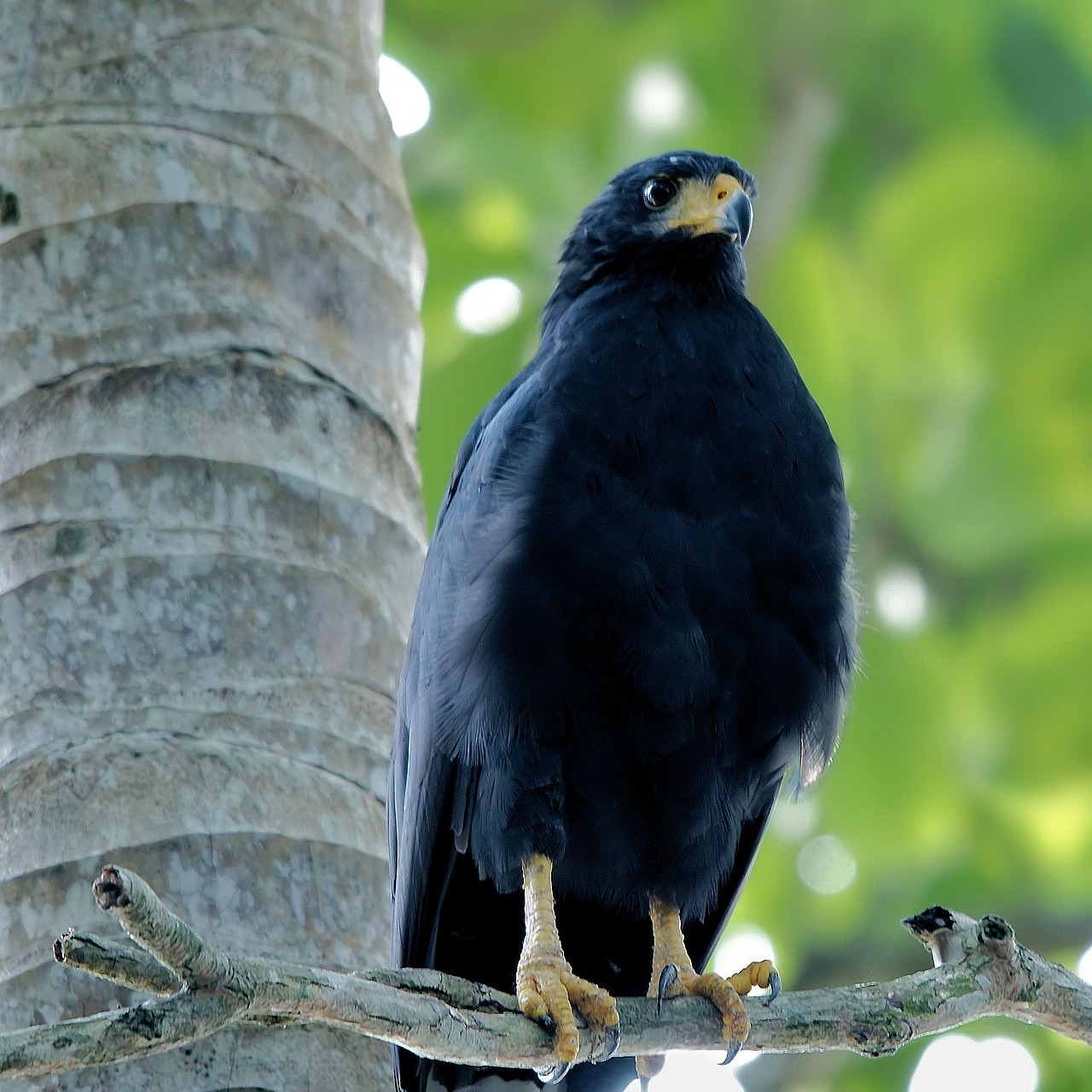
It is a raptor closely associated with water. It inhabits almost exclusively coastal and riparian ecosystems, showing a strong preference for mangrove forests, gallery forests, estuaries, wooded swamps, and margins of slow rivers. It avoids dense mountainous forests and dry, waterless plains. In Costa Rica, it is one of the most common raptors along the Pacific and Caribbean coasts, being the undisputed king of the mangroves of the Gulf of Nicoya, Térraba-Sierpe, and the lower Caribbean coast.BehaviourDaily activity patterns, movement, territory use, foraging style, and seasonal behavioral changes. Multi-lang
It is a static ambush hunter. It spends long hours perched silently on low, shaded branches overhanging the water or mangrove mud. When it detects movement, it drops down in a short, direct flight, snatching the prey with its talons without fully submerging. Despite being a large raptor, it can be quite passive and tolerant of human proximity if undisturbed on its perch. Occasionally, they are seen soaring high in circles on thermal currents, calling loudly.Social ActivitySocial structure: whether the species is solitary, paired, or colonial; hierarchy and communication. Multi-lang
It is a generally solitary bird or found in pairs during the breeding season. They are highly territorial regarding their feeding zones along the river or estuary.Feeding GuildWhat the species eats, how it forages or hunts, and its role as a consumer in the food web. Multi-lang
Carnivore / Crustacivore.Trophic Chain DetailsSpecific interactions in local food webs: prey species, predators, competitors, and scavengers. Multi-lang
Carnivorous mesopredator of coastal ecosystems. Although terrestrial and semi-aquatic crabs dominate its diet, it also hunts stranded fish, frogs, small water snakes, lizards, and chicks of other waterbirds. Healthy adults have few natural predators. Eggs and chicks can fall victim to raccoons, white-faced capuchin monkeys, snakes, and larger raptors.Reproductive BehaviourMating strategies, courtship displays, nesting or spawning behavior, and parental care. Multi-lang
They are monogamous. Both members of the pair build a bulky nest made of sticks and branches, usually lined with green leaves, located in a high fork of a tree (very often a large mangrove) near or directly over the water. The female lays 1 or 2 white eggs with brown spots. Incubation takes about 37 to 39 days. The chicks are fed in the nest (mainly with torn pieces of crab meat) and fledge between 43 and 50 days of age.Physical Measures
Length (cm)
43.0 - 53.0 cm
Weight (Grams)
630 g - 1.20 kg
Lifespan
Sexual MaturityAge at which the individual becomes capable of reproducing for the first time.
24 - 36 Months
Gestation / IncubationDuration from fertilization to birth (mammals) or to hatching (egg-laying species).
37 - 39