
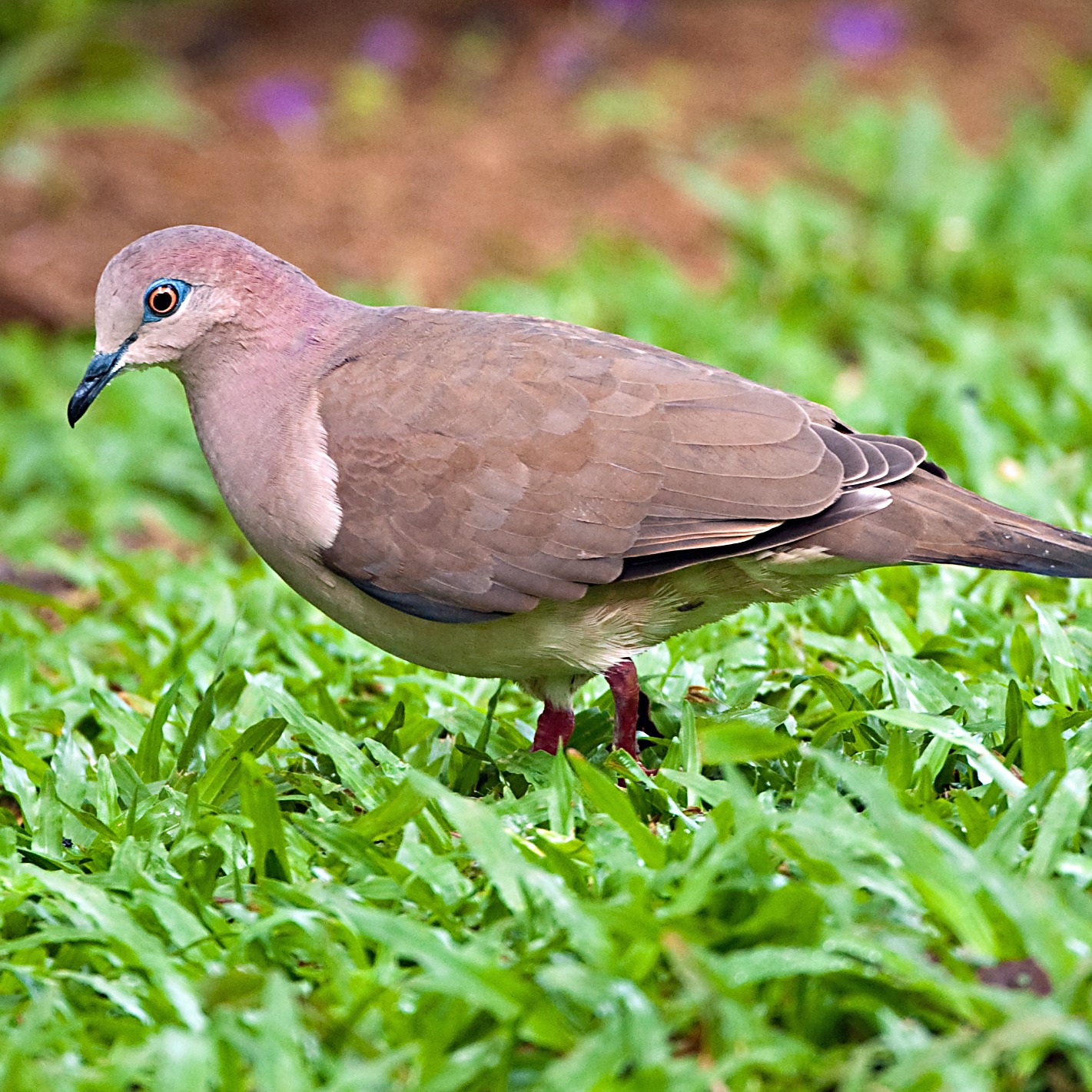
Leptotila verreauxi
White-tipped Dove
(Bonaparte, 1855)
Added by
Anonymous Curator
Reviewed by
Under Review
Last modified by
Julia Trouin
TaxonomyBiological classification ranks placing this species within the tree of life, from Kingdom down to Genus.
Ecology & StatusHow this species lives: habitat preferences, diet, behavior, population status, and role in its ecosystem.
OriginWhether the species is native (evolved here), endemic (found only here), or introduced by human activity.
Native
Population TrendDirection of change in population size over time: increasing, stable, decreasing, or unknown.
Stable
Breeding SeasonTime of year when this species typically reproduces or flowers.
Year Round
Trophic RolePosition in the food chain: producer, herbivore, carnivore, omnivore, decomposer, or parasite.
Herbivore
Recent SightingsWhether this species has been observed in the wild in Costa Rica within recent years.
Yes
Habitat SummaryOverview of the specific ecosystems and environments where this species is found in Costa Rica. Multi-lang
Unlike other forest doves, it avoids the dark, dense interior of mature primary forests. It prefers forest edges, dry deciduous forests, scrubby savannas, coffee plantations, dense secondary growth, and even suburban gardens and large parks. It spends most of its time foraging under the protective cover of shrubs. In Costa Rica, it is exceedingly abundant on the Pacific slope, the Central Valley, and the dry northwestern lowlands.BehaviourDaily activity patterns, movement, territory use, foraging style, and seasonal behavioral changes. Multi-lang
It is a bird of highly terrestrial and stealthy habits. It forages by walking slowly through the leaf litter under the thicket, rhythmically bobbing its head with each step. It searches for seeds, fallen berries, and minor insects by flipping leaves with its bill (they rarely use their feet to scratch). It avoids exposed open spaces; if it must cross a road, it does so by walking quickly. When it feels threatened and doesn't flush into flight, it 'freezes' in place, relying on its cryptic plumage.Social ActivitySocial structure: whether the species is solitary, paired, or colonial; hierarchy and communication. Multi-lang
It is a bird of markedly solitary habits. It is usually observed foraging alone, or in quiet pairs. It very rarely forms flocks, except when many doves congregate temporarily under a tree that is dropping abundant fruit or seeds.Feeding GuildWhat the species eats, how it forages or hunts, and its role as a consumer in the food web. Multi-lang
Herbivore / Ground forager.Trophic Chain DetailsSpecific interactions in local food webs: prey species, predators, competitors, and scavengers. Multi-lang
Herbivore / Strict Granivore. Its diet consists mainly of seeds (grasses and legumes), small fruits that fall to the ground, and crop shoots, although it ingests some insects incidentally. They are a very important prey for forest hawks (like the bicolored hawk or collared forest-falcon), owls, large snakes, coatis, and small felines (margay, ocelot).Reproductive BehaviourMating strategies, courtship displays, nesting or spawning behavior, and parental care. Multi-lang
They have a very prolonged breeding season. Like many doves, they build an extremely flimsy nest, a thin, untidy platform of dry twigs, which can often be seen through from below. It is placed in the branches of a dense shrub or low tree (usually between 1.5 and 3 meters off the ground). The female invariably lays 2 pure white eggs. Both parents share incubation (about 14 days) and feed the fragile squabs with crop milk. The chicks grow extraordinarily fast and leave the nest just 15 days after hatching.Physical Measures
Length (cm)
26.0 - 30.0 cm
Weight (Grams)
130 g - 180 g
Lifespan
Sexual MaturityAge at which the individual becomes capable of reproducing for the first time.
6 - 12 Months
Gestation / IncubationDuration from fertilization to birth (mammals) or to hatching (egg-laying species).
13 - 14