
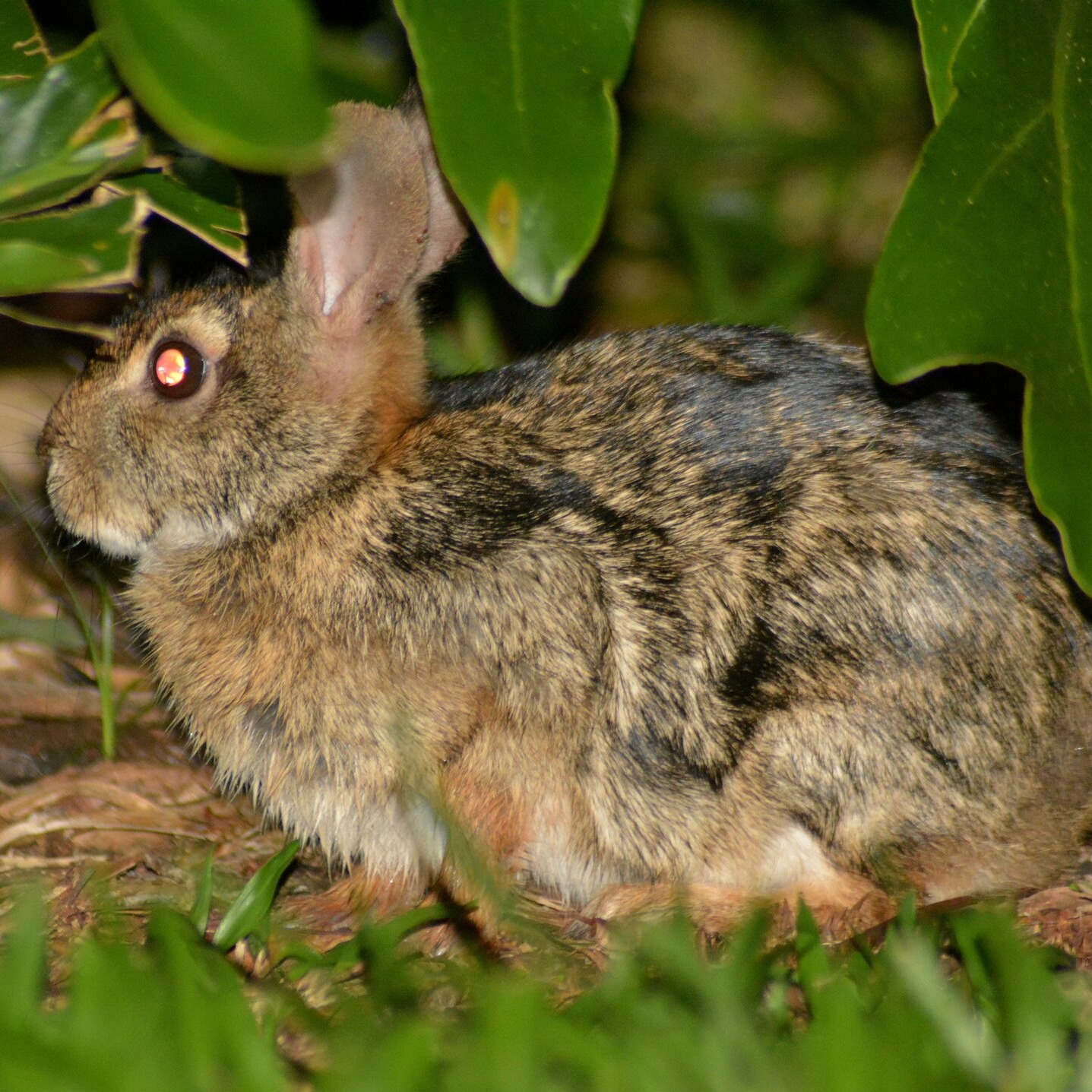
Sylvilagus brasiliensis
Tapeti / Brazilian Rabbit
(Linnaeus, 1758)
Added by
Anonymous Curator
Reviewed by
Under Review
Last modified by
Julia Trouin
TaxonomyBiological classification ranks placing this species within the tree of life, from Kingdom down to Genus.
Ecology & StatusHow this species lives: habitat preferences, diet, behavior, population status, and role in its ecosystem.
OriginWhether the species is native (evolved here), endemic (found only here), or introduced by human activity.
Native
Population TrendDirection of change in population size over time: increasing, stable, decreasing, or unknown.
Decreasing
Breeding SeasonTime of year when this species typically reproduces or flowers.
Year Round
Trophic RolePosition in the food chain: producer, herbivore, carnivore, omnivore, decomposer, or parasite.
Herbivore
Recent SightingsWhether this species has been observed in the wild in Costa Rica within recent years.
Yes
Habitat SummaryOverview of the specific ecosystems and environments where this species is found in Costa Rica. Multi-lang
It is a specialist of closed habitats, inhabiting wet tropical rainforests, gallery forests, swampy areas, and riparian zones with very dense vegetation. Unlike other rabbits, it actively avoids open pastures and savannas devoid of shrub cover. In Costa Rica, it is found from lowlands to mid-elevations (and some related lineages in paramos), strictly depending on thickets to evade predators.BehaviourDaily activity patterns, movement, territory use, foraging style, and seasonal behavioral changes. Multi-lang
It is a strictly solitary mammal with markedly crepuscular and nocturnal habits. During the day, it remains motionless, hidden in shallow beds of leaf litter or roots. At dusk, it actively forages, often traveling the same trails and paths in the brush, making them sometimes predictable to certain predators. Its diet is strictly herbivorous, utilizing green leaves, understory plant shoots, tender stems, and occasionally the bark of young trees. It plays an incalculable role in the tropical forest food web by converting plant biomass into food for carnivores.Social ActivitySocial structure: whether the species is solitary, paired, or colonial; hierarchy and communication. Multi-lang
Strictly solitary. Adults only encounter each other during the brief courtship and mating period.Feeding GuildWhat the species eats, how it forages or hunts, and its role as a consumer in the food web. Multi-lang
Herbivore / Folivore.Trophic Chain DetailsSpecific interactions in local food webs: prey species, predators, competitors, and scavengers. Multi-lang
Primary consumer. It constitutes one of the most important prey items for medium-sized felines (ocelot, jaguarundi, margay), large snakes (boas, fer-de-lance), mustelids (tayras), and nocturnal birds of prey (owls).Reproductive BehaviourMating strategies, courtship displays, nesting or spawning behavior, and parental care. Multi-lang
It breeds continuously throughout the year in the tropical climate. Gestation is about 28 to 30 days. Unlike northern species, its litters are much smaller (usually 1 or 2 young, rarely 3). The female prepares a shallow nest lined with leaf litter and fur plucked from her own body to hide the young, visiting them briefly at night to nurse.Physical Measures
Length (cm)
30.0 - 42.0 cm
Weight (Grams)
800 g - 1.20 kg
Lifespan
Sexual MaturityAge at which the individual becomes capable of reproducing for the first time.
5 - 6 Months
Gestation / IncubationDuration from fertilization to birth (mammals) or to hatching (egg-laying species).
28 - 30