
FungiIUCN NEIn Progress Recent Sighting
Phallus indusiatus
Bridal Veil Fungus
Vent., 1798
Detailed Texts Multi-lang
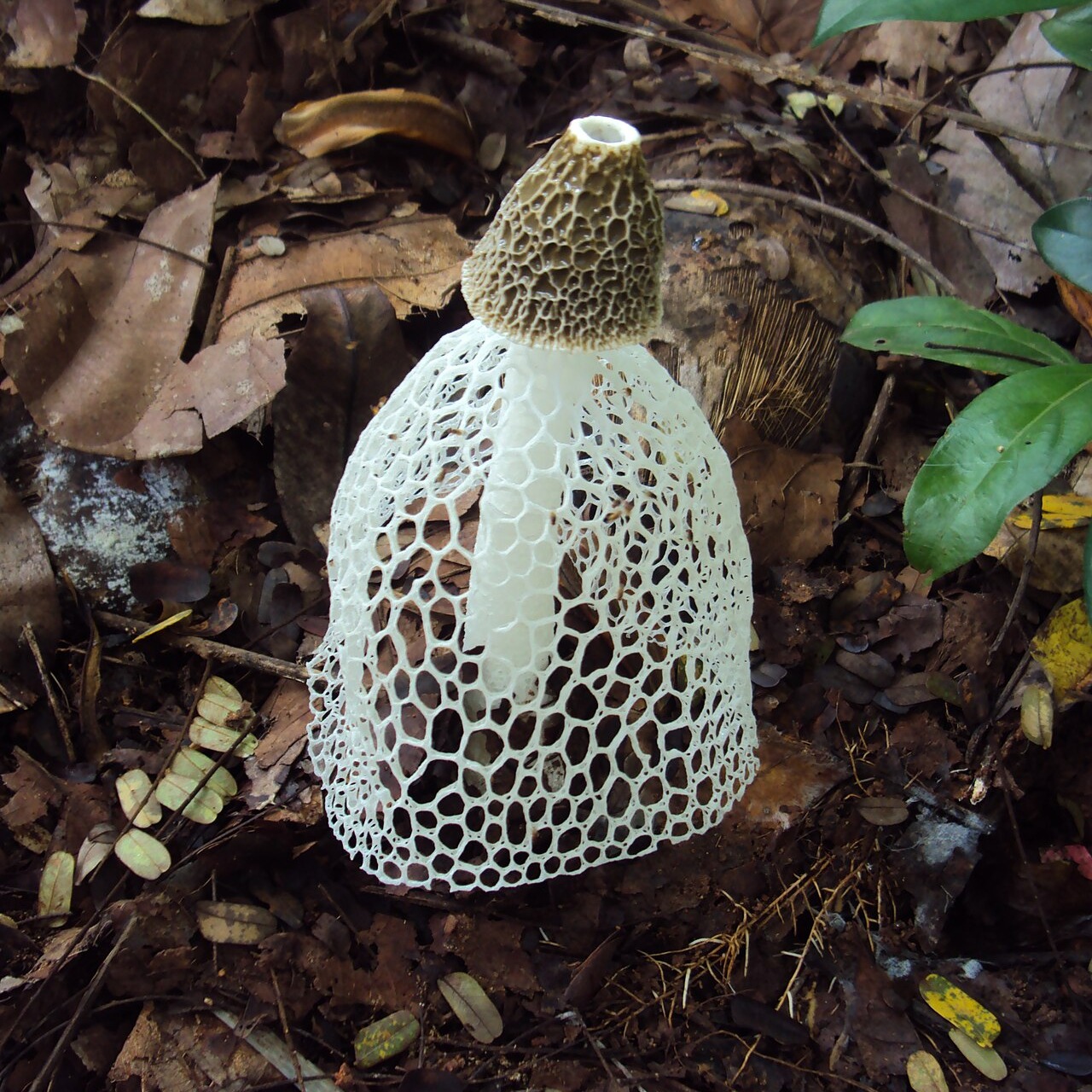
Distinctive fungus featuring a fruiting body with a white, spongy stalk topped by a conical cap (pileus) covered in an olive-green slimy gleba. Its most famous feature is a delicate white lace skirt (indusium) that unfurls from the pileus to almost touch the ground.
Added by
Anonymous Curator
Reviewed by
Under Review
Last modified by
Julia Trouin
Other Names (Global)
 Hongo de redHongo de velo
 Bamboo fungusLong net stinkhorn
 Zhusun
Taxonomy
PhylumBasidiomycota
ClassAgaricomycetes
OrderPhallales
FamilyPhallaceae
GenusPhallus
Taxonomic AuthorityVent., 1798
Ecology & Status
Origin
Native
Population Trend
Stable
Edibility
--
Cap Shape
--
Hymenium Type
--
Fruiting Season
Wet Season
Recent Sightings
Yes
Habitat Summary Multi-lang
Found in humid tropical forests and areas rich in plant debris across Asia, Africa, America, and Australia. It grows in soils with abundant decaying organic matter, especially near bamboo and tropical trees.Substrate Multi-lang
Information not available in English. Help us expand this record!Behaviour Multi-lang
Its growth is extremely fast; the indusium can unfurl in just a few hours. It emits a strong fetid odor (similar to decaying meat or excrement) that attracts flies and other insects needed to transport its spores.Physical Measures
Length (cm)
15.0 - 25.0 cm
Hymenium Structures
No hymenium surface images available.
Evolutionary Adaptations Multi-lang
Indusium structure that increases the surface area for fragrance emission and serves as a platform for insects.
Slimy and sticky gleba that ensures spores adhere to the legs and bodies of visiting insects.
Main Threats Multi-lang
Destruction of forest habitat due to deforestation and urbanization.
Excessive use of chemical fungicides in agricultural areas and gardens.
Interesting Facts Multi-lang
In China, it is considered a gourmet delicacy and is commercially cultivated for soups and traditional dishes due to its perceived health benefits.
The complete fruiting body has an ephemeral life, generally lasting less than 24 to 48 hours once unfurled.