
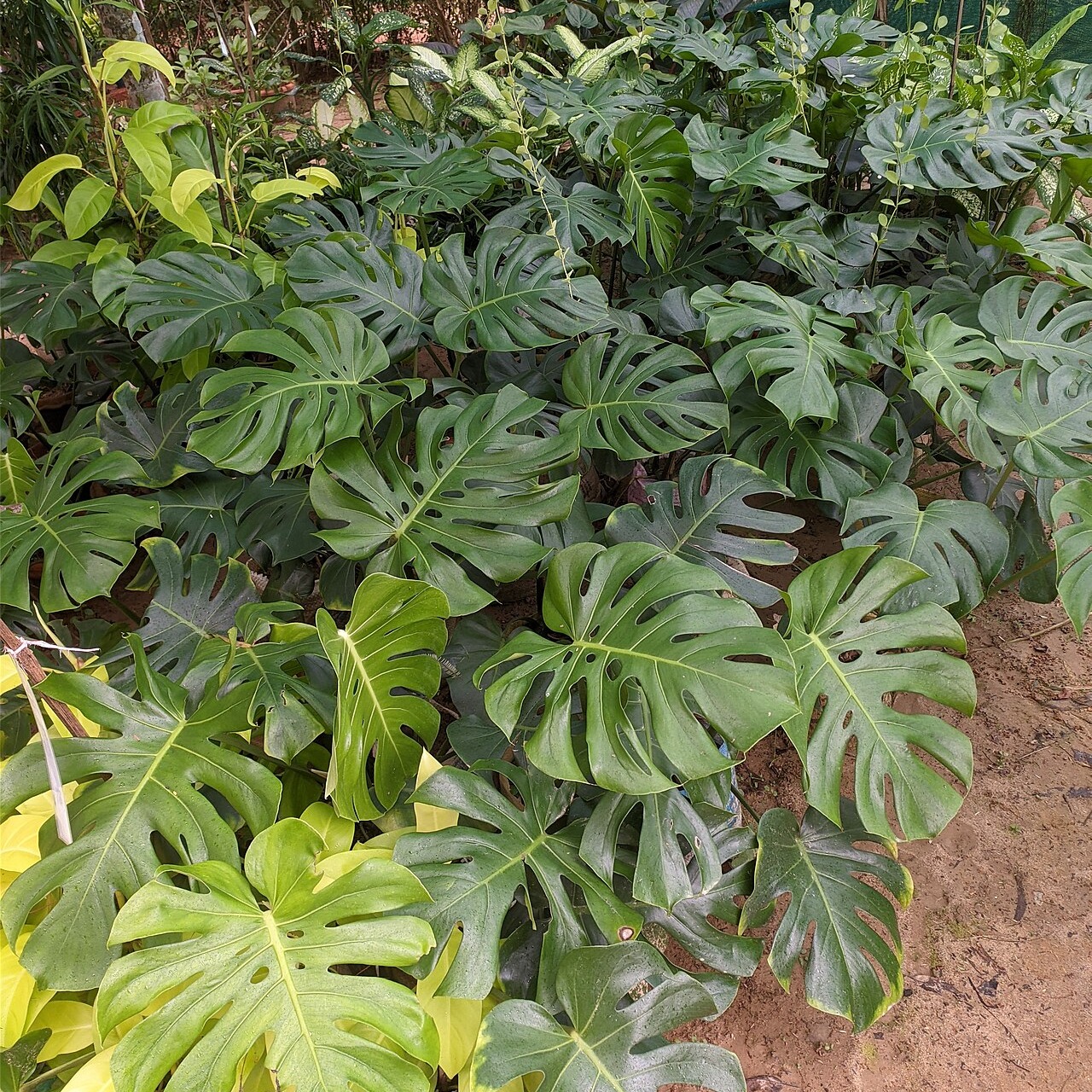
Monstera deliciosa
Swiss Cheese Plant
Liebm., 1849
Added by
Anonymous Curator
Reviewed by
Under Review
Last modified by
Julia Trouin
TaxonomyBiological classification ranks placing this species within the tree of life, from Kingdom down to Genus.
Ecology & StatusHow this species lives: habitat preferences, diet, behavior, population status, and role in its ecosystem.
OriginWhether the species is native (evolved here), endemic (found only here), or introduced by human activity.
Native
Population TrendDirection of change in population size over time: increasing, stable, decreasing, or unknown.
Stable
Trophic RolePosition in the food chain: producer, herbivore, carnivore, omnivore, decomposer, or parasite.
--
Growth HabitPhysical form and structure of the plant: tree, shrub, herb, vine, epiphyte, aquatic, etc.
--
Leaf TypeLeaf characteristics: deciduous (seasonal shed), evergreen, simple, compound, needle-like, etc.
--
Flowering SeasonTime of year when this species typically reproduces or flowers.
Year Round
Recent SightingsWhether this species has been observed in the wild in Costa Rica within recent years.
Yes
Habitat SummaryOverview of the specific ecosystems and environments where this species is found in Costa Rica. Multi-lang
It is a classic inhabitant of humid and very humid tropical forests, as well as premontane and cloud forests, thriving at elevations from sea level up to 1,500 meters (5,000 feet). It begins its life in the dark leaf litter of the forest floor (understory), but its goal is to climb the trunks of large emergent trees to reach the filtered light of the mid and upper canopy layers. It prefers environments with extremely high environmental humidity (above 80%) and constant warm temperatures. It has adapted exceptionally well to indoor living and urban gardens worldwide due to its remarkable tolerance to low light conditions.Light & Water NeedsSunlight intensity and moisture levels this plant needs to grow and reproduce successfully. Multi-lang
Information not available in English. Help us expand this record!BehaviourDaily activity patterns, movement, territory use, foraging style, and seasonal behavioral changes. Multi-lang
This plant possesses aggressive climbing behavior. Anchoring itself strongly with short roots to the bark of large trees like ceibas, figs, or guanacastes, the vine thickens its stem (reaching the girth of a human arm) and inexorably scales upward seeking to catch the condensed moisture of the clouds and the light. During the process, it drops dozens of aerial roots that descend straight down like thick cables to the forest floor to transport vital water and nutrients. It is not parasitic (it does not steal sap from the host tree). Ecologically, the tangle of its immense leaves and roots on tree trunks creates essential hanging microhabitats for small birds, tree frogs, and insects to nest in the cloud forest.Toxicity / UsesToxic compounds present and their documented effects on humans or other organisms. Multi-lang
Information not available in English. Help us expand this record!Physical Measures
Length (cm)
200.0 - 2000.0 cm