
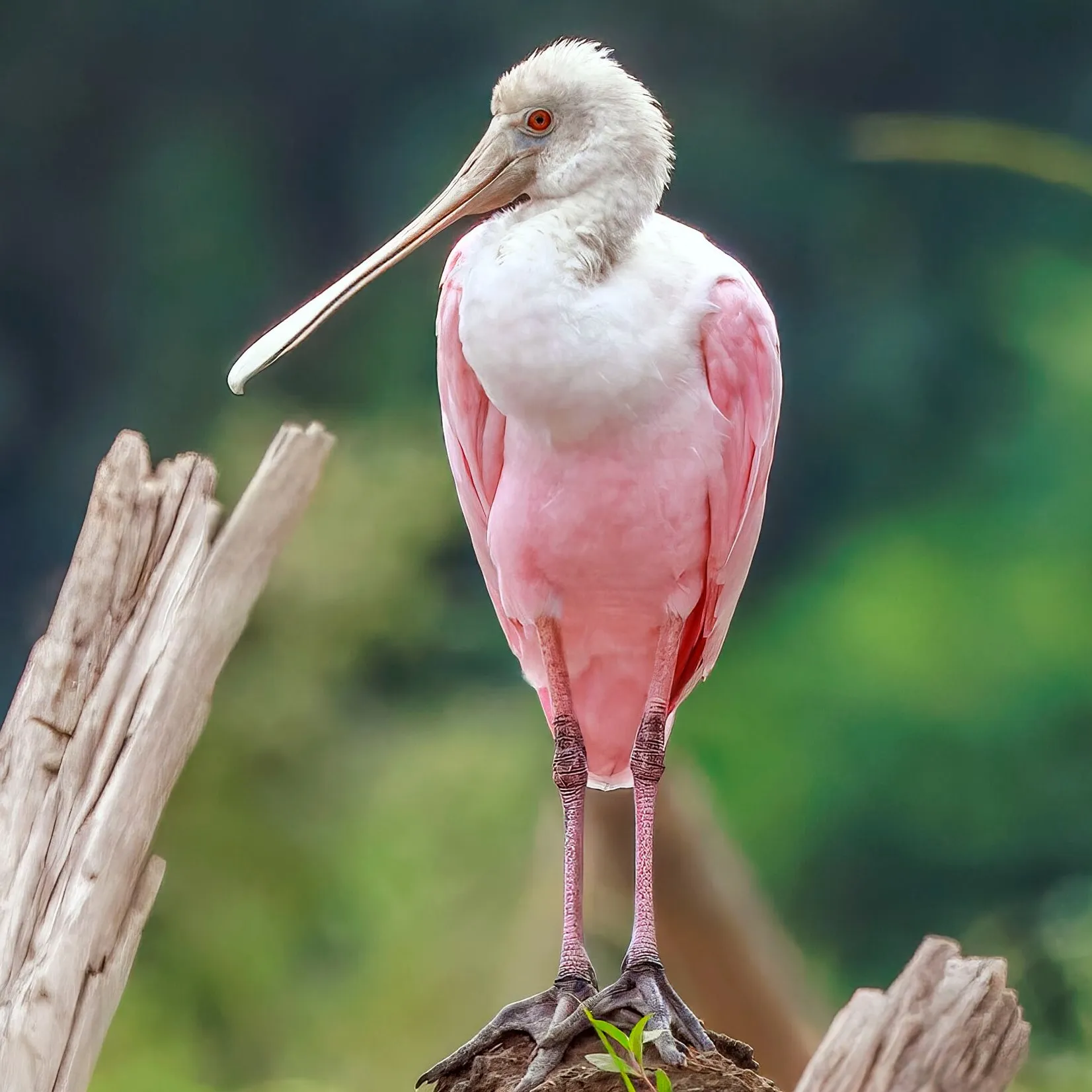
Platalea ajaja
Roseate Spoonbill
Linnaeus, 1758
Added by
Anonymous Curator
Reviewed by
Under Review
Last modified by
Julia Trouin
TaxonomyBiological classification ranks placing this species within the tree of life, from Kingdom down to Genus.
Ecology & StatusHow this species lives: habitat preferences, diet, behavior, population status, and role in its ecosystem.
OriginWhether the species is native (evolved here), endemic (found only here), or introduced by human activity.
Native
Population TrendDirection of change in population size over time: increasing, stable, decreasing, or unknown.
Increasing
Breeding SeasonTime of year when this species typically reproduces or flowers.
Year Round
Trophic RolePosition in the food chain: producer, herbivore, carnivore, omnivore, decomposer, or parasite.
Carnivore
Recent SightingsWhether this species has been observed in the wild in Costa Rica within recent years.
Yes
Habitat SummaryOverview of the specific ecosystems and environments where this species is found in Costa Rica. Multi-lang
Strictly tied to shallow, productive aquatic environments, including coastal mangrove swamps, tidal mudflats, forested brackish marshes, lagoons, and shallow freshwater wetlands. They require shallow water levels (generally under 20-30 cm) to efficiently employ their specialized tactile feeding techniques.BehaviourDaily activity patterns, movement, territory use, foraging style, and seasonal behavioral changes. Multi-lang
Forages using a unique behavior called 'tactile sweeping', walking slowly through shallow water while swinging its partially open bill from side to side in wide arcs. When the inner surface of the bill touches a small fish or crustacean, reflex nerve pathways trigger it to snap shut in milliseconds. They often feed in groups, sometimes alongside other waders like herons and ibises.Social ActivitySocial structure: whether the species is solitary, paired, or colonial; hierarchy and communication. Multi-lang
Highly gregarious bird that exhibits strong social tendencies across all lifecycle phases. They travel in tight flocks, forage collaboratively in clustered groups to pool detection resources, and nest in dense, noisy multi-species colonies (rookeries) alongside herons, egrets, and ibises.Feeding GuildWhat the species eats, how it forages or hunts, and its role as a consumer in the food web. Multi-lang
Carnivore (piscivore, invertivore; microcarnivore specializing in small aquatic fish, decapod crustaceans, and macroinvertebrates).Trophic Chain DetailsSpecific interactions in local food webs: prey species, predators, competitors, and scavengers. Multi-lang
Acts as a secondary and tertiary carnivore within wetlands. Its diet consists of small aquatic organisms, including killifish, minnows, grass shrimp, crabs, water beetles, and nymphs. In turn, eggs and nestlings are heavily preyed upon by raccoons, opossums, crows, and large raptors. Adults can occasionally fall victim to American alligators.Reproductive BehaviourMating strategies, courtship displays, nesting or spawning behavior, and parental care. Multi-lang
Forms socially monogamous pairs. They build substantial, bulky platform nests made of thick sticks and lined with moss and fine leaves, typically situated in the forks of mangroves, willows, or low shrubs over water. The female lays 2 to 4 whitish eggs covered with brown blotches. Both parents share incubation duties equally for 22 to 24 days and perform continuous chick attendance and feeding.Physical Measures
Length (cm)
71.0 - 86.0 cm
Weight (Grams)
1.10 kg - 1.80 kg
Lifespan
Sexual MaturityAge at which the individual becomes capable of reproducing for the first time.
3 - 4 Years
Gestation / IncubationDuration from fertilization to birth (mammals) or to hatching (egg-laying species).
22 - 24