
Costa Rica Species
Castilla elastica
PlantaeHighest rank in taxonomy. Groups all life into domains: Animalia, Plantae, Fungi, etc.IUCN LCInternational Union for Conservation of Nature — the world authority on species extinction risk, using standardized criteria. — Least Concern — widespread and abundant; not at immediate risk of extinction.In ProgressCurrent stage of this record in the editorial review workflow. Recent Sighting

Castilla elastica

Panama Rubber Tree / Castilla

Sessé, 1794

Detailed Texts Multi-lang
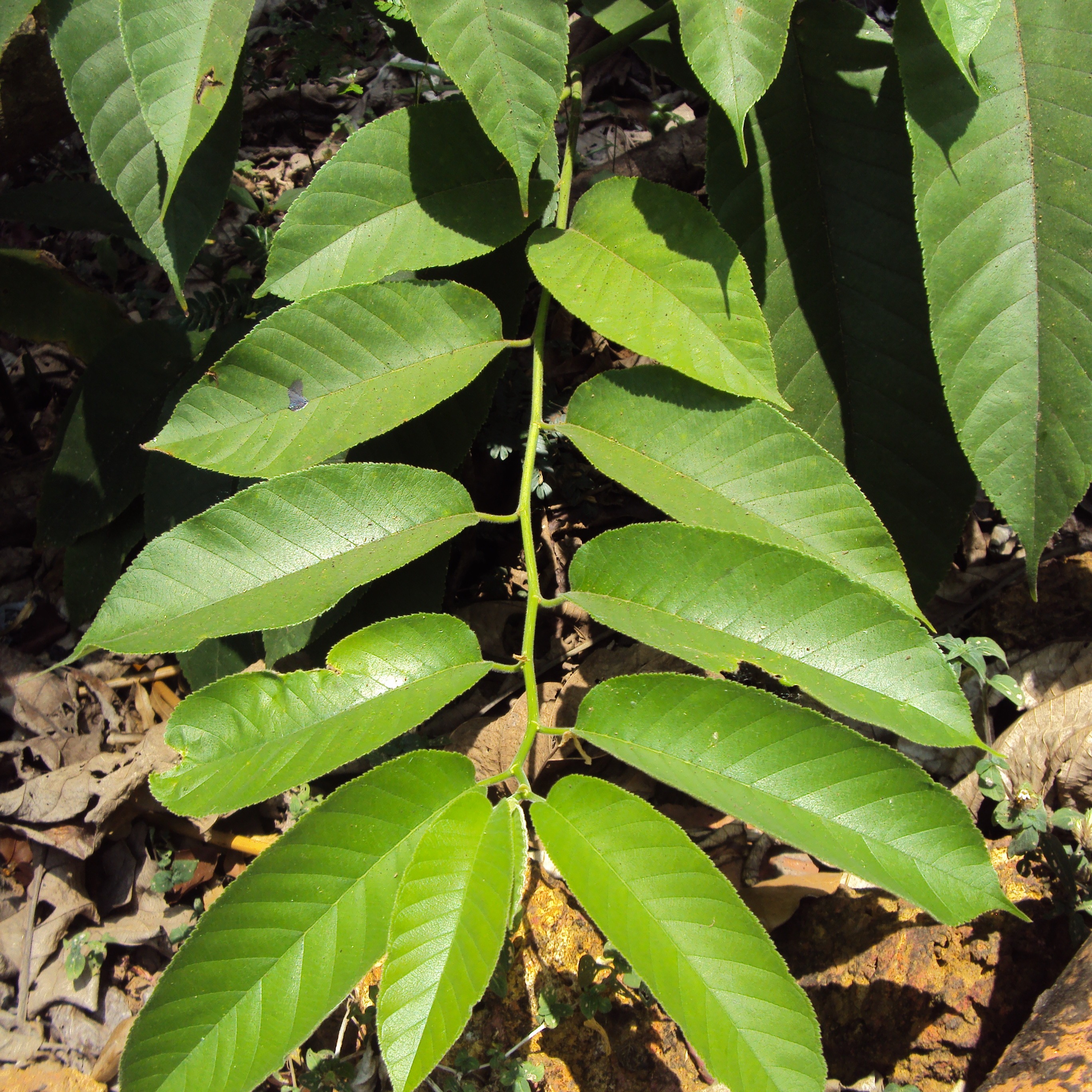
The Panama rubber tree (Castilla elastica) is an imposing member of the Moraceae family, historically famous for being the primary source of latex for pre-Hispanic Mesoamerican cultures. It is a fast-growing tree reaching 30 to 45 meters (100-150 feet) in height, characterized by an extended, drooping branching architecture and large, oblong, densely pubescent leaves (velvety to the touch). Its trunk is cylindrical, light gray to brownish in color, and when injured, it emits a thick, sticky white latex that coagulates quickly. Unlike other rubber trees, its flowers are unisexual and grouped in fleshy receptacles. Its composite fruits are orange to bright red when ripe, possessing a sweet aroma that attracts a vast diversity of forest wildlife. It is a vital component of secondary and primary tropical forests from Mexico to northwestern South America.

Added by

Anonymous Curator

Reviewed by

Under Review

Last modified by

Julia Trouin

TaxonomyBiological classification ranks placing this species within the tree of life, from Kingdom down to Genus.

PhylumRank below Kingdom. Groups organisms sharing a fundamental body plan (e.g., Chordata = vertebrates and some invertebrates).Tracheophyta
ClassRank below Phylum. Subdivides by structural traits (e.g., Mammalia, Aves, Reptilia, Insecta).Magnoliopsida
OrderRank below Class. Groups related families sharing common ancestry (e.g., Carnivora, Primates).Rosales
FamilyRank below Order. Groups closely related genera (e.g., Felidae = cats, Canidae = dogs).Moraceae
GenusRank just above Species. The first word in the two-part binomial scientific name.Castilla
Taxonomic AuthorityThe scientist who first formally described and published this species, followed by the year of publication.Sessé, 1794
Record Completeness
82%
Coming soon

Ecology & StatusHow this species lives: habitat preferences, diet, behavior, population status, and role in its ecosystem.

OriginWhether the species is native (evolved here), endemic (found only here), or introduced by human activity.

Native

Population TrendDirection of change in population size over time: increasing, stable, decreasing, or unknown.

Stable

Trophic RolePosition in the food chain: producer, herbivore, carnivore, omnivore, decomposer, or parasite.

--

Growth HabitPhysical form and structure of the plant: tree, shrub, herb, vine, epiphyte, aquatic, etc.

--

Leaf TypeLeaf characteristics: deciduous (seasonal shed), evergreen, simple, compound, needle-like, etc.

--

Flowering SeasonTime of year when this species typically reproduces or flowers.

--

Recent SightingsWhether this species has been observed in the wild in Costa Rica within recent years.

Yes

Habitat SummaryOverview of the specific ecosystems and environments where this species is found in Costa Rica. Multi-lang

It is a pioneer and opportunistic species that prefers the warm and humid climates of the lowlands. It thrives in a wide variety of soils, although it shows its best development in deep, well-drained alluvial soils. It is extremely common in secondary forests, forest clearings, and disturbed areas, where its rapid growth allows it to dominate the young canopy. In Costa Rica, it is widely distributed on both slopes, from sea level up to 800 meters (2,600 feet) in altitude.

Light & Water NeedsSunlight intensity and moisture levels this plant needs to grow and reproduce successfully. Multi-lang

Information not available in English. Help us expand this record!

BehaviourDaily activity patterns, movement, territory use, foraging style, and seasonal behavioral changes. Multi-lang

It is a fast-growing tree with aggressive pioneer behavior. In its youth, its long, flexible branches hang toward the ground, allowing it to quickly occupy lateral space in forest clearings. Its fruits, being highly nutritious and colorful, are consumed by a wide variety of birds and mammals, ensuring effective seed dispersal through endozoochory.

Toxicity / UsesToxic compounds present and their documented effects on humans or other organisms. Multi-lang

Information not available in English. Help us expand this record!

Physical Measures

Length (cm)

1000.0 - 4500.0 cm

Reproductive StructuresFlowers, fruits, and seeds — the reproductive organs and their seasonal appearance.

Flower Photos (Max 2)

No image

Fruit Photos (Max 2)

No image

Evolutionary AdaptationsInherited traits and behaviors that improve the species' survival and reproduction in its specific environment. Multi-lang

High-viscosity latex as defense: The tree produces large amounts of latex rich in isoprene polymers. This substance acts as an immediate mechanical and chemical barrier against herbivorous insects and pathogens; upon puncturing the bark, the latex flows to seal the wound and trap attackers' mandibles, while also containing toxic compounds that deter feeding.
Protective foliar pubescence: Its leaves are covered by a dense layer of fine hairs. This adaptation reduces water loss through transpiration in environments with high solar radiation (such as forest clearings) and hinders the movement and feeding of small phytophagous insects on the leaf surface.

Main ThreatsDocumented pressures reducing the population: habitat loss, hunting, disease, climate change, and invasive species. Multi-lang

Substitution by Hevea monocultures: Historically, Castilla elastica was the primary rubber source, but it was displaced by Hevea brasiliensis because the latter allows more frequent tapping. This led to the abandonment and logging of many natural plantations to make way for more profitable crops.

Interesting FactsSurprising or notable facts that highlight what makes this species unique or ecologically important. Multi-lang

The origin of the Mesoamerican ball: The ancient Olmecs (whose name means 'people of the rubber country') used the latex from this tree, mixed with the juice of the Ipomoea alba vine, to naturally vulcanize rubber and create the solid balls used in their sacred rituals over 3,000 years ago.