
PlantaeIUCN NEIn Progress Recent Sighting
Carludovica palmata
Panama Hat Plant
Ruiz & Pav., 1798
Detailed Texts Multi-lang
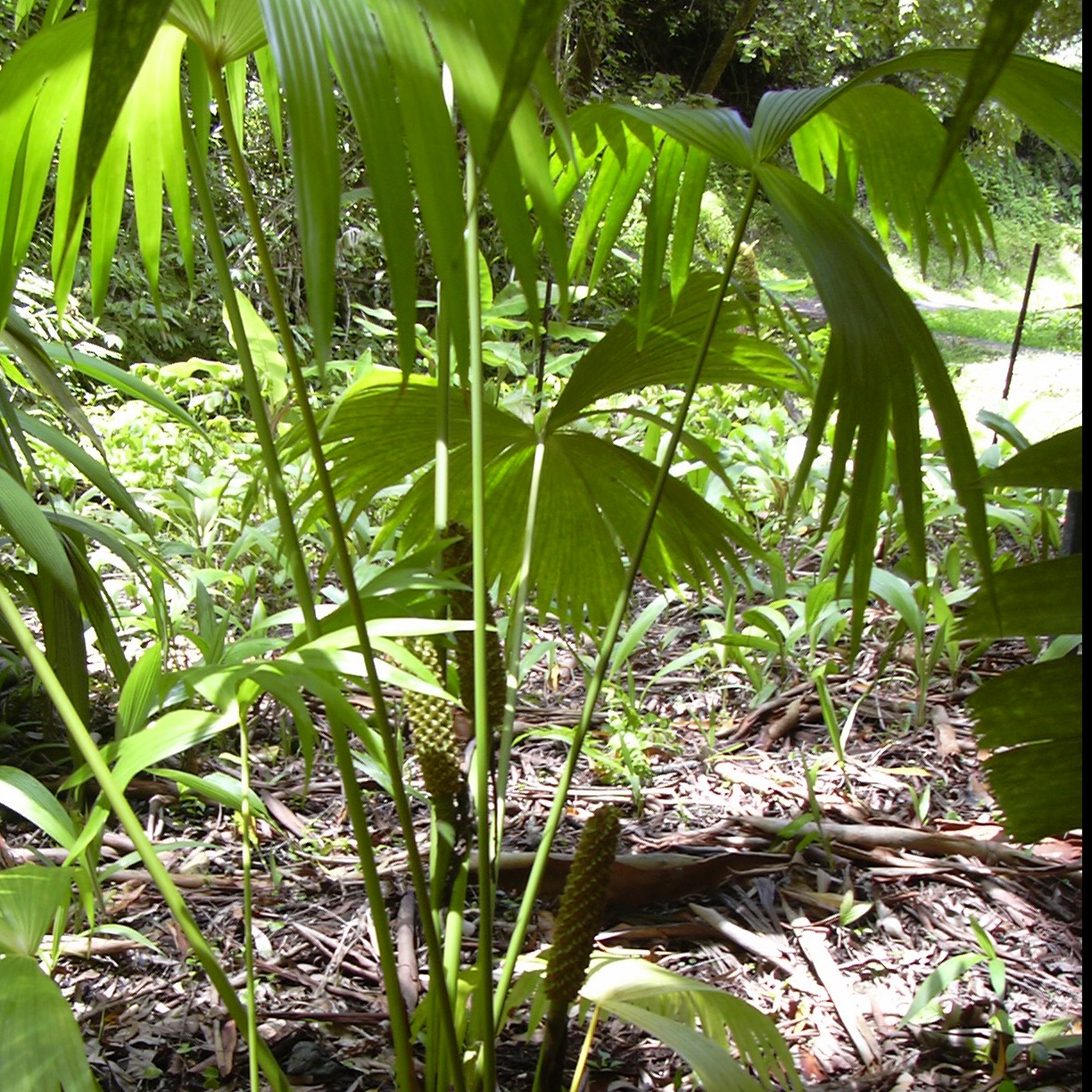
Stemless perennial herbaceous plant with large, pleated, fan-shaped leaves growing directly from underground rhizomes. Its leaves can measure up to 2-3 meters and are divided into four deep segments.
Added by
Anonymous Curator
Reviewed by
Under Review
Last modified by
Julia Trouin
Other Names (Global)
 Palma de sombreroIracaJipijapa
 Toquilla palm
Taxonomy
PhylumTracheophyta
ClassLiliopsida
OrderPandanales
FamilyCyclanthaceae
GenusCarludovica
Taxonomic AuthorityRuiz & Pav., 1798
Ecology & Status
Origin
Native
Population Trend
Stable
Growth Habit
--
Leaf Type
--
Flowering Season
Wet Season
Recent Sightings
Yes
Habitat Summary Multi-lang
Inhabits the understory of tropical rainforests and disturbed areas from southern Mexico to Bolivia. It prefers fertile, well-drained soils with high environmental humidity.Light & Water Needs Multi-lang
Information not available in English. Help us expand this record!Behaviour Multi-lang
Despite its appearance, it is not a palm. It produces a unique spadix-shaped inflorescence with fragrant white flowers that attract beetles for pollination.Toxicity / Uses Multi-lang
Information not available in English. Help us expand this record!Physical Measures
Length (cm)
150.0 - 300.0 cm
Reproductive Structures
Flower Photos (Max 2)
No imageFruit Photos (Max 2)
No imageEvolutionary Adaptations Multi-lang
Leaves with strong parallel venation that allows folding without damage during storms.
Long petioles that elevate the leaves above competitors in the understory.
Main Threats Multi-lang
Overexploitation of young leaves for the craft industry without allowing the plant to recover.
Drainage of wetlands and land conversion for cattle ranching.
Interesting Facts Multi-lang
The fiber from its young leaves is the exclusive material used to weave the famous 'Panama Hats', which are actually native to Ecuador.
Its ripe fruits are edible and have a sweet taste reminiscent of watermelon or melon.