
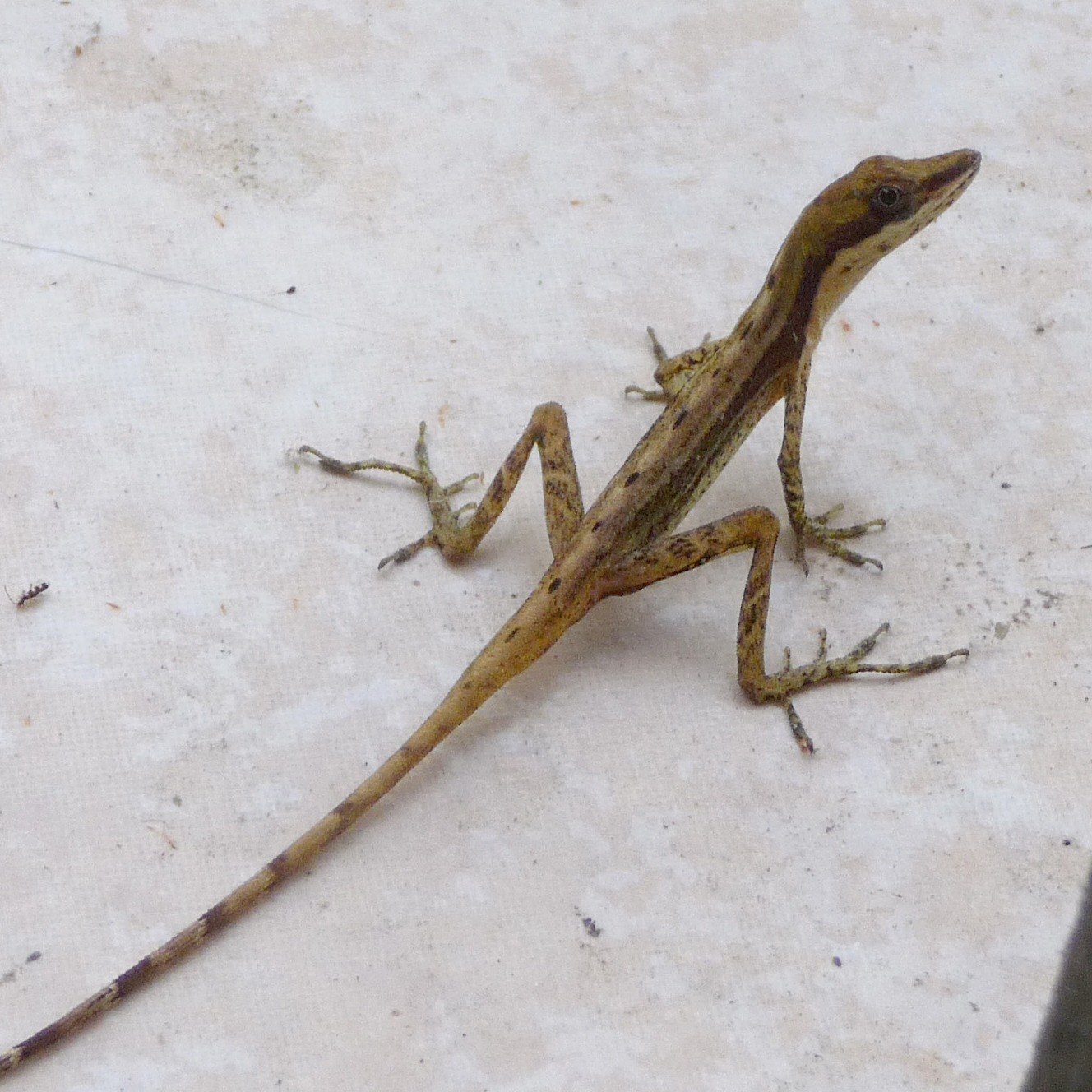
Norops humilis
Ground Anole
(Peters, 1863)
Added by
Anonymous Curator
Reviewed by
Under Review
Last modified by
Julia Trouin
TaxonomyBiological classification ranks placing this species within the tree of life, from Kingdom down to Genus.
Ecology & StatusHow this species lives: habitat preferences, diet, behavior, population status, and role in its ecosystem.
OriginWhether the species is native (evolved here), endemic (found only here), or introduced by human activity.
Native
Population TrendDirection of change in population size over time: increasing, stable, decreasing, or unknown.
Stable
Breeding SeasonTime of year when this species typically reproduces or flowers.
Year Round
Trophic RolePosition in the food chain: producer, herbivore, carnivore, omnivore, decomposer, or parasite.
Insectivore
Recent SightingsWhether this species has been observed in the wild in Costa Rica within recent years.
Yes
Habitat SummaryOverview of the specific ecosystems and environments where this species is found in Costa Rica. Multi-lang
Strictly terrestrial species, inhabiting the lowest layers of humid and very humid forests. It is found mainly in leaf litter, where it finds shelter and food, preferring areas with high ambient humidity and shade.BehaviourDaily activity patterns, movement, territory use, foraging style, and seasonal behavioral changes. Multi-lang
Diurnal and strictly terrestrial reptile. Unlike other anoles, it rarely climbs trees, preferring to patrol leaf litter. It is a very active animal during the day, moving with quick short jumps. It is territorial and males use their dewlap for constant visual interactions with other individuals.Social ActivitySocial structure: whether the species is solitary, paired, or colonial; hierarchy and communication. Multi-lang
Solitary species outside of the breeding season. Males maintain small territories that they actively defend. Social interactions are limited almost exclusively to territorial displays and courtship.Feeding GuildWhat the species eats, how it forages or hunts, and its role as a consumer in the food web. Multi-lang
Opportunistic insectivore. It feeds on a wide variety of small prey it finds on the ground, mainly ants, small beetles, and mites. It practices stalking: it waits patiently before pouncing rapidly on the prey.Trophic Chain DetailsSpecific interactions in local food webs: prey species, predators, competitors, and scavengers. Multi-lang
Plays a fundamental role in the understory food chain by controlling populations of ants, beetles, and small spiders. It is a common prey for ground birds, leaf litter snakes, and small carnivorous mammals, being a critical link for energy transfer to higher levels.Reproductive BehaviourMating strategies, courtship displays, nesting or spawning behavior, and parental care. Multi-lang
Oviparous species. The female deposits a single egg in leaf litter or soil cracks. The incubation period is relatively long. The hatchlings emerge being self-sufficient and begin hunting small prey immediately.Physical Measures
Length (cm)
4.0 - 7.0 cm
Weight (Grams)
1 g - 3 g
Lifespan
Sexual MaturityAge at which the individual becomes capable of reproducing for the first time.
0.5 - 0.8 Years
Gestation / IncubationDuration from fertilization to birth (mammals) or to hatching (egg-laying species).
45 - 65