Hericium erinaceus
Lion's Mane
(Bull.) Pers., 1797
Added by
Anonymous Curator
Reviewed by
Under Review
Last modified by
Julia Trouin
TaxonomyBiological classification ranks placing this species within the tree of life, from Kingdom down to Genus.
Ecology & StatusHow this species lives: habitat preferences, diet, behavior, population status, and role in its ecosystem.
OriginWhether the species is native (evolved here), endemic (found only here), or introduced by human activity.
Native
Population TrendDirection of change in population size over time: increasing, stable, decreasing, or unknown.
Unknown
Trophic RolePosition in the food chain: producer, herbivore, carnivore, omnivore, decomposer, or parasite.
Decomposer
EdibilityWhether this mushroom is edible, toxic, hallucinogenic, or of unknown safety. Never eat based solely on this data.
--
Cap ShapeShape of the mushroom cap (pileus): convex, flat, umbonate, funnel-shaped, bell-shaped, etc.
--
Hymenium TypeThe spore-bearing surface of a fungus: gills, pores, teeth, ridges, smooth, or wrinkled.
--
Fruiting SeasonTime of year when this species typically reproduces or flowers.
Year Round
Recent SightingsWhether this species has been observed in the wild in Costa Rica within recent years.
Yes
Habitat SummaryOverview of the specific ecosystems and environments where this species is found in Costa Rica. Multi-lang
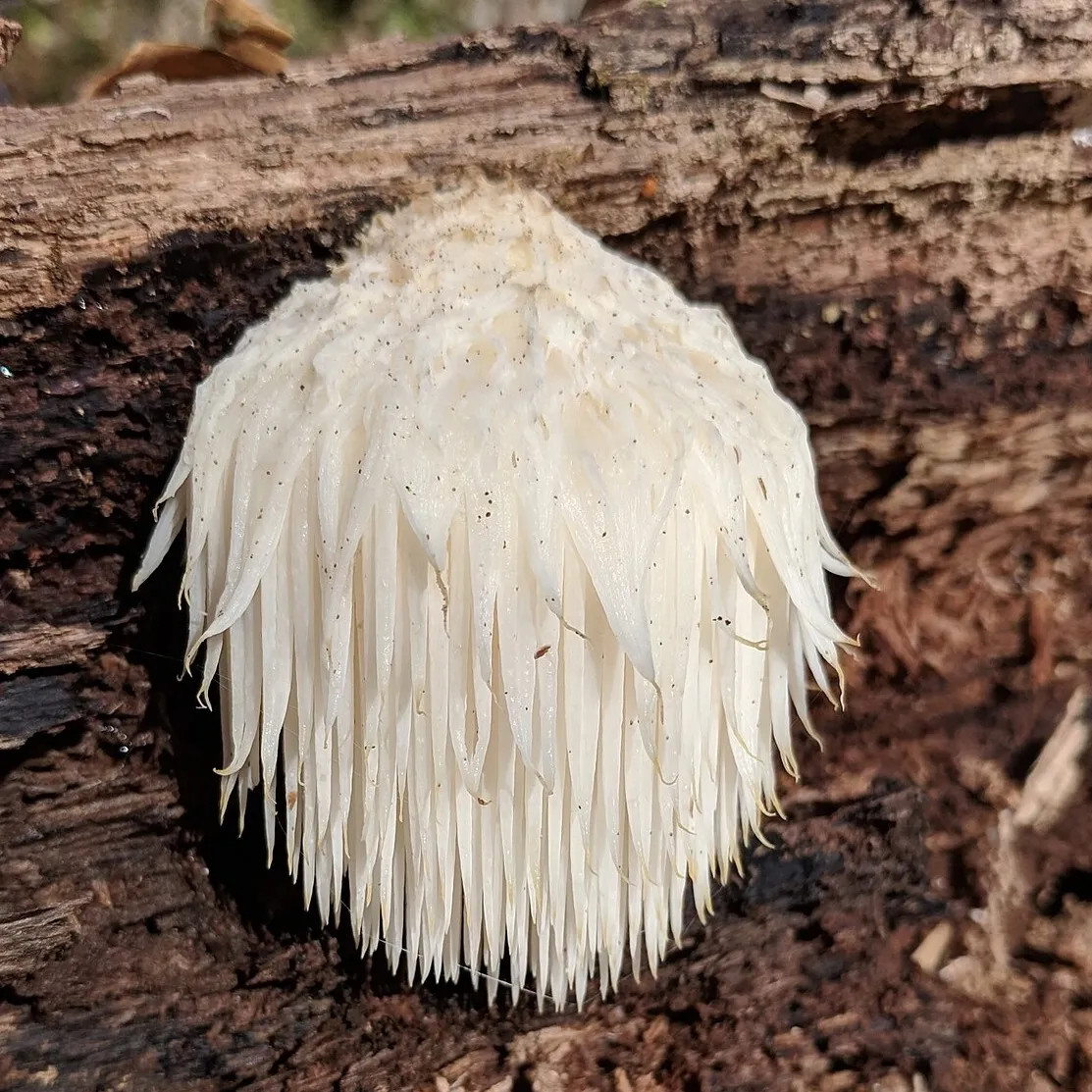
Inhabits mature, old-growth temperate deciduous forests across the Northern Hemisphere. It grows as a wound parasite and saprophyte on living or recently dead broadleaf hardwoods, showing a strict preference for mature oaks and beeches. It typically emerges from high tree hollows, frost cracks, or mechanical wounds up in the canopy, and can fruit from the same spot for consecutive years.SubstrateThe organic material or host organism this fungus colonizes and decomposes. Multi-lang
Information not available in English. Help us expand this record!BehaviourDaily activity patterns, movement, territory use, foraging style, and seasonal behavioral changes. Multi-lang
A stationary wood decomposer with a highly persistent vegetative lifespan. The mycelium can live inside a living oak for decades, hidden within the trunk core while executing a slow white-rot process. When atmospheric conditions trigger fruiting in autumn, it forces its way through external wounds to generate a heavy, nutrient-dense dangling mass designed to intercept canopy wind currents.Physical Measures
Length (cm)
1.0 - 40.0 cm