
Costa Rica Species
Sigmodon hispidus
AnimaliaHighest rank in taxonomy. Groups all life into domains: Animalia, Plantae, Fungi, etc.IUCN LCInternational Union for Conservation of Nature — the world authority on species extinction risk, using standardized criteria. — Least Concern — widespread and abundant; not at immediate risk of extinction.In ProgressCurrent stage of this record in the editorial review workflow. Recent Sighting

Sigmodon hispidus

Hispid Cotton Rat

Say & Ord, 1825

Detailed Texts Multi-lang
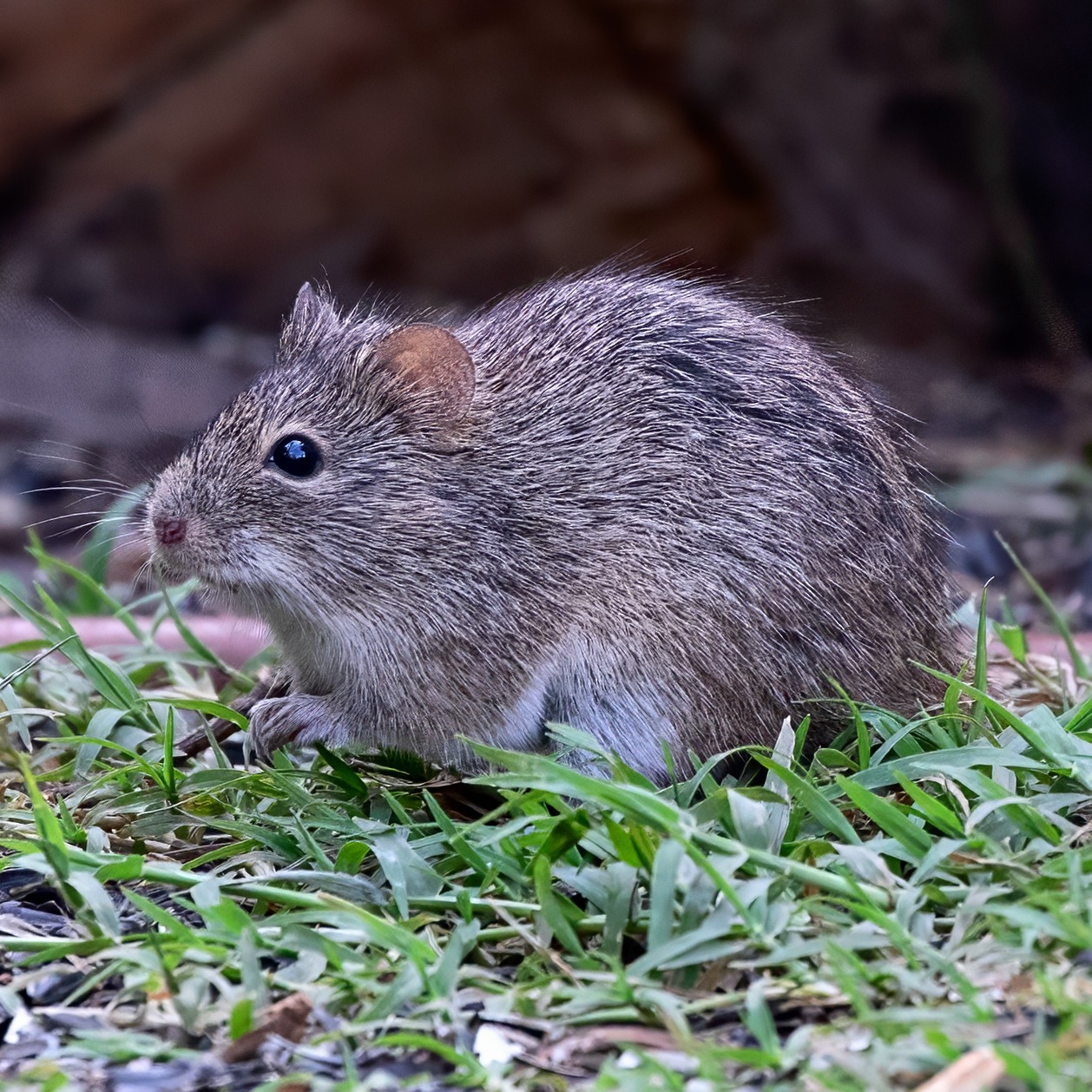
The hispid cotton rat (Sigmodon hispidus) is a medium-sized cricetid rodent with a robust and stocky body. Its name (hispid) refers to its characteristically coarse and bristly fur, composed of a mixture of fine hairs and stiff bristles. The color of its back is an agouti mixture of grayish-browns, blackish, and tawny, giving it excellent camouflage among dry grass; its belly is pale gray or whitish. It has rounded ears that barely protrude from its fur, prominent black eyes, and a scaly, sparsely haired tail that is markedly shorter than its body. It gets the name 'cotton rat' from its fondness for collecting cotton fibers, dry grasses, and soft materials to weave its elaborate spherical nests.

Added by

Anonymous Curator

Reviewed by

Under Review

Last modified by

Julia Trouin

TaxonomyBiological classification ranks placing this species within the tree of life, from Kingdom down to Genus.

PhylumRank below Kingdom. Groups organisms sharing a fundamental body plan (e.g., Chordata = vertebrates and some invertebrates).Chordata
ClassRank below Phylum. Subdivides by structural traits (e.g., Mammalia, Aves, Reptilia, Insecta).Mammalia
OrderRank below Class. Groups related families sharing common ancestry (e.g., Carnivora, Primates).Rodentia
FamilyRank below Order. Groups closely related genera (e.g., Felidae = cats, Canidae = dogs).Cricetidae
GenusRank just above Species. The first word in the two-part binomial scientific name.Sigmodon
Taxonomic AuthorityThe scientist who first formally described and published this species, followed by the year of publication.Say & Ord, 1825
Record Completeness
85%
Coming soon

Ecology & StatusHow this species lives: habitat preferences, diet, behavior, population status, and role in its ecosystem.

OriginWhether the species is native (evolved here), endemic (found only here), or introduced by human activity.

Native

Population TrendDirection of change in population size over time: increasing, stable, decreasing, or unknown.

Stable

Breeding SeasonTime of year when this species typically reproduces or flowers.

Year Round

Trophic RolePosition in the food chain: producer, herbivore, carnivore, omnivore, decomposer, or parasite.

Herbivore

Recent SightingsWhether this species has been observed in the wild in Costa Rica within recent years.

Yes

Habitat SummaryOverview of the specific ecosystems and environments where this species is found in Costa Rica. Multi-lang

It is an open-space specialist. Unlike many Neotropical rodents that prefer the jungle, the cotton rat inhabits grasslands, savannas, roadsides, secondary scrub, and agricultural areas (sugarcane, rice fields, and cattle pastures). It avoids dense primary forests. It relies on tall grass not only for food but as vital cover against predators. In Costa Rica, it is very abundant in the dry and humid lowlands, as well as in the Central Valley.

BehaviourDaily activity patterns, movement, territory use, foraging style, and seasonal behavioral changes. Multi-lang

They are highly active animals, both day and night (cathemeral activity pattern), although they prefer twilight. They move frantically along their well-maintained runways under the grass. They build cup- or sphere-shaped nests woven from dry grasses, generally hidden in small ground depressions or under dense shrubs. Despite their docile appearance, they can be quite aggressive and territorial with other members of their species, especially adult males.

Social ActivitySocial structure: whether the species is solitary, paired, or colonial; hierarchy and communication. Multi-lang

They are not truly social, but due to their rapid reproduction, they often live in high population densities in favorable areas. Individuals maintain small home ranges that can overlap.

Feeding GuildWhat the species eats, how it forages or hunts, and its role as a consumer in the food web. Multi-lang

Herbivore / Granivore (Occasionally insectivore).

Trophic Chain DetailsSpecific interactions in local food webs: prey species, predators, competitors, and scavengers. Multi-lang

Primary consumer. It is a true pillar of the grassland ecosystem (Keystone prey). It converts plant biomass into food for an innumerable list of predators: barn owls, hawks, snakes (fer-de-lance, rattlesnakes, rat snakes), coyotes, foxes, weasels, and wild felines.

Reproductive BehaviourMating strategies, courtship displays, nesting or spawning behavior, and parental care. Multi-lang

They possess one of the highest reproductive rates among mammals of their size. In tropical climates, they breed year-round. Gestation lasts about 27 days. Females give birth to litters ranging from 1 to 15 pups (averaging 5 to 7). Mothers exhibit postpartum estrus, meaning they can mate again within hours of giving birth, maintaining a continuous cycle of pup production.

Physical Measures

Length (cm)

13.0 - 20.0 cm

Weight (Grams)

100 g - 225 g

Offspring per cycleTypical number of young (live births, eggs, or seeds) produced by one adult in a single reproductive event or breeding season.1 - 15
Sexual DimorphismObservable physical differences between males and females of the same species (e.g., size, coloration, features).Yes

Lifespan

Sexual MaturityAge at which the individual becomes capable of reproducing for the first time.

1 - 2 Months

Gestation / IncubationDuration from fertilization to birth (mammals) or to hatching (egg-laying species).

27 - 28

Lifespan EstimatedExpected duration of life from birth to natural death under wild conditions.
Males0.5 - 1.5 Years
Females0.5 - 1.5 Years

Sexual DimorphismPhysical differences in size, coloration, or morphology between males and females of this species.

Males Multi-lang

Adult males tend to be slightly larger and heavier than females.

Females Multi-lang

Slightly smaller, they raise their multiple litters exclusively.

Evolutionary AdaptationsInherited traits and behaviors that improve the species' survival and reproduction in its specific environment. Multi-lang

Runway Networks: They cut and maintain an extensive network of small, clean, clear tunnels at ground level, hidden beneath the dense canopy of tall grass. These runways allow them to sprint at full speed to escape predators without being snagged by the brush.
Precocial Young: Unlike most mice whose young are born naked and blind, cotton rat pups are born surprisingly developed: with a fine coat of fur, they can open their eyes within hours and are able to run within a few days. This is a vital adaptation for quick escape in a predator-filled environment.

Main ThreatsDocumented pressures reducing the population: habitat loss, hunting, disease, climate change, and invasive species. Multi-lang

Pest Control (Rodenticides): Because they can reach immense population densities and damage commercial crops (sugarcane, melons, rice), they are frequently exterminated with poisoned baits.

Interesting FactsSurprising or notable facts that highlight what makes this species unique or ecologically important. Multi-lang

Boom and Bust Cycles: Their populations are famous for experiencing massive demographic explosions when food is abundant, followed by dramatic collapses due to resource depletion, disease, or a disproportionate increase in predators.
Biomedical Heroes: They have been crucial laboratory animals in the history of medicine. Due to their unique susceptibility to certain human viruses, they were instrumental in the development of polio and measles vaccines.