
Costa Rica Species
Machaerium biovulatum
PlantaeHighest rank in taxonomy. Groups all life into domains: Animalia, Plantae, Fungi, etc.IUCN LCInternational Union for Conservation of Nature — the world authority on species extinction risk, using standardized criteria. — Least Concern — widespread and abundant; not at immediate risk of extinction.In ProgressCurrent stage of this record in the editorial review workflow. Recent Sighting

Machaerium biovulatum

Sangricio / Winged-fruit Machaerium

Micheli, 1894

Detailed Texts Multi-lang
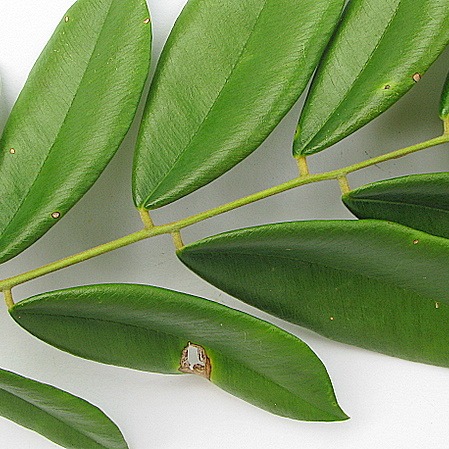
Machaerium biovulatum is a medium to large-sized deciduous tree belonging to the Fabaceae family, recognized for its ability to colonize seasonal forests and its characteristic reddish sap. It reaches heights of 15 to 25 meters (50-80 feet), with a trunk that often features short, paired spines on young branches (spinescent stipules). Its bark is grayish to brown, and when cut, it emits an intense red exudate that oxidizes quickly, giving it the name 'sangricio'. The leaves are compound and pinnate, with small, elliptical, bright green leaflets. The flowers are small, violet or purple, clustered in very striking terminal panicles. Its fruit is a winged samara (similar to the Acer genus), allowing for efficient aerial dispersal. It is a key species for soil restoration in the Costa Rican Pacific.

Added by

Anonymous Curator

Reviewed by

Under Review

Last modified by

Julia Trouin

TaxonomyBiological classification ranks placing this species within the tree of life, from Kingdom down to Genus.

PhylumRank below Kingdom. Groups organisms sharing a fundamental body plan (e.g., Chordata = vertebrates and some invertebrates).Tracheophyta
ClassRank below Phylum. Subdivides by structural traits (e.g., Mammalia, Aves, Reptilia, Insecta).Magnoliopsida
OrderRank below Class. Groups related families sharing common ancestry (e.g., Carnivora, Primates).Fabales
FamilyRank below Order. Groups closely related genera (e.g., Felidae = cats, Canidae = dogs).Fabaceae
GenusRank just above Species. The first word in the two-part binomial scientific name.Machaerium
Taxonomic AuthorityThe scientist who first formally described and published this species, followed by the year of publication.Micheli, 1894
Record Completeness
91%
Coming soon

Ecology & StatusHow this species lives: habitat preferences, diet, behavior, population status, and role in its ecosystem.

OriginWhether the species is native (evolved here), endemic (found only here), or introduced by human activity.

Native

Population TrendDirection of change in population size over time: increasing, stable, decreasing, or unknown.

Stable

Trophic RolePosition in the food chain: producer, herbivore, carnivore, omnivore, decomposer, or parasite.

--

Growth HabitPhysical form and structure of the plant: tree, shrub, herb, vine, epiphyte, aquatic, etc.

--

Leaf TypeLeaf characteristics: deciduous (seasonal shed), evergreen, simple, compound, needle-like, etc.

--

Flowering SeasonTime of year when this species typically reproduces or flowers.

--

Recent SightingsWhether this species has been observed in the wild in Costa Rica within recent years.

Yes

Habitat SummaryOverview of the specific ecosystems and environments where this species is found in Costa Rica. Multi-lang

It mainly inhabits tropical dry forests and transitional wet forests. It is a very common species in the North and Central Pacific of Costa Rica, from sea level up to 900 meters (2,950 feet) in altitude. It prefers well-drained, often stony soils, and has a high tolerance for marked seasonality, losing its leaves during the dry season to conserve water.

Light & Water NeedsSunlight intensity and moisture levels this plant needs to grow and reproduce successfully. Multi-lang

Information not available in English. Help us expand this record!

BehaviourDaily activity patterns, movement, territory use, foraging style, and seasonal behavioral changes. Multi-lang

It is a deciduous tree that loses its foliage completely during the peak of the dry season (March). Its massive flowering occurs before the new leaves sprout, becoming an important resource for bees and other pollinators. Its winged fruits are released just before the start of the rains, ensuring they land and germinate with the May humidity.

Toxicity / UsesToxic compounds present and their documented effects on humans or other organisms. Multi-lang

Information not available in English. Help us expand this record!

Physical Measures

Length (cm)

1500.0 - 2500.0 cm

Reproductive StructuresFlowers, fruits, and seeds — the reproductive organs and their seasonal appearance.

Flower Photos (Max 2)

No image

Fruit Photos (Max 2)

No image

Evolutionary AdaptationsInherited traits and behaviors that improve the species' survival and reproduction in its specific environment. Multi-lang

Defensive Resinous Sap (Blood): The reddish exudate is rich in tannins and phenolic compounds. This adaptation acts as a fast-healing agent and a chemical defense against boring insects and pathogenic fungi, sealing mechanical wounds almost instantaneously.
Anemochorous Samara Dispersal: The fruits possess a membranous wing that allows them to spin like a helicopter when falling. This adaptation takes advantage of strong dry season winds in the Pacific to disperse seeds far from the parent tree.

Main ThreatsDocumented pressures reducing the population: habitat loss, hunting, disease, climate change, and invasive species. Multi-lang

Deforestation and fragmentation: The conversion of dry forests into pastures and urban areas reduces its natural habitat, limiting the connectivity of its populations.

Interesting FactsSurprising or notable facts that highlight what makes this species unique or ecologically important. Multi-lang

Nitrogen Fixer: As a legume, sangricio establishes symbiosis with bacteria in its roots to fix atmospheric nitrogen, making it a soil-improving species ideal for reforestation projects on degraded soils.