
PlantaeIUCN LCIn Progress Recent Sighting
Gliricidia sepium
Quickstick
(Jacq.) Kunth ex Walp., 1842
Detailed Texts Multi-lang
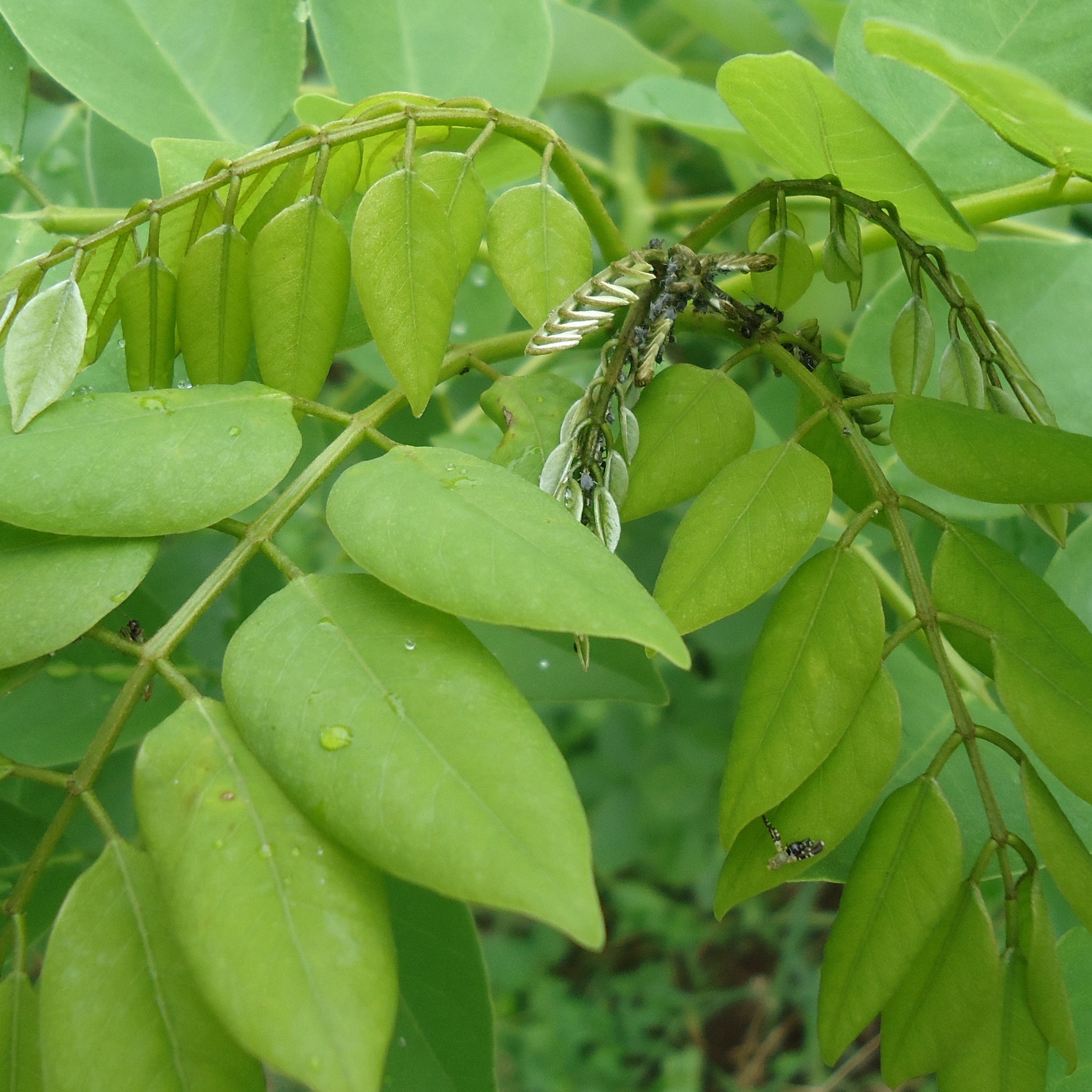
Medium-sized tree with grayish bark and pale pink to lilac flowers that appear in clusters when the tree loses its leaves. Its leaves are pinnate and its fruits are flattened pods.
Added by
Anonymous Curator
Reviewed by
Under Review
Last modified by
Julia Trouin
Other Names (Global)
 MadriadoMatarratón
 Nicaraguan cocoa shadeCocoite
Taxonomy
PhylumTracheophyta
ClassMagnoliopsida
OrderFabales
FamilyFabaceae
GenusGliricidia
Taxonomic Authority(Jacq.) Kunth ex Walp., 1842
Ecology & Status
Origin
Native
Population Trend
Stable
Growth Habit
--
Leaf Type
--
Flowering Season
Dry Season
Recent Sightings
Yes
Habitat Summary Multi-lang
Inhabits dry and humid forests, from sea level to 1,500 meters. Very common in living fences and as shade for cocoa and coffee crops.Light & Water Needs Multi-lang
Information not available in English. Help us expand this record!Behaviour Multi-lang
Deciduous plant that fixes nitrogen in the soil. It blooms spectacularly in the dry season, attracting a large number of pollinating bees.Toxicity / Uses Multi-lang
Information not available in English. Help us expand this record!Physical Measures
Length (cm)
1000.0 - 1500.0 cm
Reproductive Structures
Flower Photos (Max 2)
No imageFruit Photos (Max 2)
No imageEvolutionary Adaptations Multi-lang
Rapid regrowth capacity from buried cuttings, allowing efficient use in living fences.
Presence of toxic compounds in the bark and seeds that act as a natural rodenticide.
Main Threats Multi-lang
Although very resistant, it can be affected by leaf spot fungus in very humid areas.
Overgrazing of young shoots by livestock in unmanaged silvopastoral systems.
Interesting Facts Multi-lang
The name 'Matarratón' comes from the traditional use of its fermented bark mixed with corn to eliminate rodents.
It is called 'Madero Negro' due to the dark color its wood acquires as it ages or gets wet.