
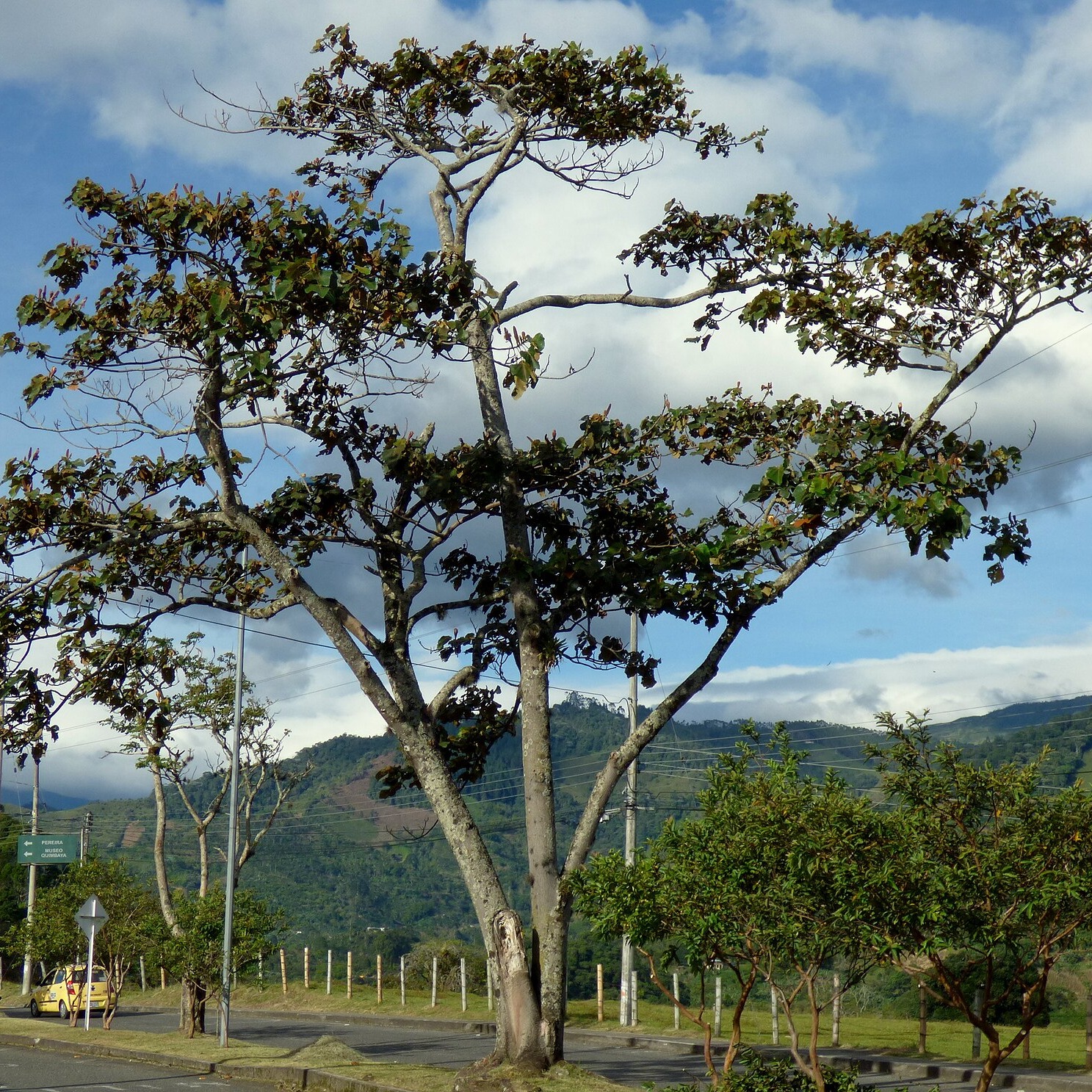
Ochroma pyramidale
Balsa Tree
(Cav. ex Lam.) Urb., 1920
Added by
Anonymous Curator
Reviewed by
Under Review
Last modified by
Julia Trouin
TaxonomyBiological classification ranks placing this species within the tree of life, from Kingdom down to Genus.
Ecology & StatusHow this species lives: habitat preferences, diet, behavior, population status, and role in its ecosystem.
OriginWhether the species is native (evolved here), endemic (found only here), or introduced by human activity.
Native
Population TrendDirection of change in population size over time: increasing, stable, decreasing, or unknown.
Stable
Trophic RolePosition in the food chain: producer, herbivore, carnivore, omnivore, decomposer, or parasite.
--
Growth HabitPhysical form and structure of the plant: tree, shrub, herb, vine, epiphyte, aquatic, etc.
--
Leaf TypeLeaf characteristics: deciduous (seasonal shed), evergreen, simple, compound, needle-like, etc.
--
Flowering SeasonTime of year when this species typically reproduces or flowers.
--
Recent SightingsWhether this species has been observed in the wild in Costa Rica within recent years.
Yes
Habitat SummaryOverview of the specific ecosystems and environments where this species is found in Costa Rica. Multi-lang
It is the quintessential light-demanding pioneer species. It is never found in the dark understory of closed primary forests. Instead, it rapidly colonizes forest clearings created by natural tree falls, landslides, flood-prone riverbanks, roadsides, and abandoned agricultural lands. It thrives in humid and very humid tropical climates, from sea level up to about 1,000 meters (3,300 feet) in elevation. It requires continuous full sun and high rainfall, although well-drained soil is preferred. It is one of the first trees to appear after a jungle is deforested, marking the beginning of secondary ecological succession.Light & Water NeedsSunlight intensity and moisture levels this plant needs to grow and reproduce successfully. Multi-lang
Information not available in English. Help us expand this record!BehaviourDaily activity patterns, movement, territory use, foraging style, and seasonal behavioral changes. Multi-lang
It displays an aggressive phenological behavior. It is a plant that 'lives fast and dies young', reaching reproductive maturity in barely 3 or 4 years. To sustain that growth, it consumes water and depletes surface soil nutrients very rapidly. As the end of the rainy season approaches (or upon suffering water stress), the balsa massively defoliates its dense canopy of green leaves. The enormous and heavy white flowers (which sometimes accumulate so much water and nectar that they drip) open after sunset and remain receptive for just a single day before withering under the tropical midday heat.Toxicity / UsesToxic compounds present and their documented effects on humans or other organisms. Multi-lang
Information not available in English. Help us expand this record!Physical Measures
Length (cm)
500.0 - 3000.0 cm