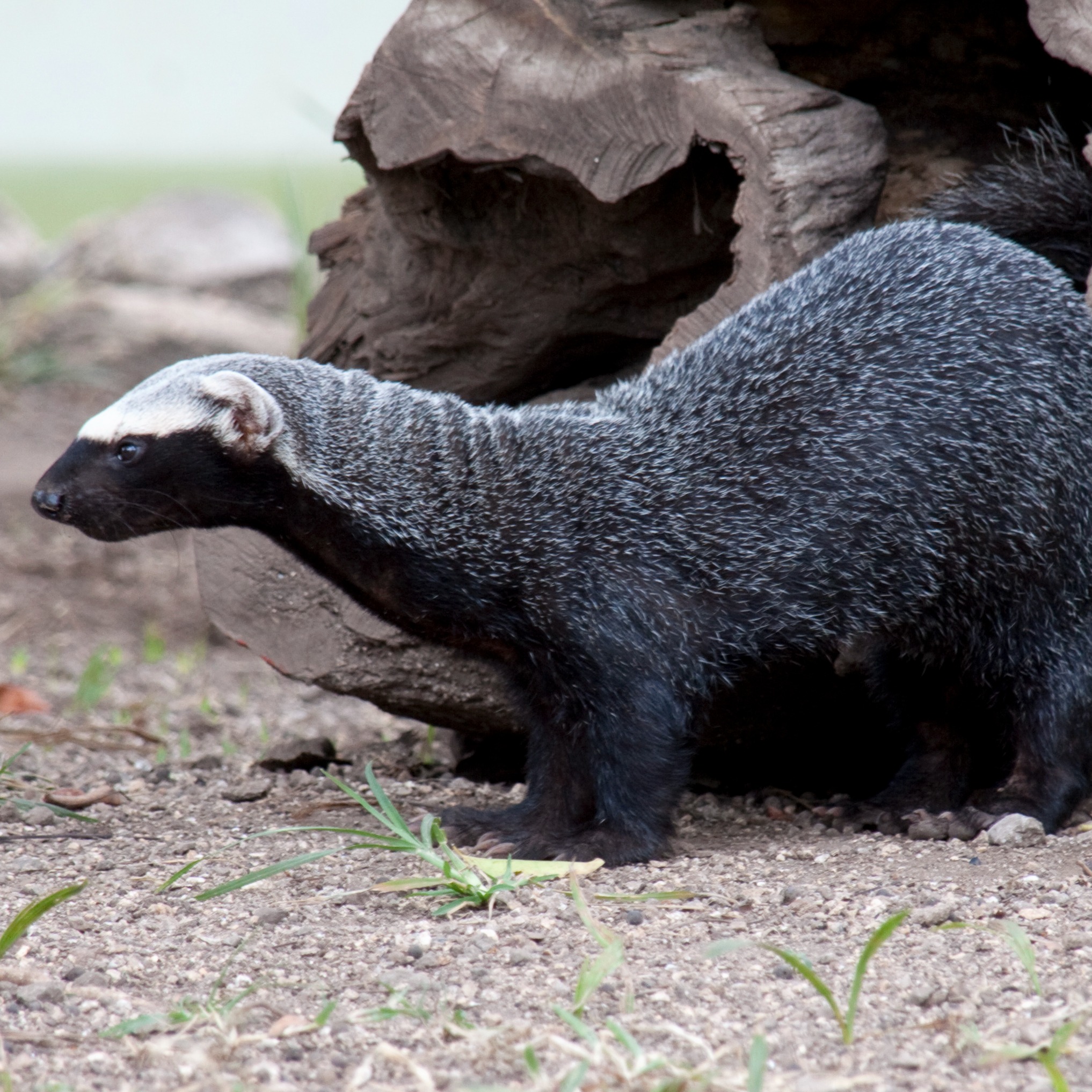
Galictis vittata
Greater Grison
(Schreber, 1776)
Added by
Anonymous Curator
Reviewed by
Under Review
Last modified by
Julia Trouin
TaxonomyBiological classification ranks placing this species within the tree of life, from Kingdom down to Genus.
Ecology & StatusHow this species lives: habitat preferences, diet, behavior, population status, and role in its ecosystem.
OriginWhether the species is native (evolved here), endemic (found only here), or introduced by human activity.
Native
Population TrendDirection of change in population size over time: increasing, stable, decreasing, or unknown.
Decreasing
Breeding SeasonTime of year when this species typically reproduces or flowers.
Year Round
Trophic RolePosition in the food chain: producer, herbivore, carnivore, omnivore, decomposer, or parasite.
Carnivore
Recent SightingsWhether this species has been observed in the wild in Costa Rica within recent years.
Yes
Habitat SummaryOverview of the specific ecosystems and environments where this species is found in Costa Rica. Multi-lang
It predominantly inhabits lowland areas, from sea level up to 1,200 meters in altitude. It prefers wet tropical and deciduous forests, gallery forests, and wooded savannas, but shows a strong association with water, frequently being found near rivers, streams, and wetlands. It can also tolerate a certain degree of human disturbance and is sighted in agricultural areas and plantations. In Costa Rica, it is more common in the Caribbean plains, the northern zone, and parts of the South Pacific.BehaviourDaily activity patterns, movement, territory use, foraging style, and seasonal behavioral changes. Multi-lang
Unlike many mustelids that are strictly solitary and nocturnal, the grison is predominantly diurnal and often very social. It is common to see them hunting or moving in pairs or small family groups (a mother with her kits), advancing single-file and communicating with a wide variety of grunts and sharp squeaks. They have an excellent sense of smell. When threatened, they can secrete a very unpleasant odor from their anal glands, though they cannot spray it with the precision of a skunk.Social ActivitySocial structure: whether the species is solitary, paired, or colonial; hierarchy and communication. Multi-lang
Unusually social for a mustelid. Often forages in pairs or closely-knit family groups that communicate vocally constantly so as not to get lost in the thick brush.Feeding GuildWhat the species eats, how it forages or hunts, and its role as a consumer in the food web. Multi-lang
Carnivore.Trophic Chain DetailsSpecific interactions in local food webs: prey species, predators, competitors, and scavengers. Multi-lang
Mesopredator (Carnivore). Its main diet consists of small to medium-sized vertebrates: rodents, lizards, snakes, frogs, fish, and birds. It plays an important role in rodent control. It is occasional prey for jaguars, pumas, ocelots, and large crested eagles.Reproductive BehaviourMating strategies, courtship displays, nesting or spawning behavior, and parental care. Multi-lang
Poorly documented in the wild, but it is known that reproduction can occur in any month. Gestation is relatively short, around 39 to 40 days. The mother prepares an underground burrow, often a natural hollow among rocks or tree roots near water, where she gives birth to 1 to 4 kits. The kits are born blind with very fine fur.Physical Measures
Length (cm)
45.0 - 60.0 cm
Weight (Grams)
1.50 kg - 3.80 kg
Lifespan
Sexual MaturityAge at which the individual becomes capable of reproducing for the first time.
10 - 12 Months
Gestation / IncubationDuration from fertilization to birth (mammals) or to hatching (egg-laying species).
39 - 41