
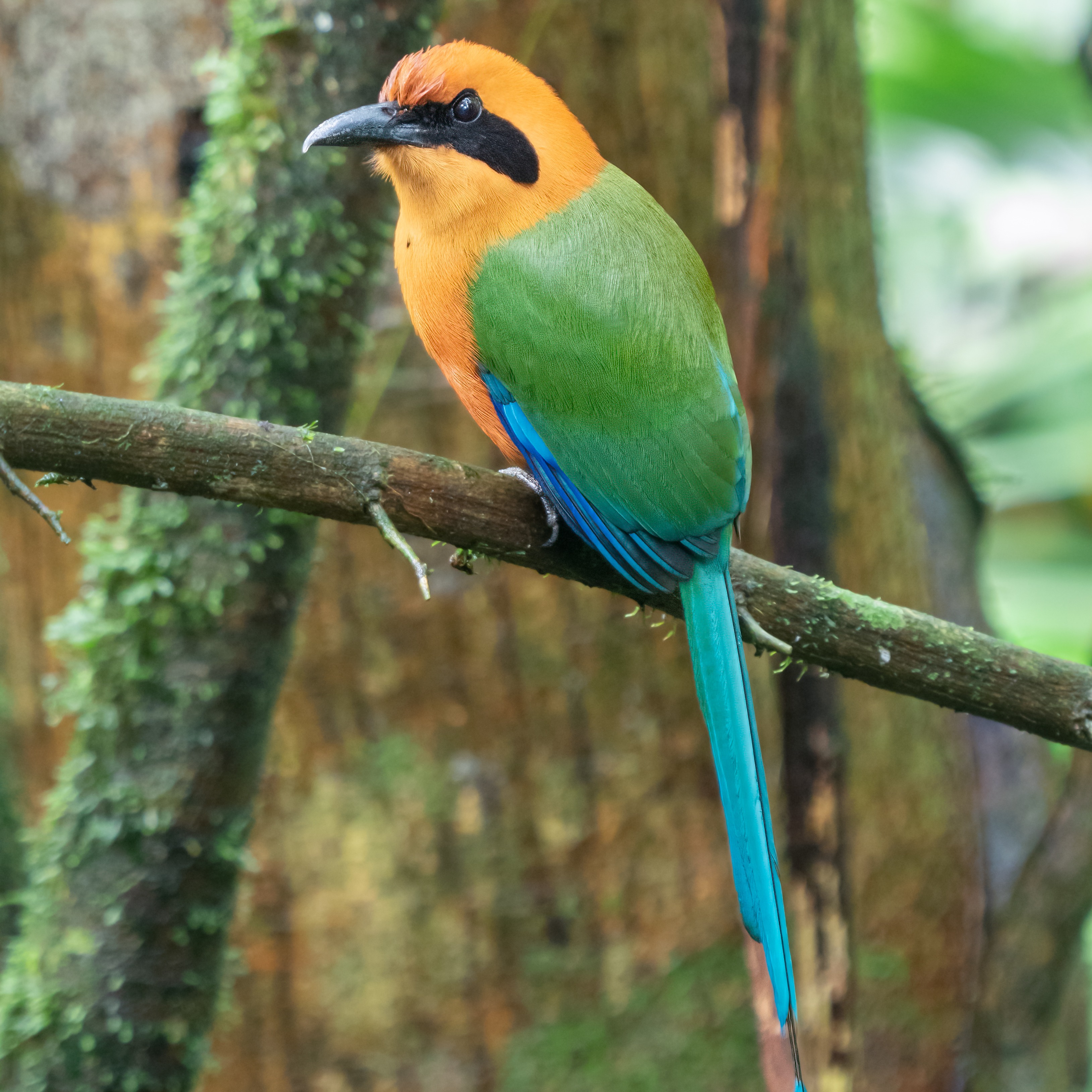
Baryphthengus martii
Rufous Motmot
(Spix, 1824)
Added by
Anonymous Curator
Reviewed by
Under Review
Last modified by
Julia Trouin
TaxonomyBiological classification ranks placing this species within the tree of life, from Kingdom down to Genus.
Ecology & StatusHow this species lives: habitat preferences, diet, behavior, population status, and role in its ecosystem.
OriginWhether the species is native (evolved here), endemic (found only here), or introduced by human activity.
Native
Population TrendDirection of change in population size over time: increasing, stable, decreasing, or unknown.
Decreasing
Breeding SeasonTime of year when this species typically reproduces or flowers.
Dry Season
Trophic RolePosition in the food chain: producer, herbivore, carnivore, omnivore, decomposer, or parasite.
Omnivore
Recent SightingsWhether this species has been observed in the wild in Costa Rica within recent years.
Yes
Habitat SummaryOverview of the specific ecosystems and environments where this species is found in Costa Rica. Multi-lang
It is a bird strictly tied to the depths of the rainforests. It prefers the understory and mid-story of humid lowland primary forests, deep wooded canyons, shaded riverbanks, and mature jungles. It avoids open spaces and dry areas. In Costa Rica, it is found almost exclusively in the humid Caribbean lowlands (such as Sarapiquí and Tortuguero) and in the very humid forests of the South Pacific (like Corcovado), from sea level up to 1,300 meters in elevation.BehaviourDaily activity patterns, movement, territory use, foraging style, and seasonal behavioral changes. Multi-lang
It is a patient sit-and-wait hunter. It spends hours completely motionless, perched vertically on a shaded mid-story branch, meticulously observing the forest floor or nearby foliage. When it detects prey, it makes a rapid, direct dash (sally-pounce), catches it with its massive bill, and returns to its branch. There, before swallowing it, it violently beats the prey repeatedly against the wood of the branch to kill it, remove spines, hard legs, or venomous shells.Social ActivitySocial structure: whether the species is solitary, paired, or colonial; hierarchy and communication. Multi-lang
The Rufous Motmot is a generally solitary bird or found in strongly bonded pairs. They are shy and stealthy birds that do not join mixed-species flocks and prefer to hunt and rest away from other birds.Feeding GuildWhat the species eats, how it forages or hunts, and its role as a consumer in the food web. Multi-lang
Omnivore / Sally-pounce predator.Trophic Chain DetailsSpecific interactions in local food webs: prey species, predators, competitors, and scavengers. Multi-lang
Omnivore. Its diet is very versatile and impressive given the size of its prey: it hunts large beetles, cicadas, giant spiders, and even small vertebrates like lizards, poison dart frogs, small fish from drying pools, and even crayfish. It also consumes a large quantity of wild fruits (such as palm fruits and laurels), swallowing the fruits whole and regurgitating the large intact seeds. The earthen nests are vulnerable to snakes, coatis, and tayras, while adults fear eagles and forest hawks.Reproductive BehaviourMating strategies, courtship displays, nesting or spawning behavior, and parental care. Multi-lang
Monogamous birds. Reproduction requires the presence of steep earth banks (riverbanks or deep landslides). Both parents work arduously using their bills and feet to excavate a tunnel that can measure between 2 and 5 meters long, ending in a wide, completely dark chamber. They do not line the nest. The female typically lays 3 or 4 white eggs directly on the tunnel floor. Both parents incubate the eggs (about 21 days) and both hunt incessantly to bring food to the altricial chicks. The young leave the safety of their dark subterranean world after about a month.Physical Measures
Length (cm)
42.0 - 46.0 cm
Weight (Grams)
150 g - 200 g
Lifespan
Sexual MaturityAge at which the individual becomes capable of reproducing for the first time.
12 - 24 Months
Gestation / IncubationDuration from fertilization to birth (mammals) or to hatching (egg-laying species).
20 - 22