
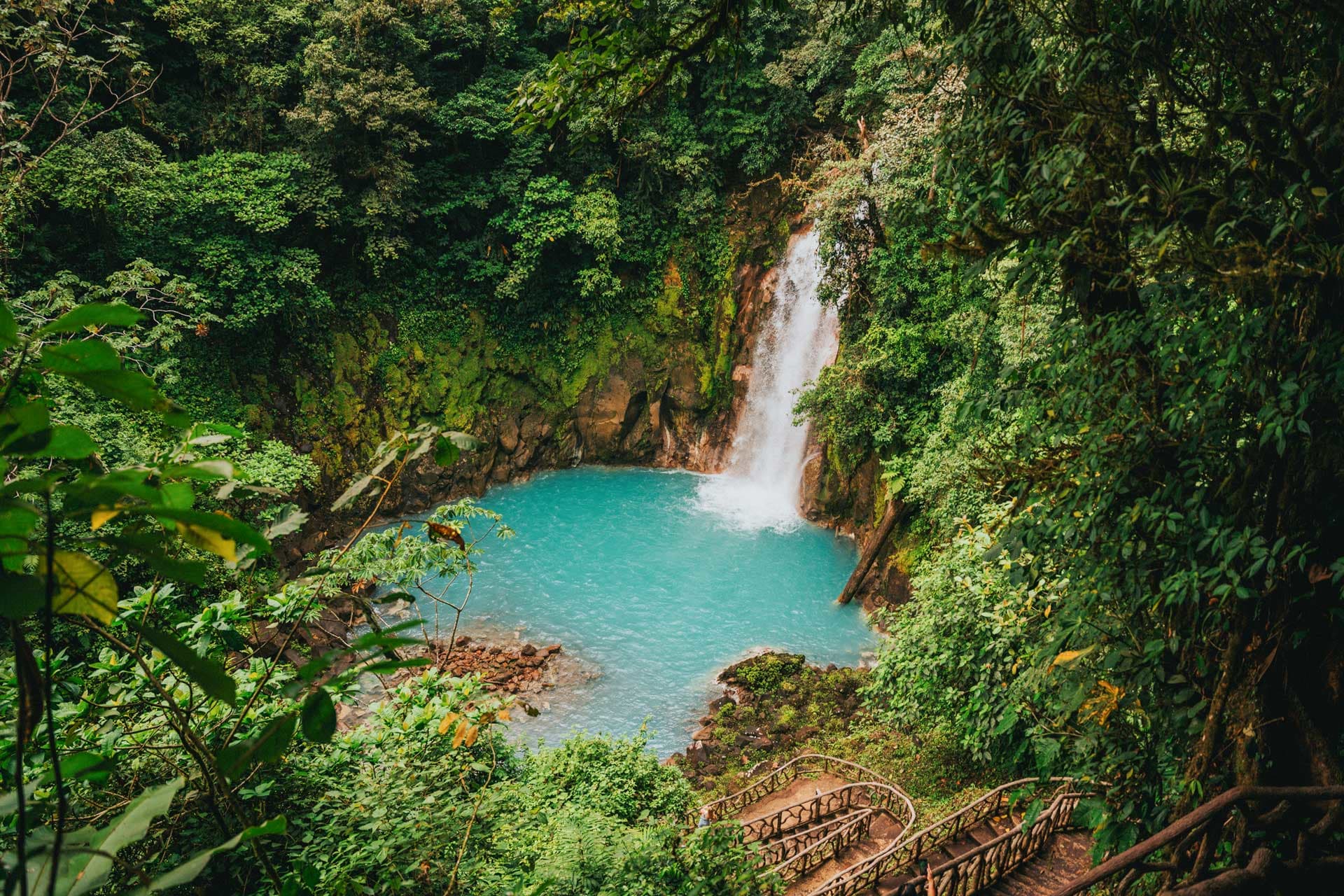
Tropical Rainforest
Added by
Anonymous Curator
Reviewed by
Under Review
Last modified by
Julia Trouin
Detailed Description
The tropical rainforest is the ultimate expression of biodiversity on the planet, characterized by a complex vertical structure of multiple strata. Majestic trees such as the Ceiba or the Great Green Macaw almond tree exceed 50 meters, forming a dense canopy that shelters an infinite network of epiphytes, orchids, and bromeliads. This ecosystem is crucial for global climate stability, acting as a giant lung that processes carbon dioxide and regulates the water cycle through constant evapotranspiration. In Costa Rica, these forests are a sanctuary for emblematic species such as the jaguar, the Baird's tapir, and the scarlet macaw, maintaining ancient evolutionary processes in an environment of constant competition and symbiosis.
Climate Metrics
Basic Identification
Locations in Costa RicaGeographic regions of Costa Rica where this habitat or species has been documented.
Best Season to VisitBest times of year to visit or observe this area at its most biodiverse.
Climate & EnvironmentTypical weather patterns, temperature ranges, and seasonal rainfall affecting this location.
Warm and extremely humid climate. The average temperature ranges between 24°C and 30°C with relative humidity that rarely drops below 85%. Rainfall is abundant throughout most of the year, with a brief decrease between February and April.