



Yellow‑eared Toucanet

Selenidera spectabilis (Gould, 1859)

Also known / common namesSpanish – Tucancillo orejiamarillo, Arasarí orejiamarillo; Bribri – Bríkwa‑tsö; Cabécar – Tsá‑čik

Yellow‑eared Toucanet(s) General Description

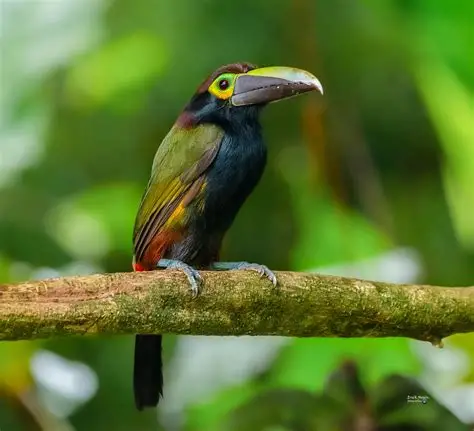
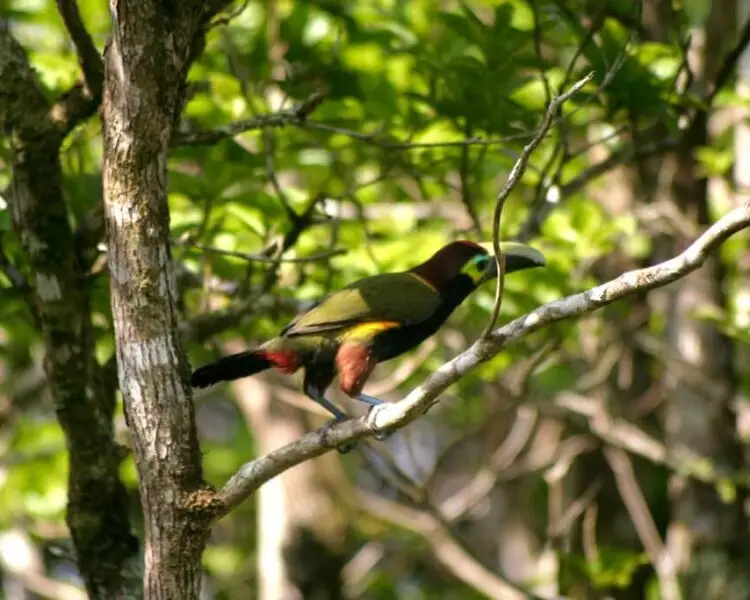
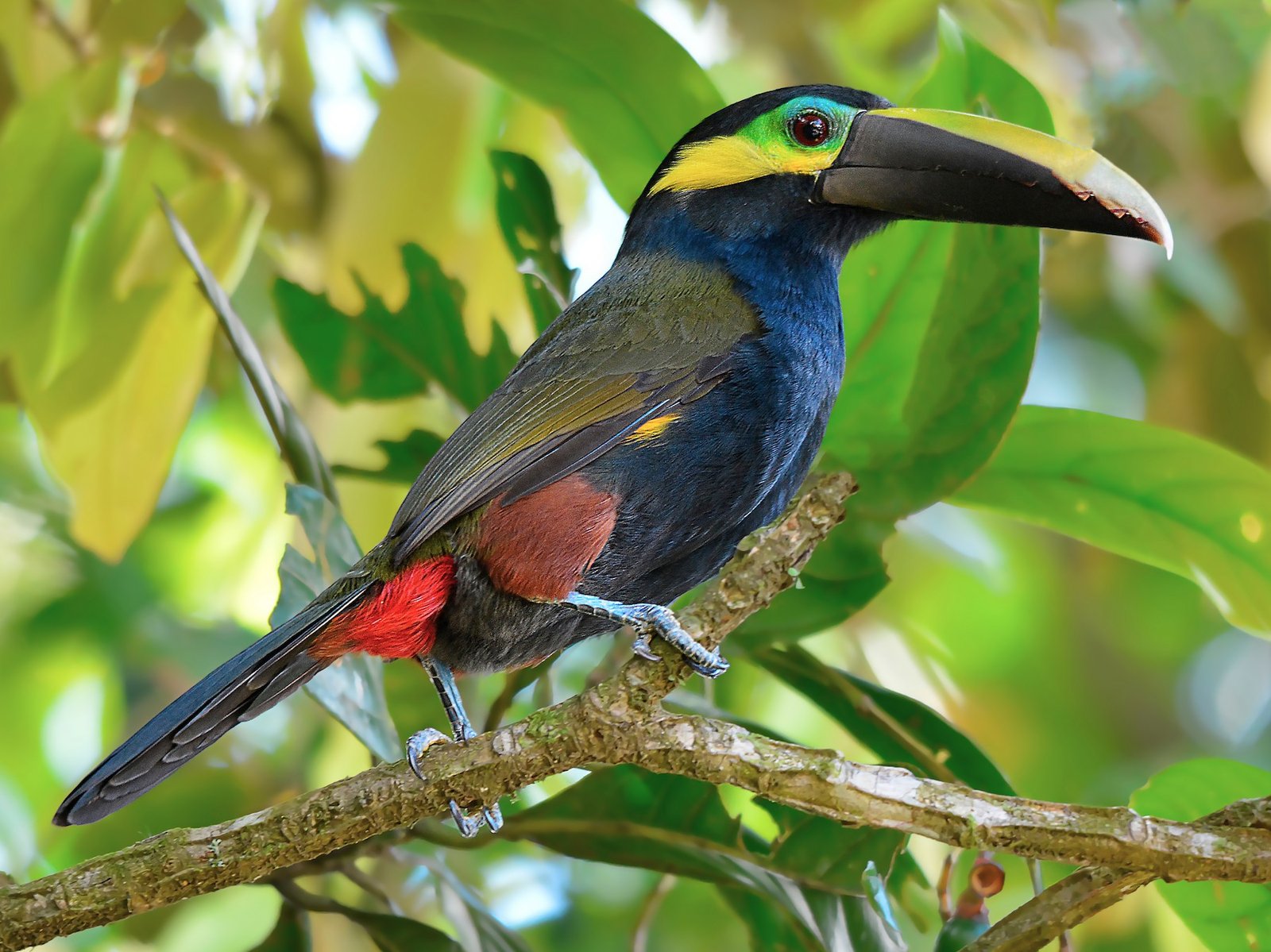
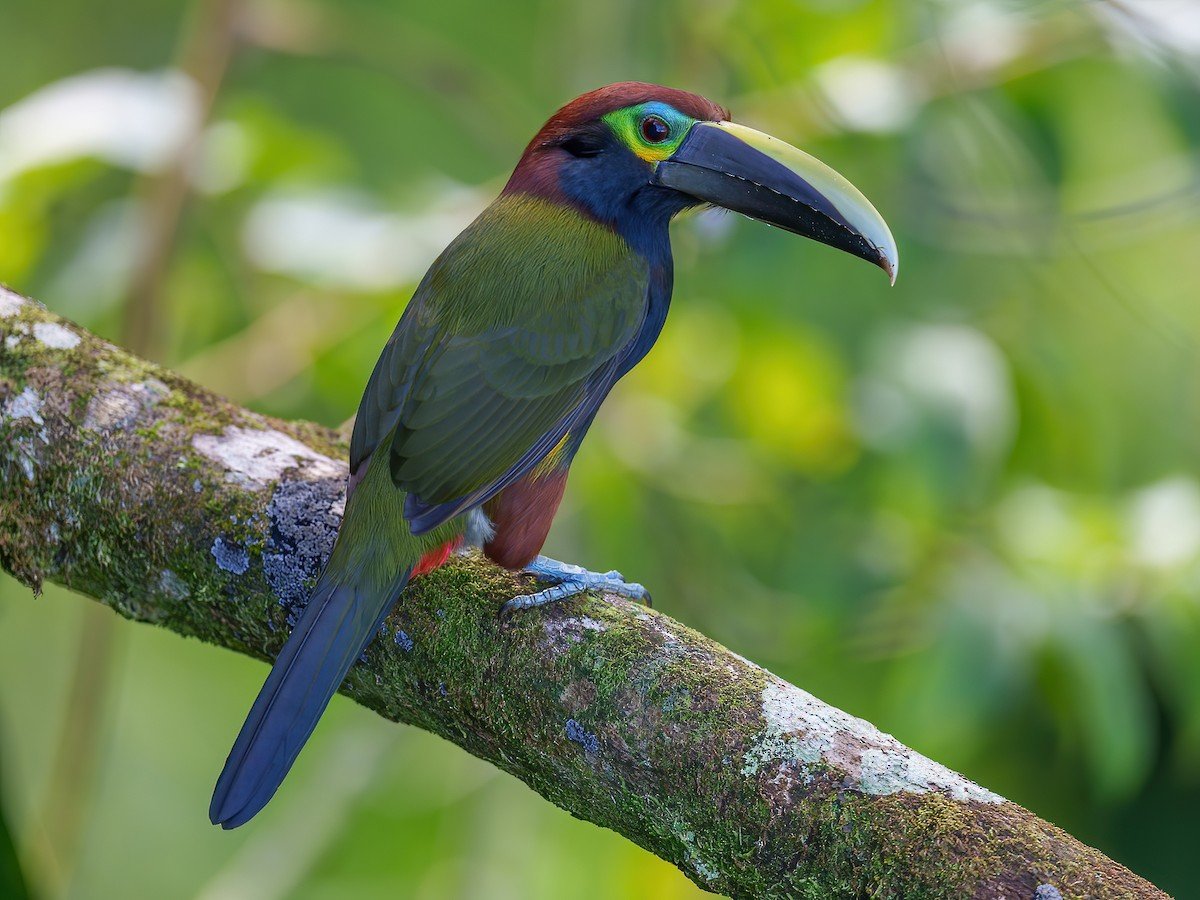
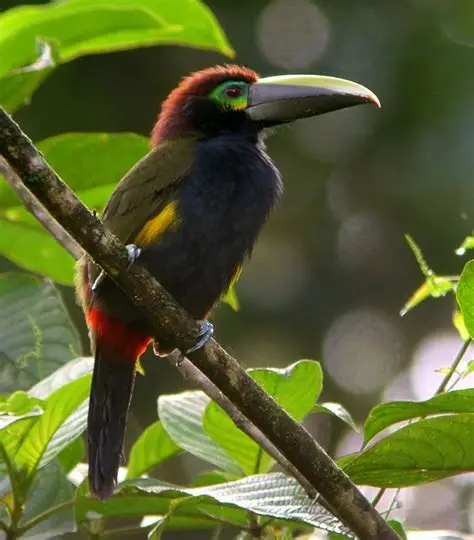
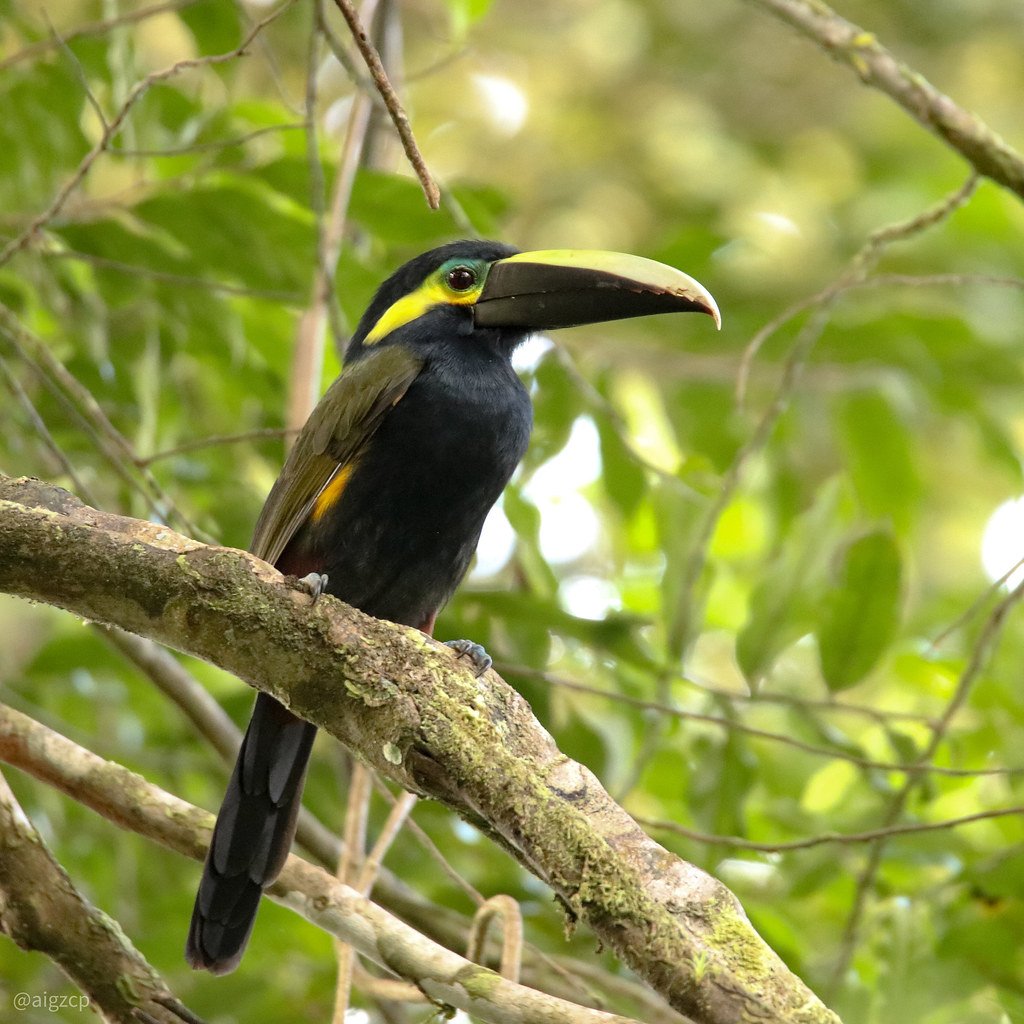
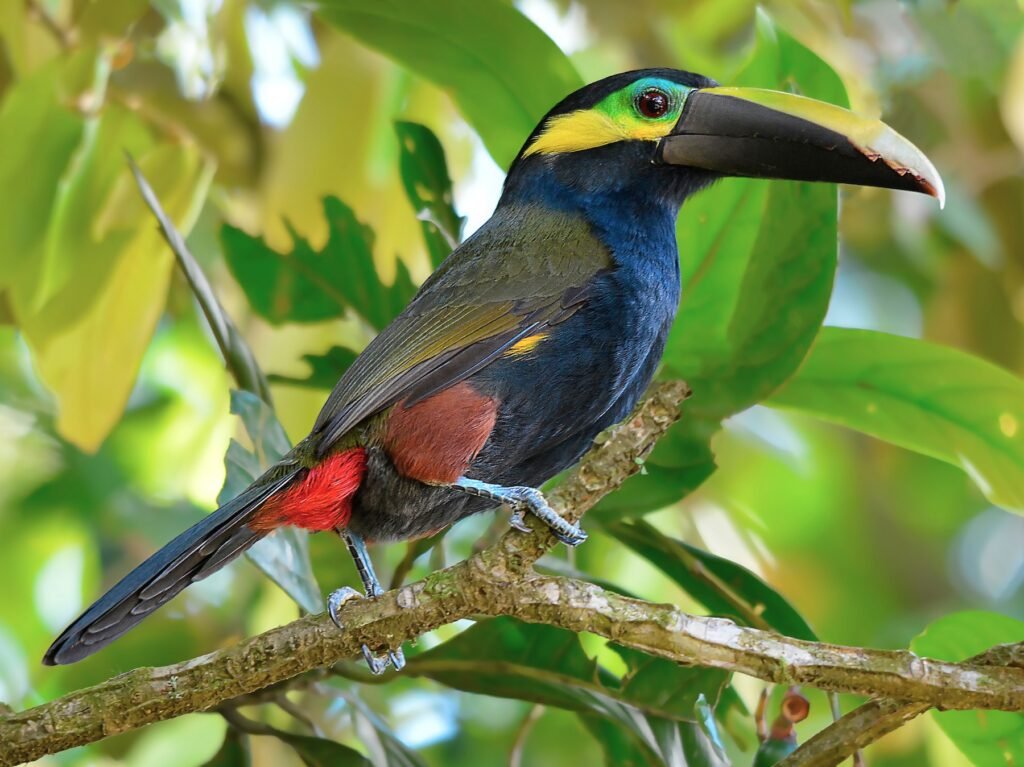
Small, sexually dimorphic toucan 34–38 cm long. Male: glossy black head, neck and underparts; striking lemon‑yellow ear patch bordered by white; nape olive‑green; upperparts dark green; undertail coverts scarlet. Bill laterally compressed (length 7–9 cm) with black maxilla, white culmen stripe, and chestnut mandible; basal two‑thirds pale bluish‑green. Female: crown and nape rich chestnut; throat buffy white; yellow ear patch reduced. Bare orbital skin turquoise; legs slate‑blue. Tail squared, green above, dusky below. Weight 200–260 g. Juveniles duller with brown ear patch and shorter bill.

Has Sexual Diamorphism?

Yes — male black‑and‑yellow; female chestnut‑headed; bill pattern similar.

LIFE‑HISTORY & VITAL STATISTICS OF THE Yellow‑eared Toucanet(S)

Average Height / Length / Diameter

Total length 34–38 cm; wingspan ≈ 48 cm

Average Adult Weight / Mass

200–260 g

Typical Lifespan / Longevity

10–14 yr wild; up to 18 yr captivity

Typical Lifespan / Longevity for males

Data deficient

Typical Lifespan / Longevity for Females

Data deficient

Age at Sexual Maturity

≈ 2 yr

Breading Season

March – June (late dry / early wet season)

Gestation

Reproductive Outcome

2–4 white eggs; usually one clutch yr⁻¹

Ecology and Behaviour for Yellow‑eared Toucanet(s)

Small, sexually dimorphic toucan 34–38 cm long. Male: glossy black head, neck and underparts; striking lemon‑yellow ear patch bordered by white; nape olive‑green; upperparts dark green; undertail coverts scarlet. Bill laterally compressed (length 7–9 cm) with black maxilla, white culmen stripe, and chestnut mandible; basal two‑thirds pale bluish‑green. Female: crown and nape rich chestnut; throat buffy white; yellow ear patch reduced. Bare orbital skin turquoise; legs slate‑blue. Tail squared, green above, dusky below. Weight 200–260 g. Juveniles duller with brown ear patch and shorter bill.

Habitat

Restricted to humid Caribbean‑slope foothill and lower‑montane rainforest (500 – 1 500 m), often along ridge crests and steep ravines with abundant palms and hemiepiphytic figs; tolerates tall secondary forest but avoids open pasture.

Trophic Chain

Primarily frugivore (≈ 80 %) on Ilex, Prestoea, Ficus; supplements with large insects, anoles and frogs; important mid‑elevation seed disperser.

Interespecies relationships noted for Yellow‑eared Toucanet

Mutualism + / +

Disperses Prestoea decurrens (palm) seeds > 250 m; gains lipid‑rich pulp.

Symbiosis + / +

Gut microbiota ferment fiber‑rich Lauraceae mesocarp, providing short‑chain fatty acids to toucanet.

Commensalism + / 0

Tawny‑chested flycatcher catches insects flushed by foraging toucanets.

Inquilinism + / 0

Pygmy owl (Glaucidium costaricanum) nests in abandoned toucanet cavities at 1 200 m.

Phoresy +/0

No documented case.

Tanatocresis + / 0

Stingless bees establish hives in old nest holes after toucanets fledge.

Parasitism + / –

Feather mites (Ramphasticola) and botflies (Philornis) infest plumage and nestlings.

Predation + / –

Preyed upon by bicoloured hawk (Accipiter bicolor) and arboreal pit‑vipers; toucanet preys on eggs of canopy icterids.

Amensalism 0 / –

Heavy utilization of limited fruit clusters reduces availability for quetzals in lean fruit years.

Competition – / –

Competes with emerald‑toucanets for nest cavities and Ilex fruit in overlapping elevational bands.

Social behaviour of Yellow‑eared Toucanet

Social Structure & Behaviour

  • Activity pattern: diurnal; active 06:00–11:00 & 15:00–17:00.

  • Group size: usually pairs or trios (breeding pair + 1 helper); gather up to 8 at large fruiting trees.

  • Breeding system: seasonal monogamy; helpers occasionally feed nestlings.

  • Territoriality: pairs maintain 3–4 ha territories, defended with duet calls and wing‑flick displays.

  • Communication: duet of 10–20 sharp “tik” notes; bill clacks in close contact; male displays yellow ear patch by head‑tilting.

  • Special behaviours: regurgitates fruit seeds intact, wiping bill on moss; roosts communally inside vertical cavities with bills pointed upward.

Distribution and Sighthings ofYellow‑eared Toucanet(s) in Costa Rica

General Regions of Costa Rica where to find Yellow‑eared Toucanets

National Parks and Reserves of Costa Rica where to find Yellow‑eared Toucanets

Parque Nacional Barbilla
Parque Nacional Braulio Carrillo
Parque Internacional La Amistad
Reserva Biológica Hitoy-Cerere

Best Time to seeYellow‑eared Toucanet(s) in Costa Rica

Dry Season
January
February
March
April
June
July
August
September
October
November
December

Media

Videos

Sounds and calls

Taxonomy

Conservation Status

Status IUCN

Threats

⚠️Deforestation of Caribbean foothill forest for cattle and pineapple cultivation.
⚠️Selective removal of large cavity trees (e.g., Dipteryx, Terminalia).
⚠️Pesticide drift reducing insect prey and fruit set near plantations.
⚠️Road construction fragmenting elevational corridors critical for seasonal movements.

Fun Facts

  • Emits a rapid, far‑carrying “tí‑tí‑tí‑tí‑tí” duet; sexes call alternately.

  • Sexual dichromatism unique among Costa‑Rican toucans: female’s chestnut head provides camouflage on nest.

  • Frequently joins mixed flocks of tanagers and furnariids at fruiting Ilex trees.

  • Shares nest‑cavity attendance with non‑breeding helpers that may be previous offspring.

  • Infrared studies show the bill can radiate up to 30 % of resting metabolic heat.

Origins & Record

Origin Status

Native

Population trend

Stable

Added by

Reviewed by

More Species

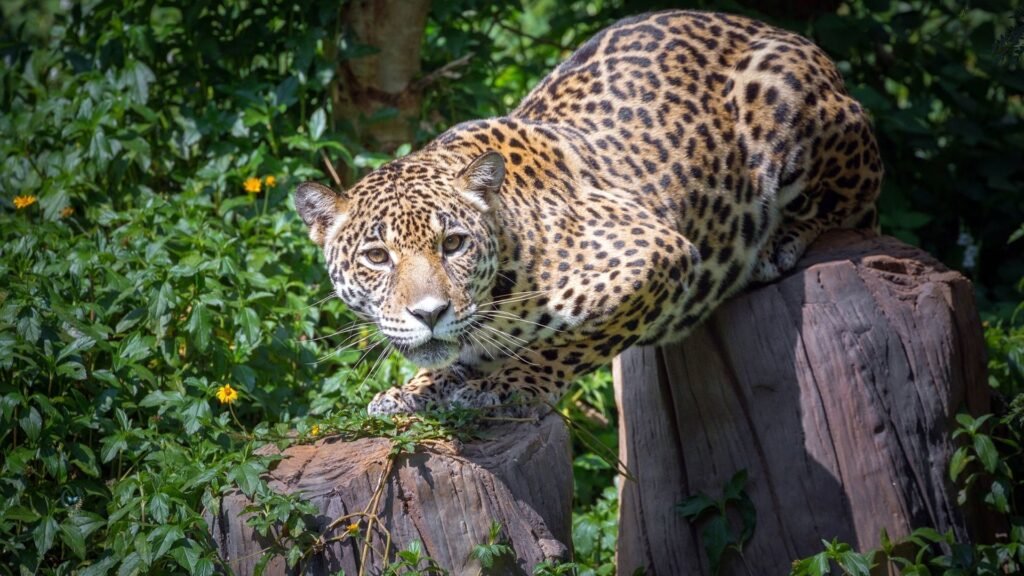
Jaguar

The jaguar is the largest felid native to the Americas and a stocky, powerfully built big cat with a massive head, very strong jaws, and relatively short, muscular limbs.

Coat ground color ranges from pale yellow to tawny or reddish, overlaid with distinctive black rosettes that typically encircle one or more central spots (helping distinguish it from the leopard).

Read More »