



Whitetip Reef Shark

Triaenodon obesus (Rüppell, 1837)

Also known / common namesSpanish – Tiburón punta blanca de arrecife, Pejegato; Bribri – Suré‑tök; Cabécar – Tsunu‑ská

Whitetip Reef Shark(s) General Description

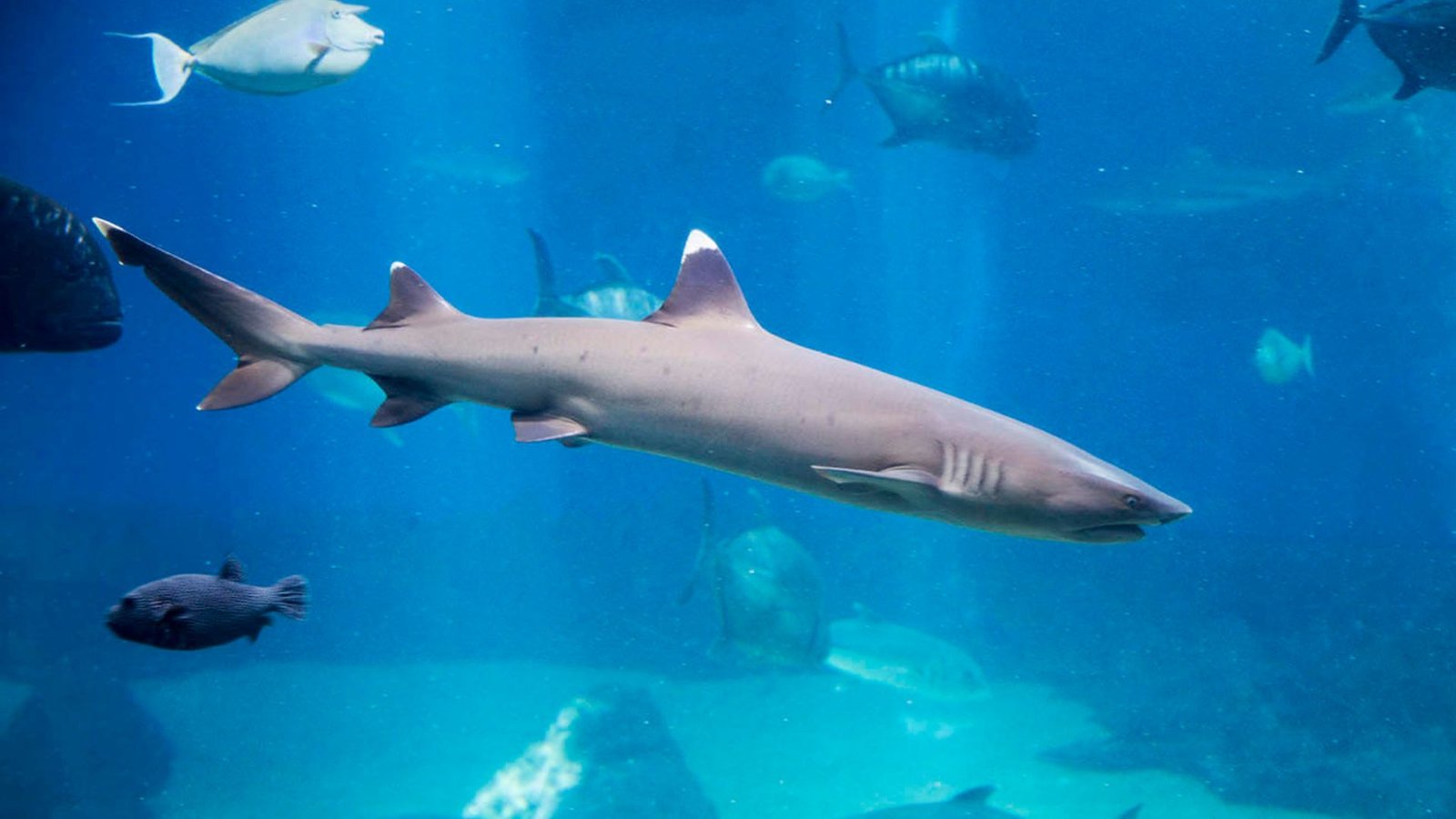
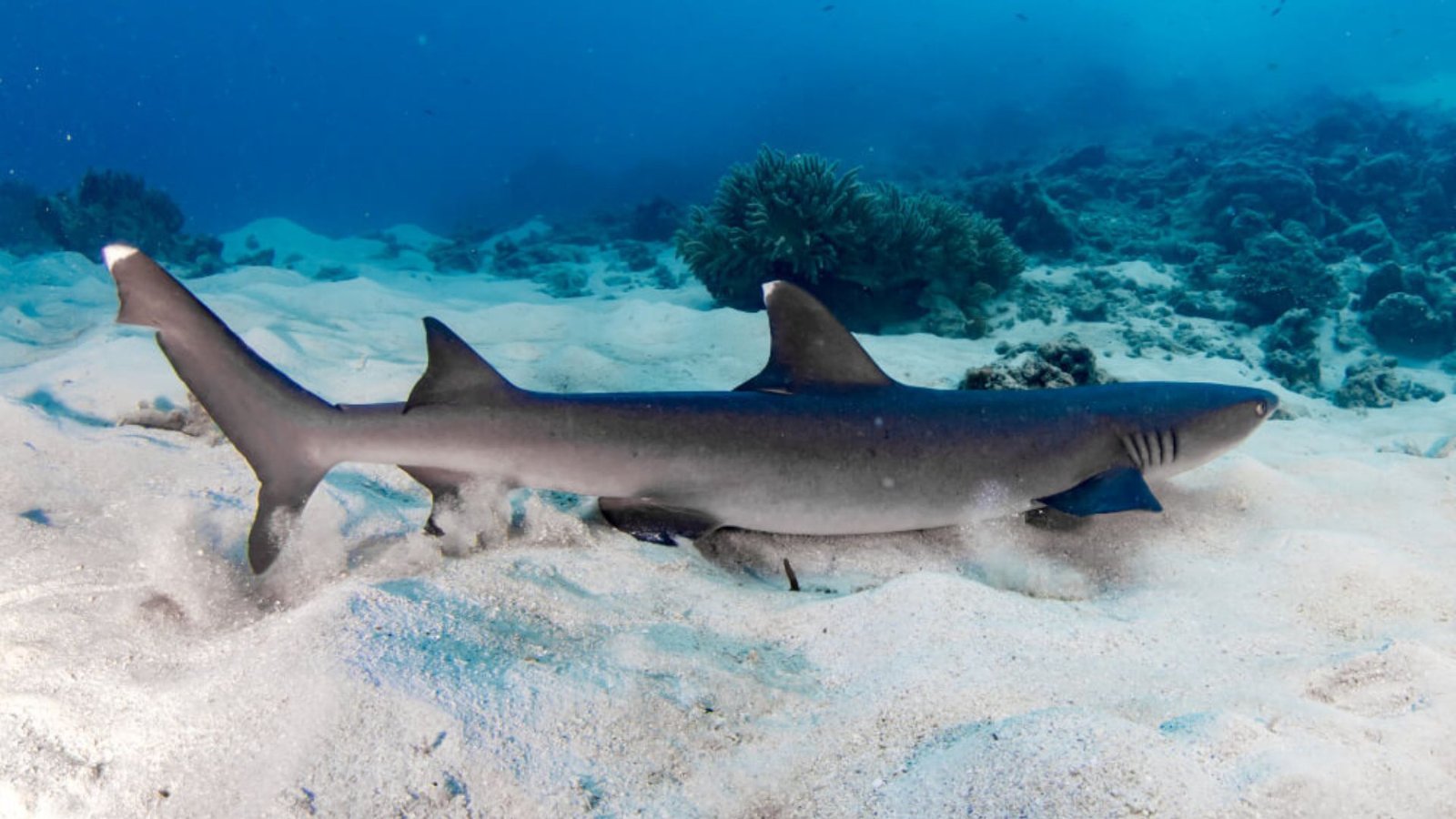
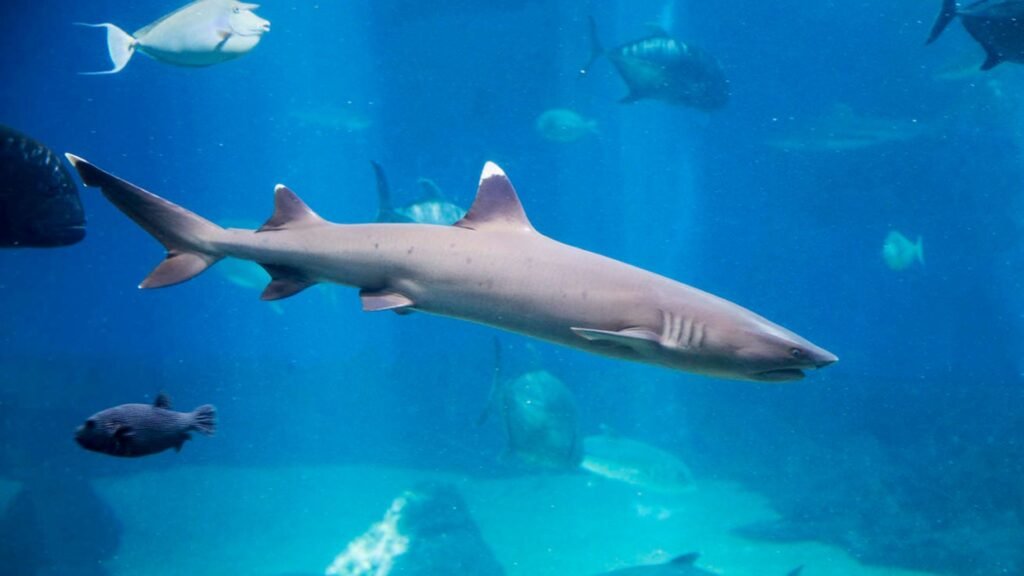
Slender, small‑to‑medium reef shark distinguished by conspicuous white tips on first dorsal and upper caudal fins. Snout short, broad and blunt; eyes large, oval with vertical pupil. Dorsum grey‑brown, often with faint dark speckles; belly whitish. First dorsal origin well behind pectoral rear tips; second dorsal and anal low but elongated. Caudal fin strongly notched with white‑tipped upper lobe. Adults average 1.3 – 1.6 m total length (TL), maximum ~2.1 m; mass 18 – 30 kg. Dermal denticles arrow‑shaped giving rough texture. Sexes similar, females slightly longer; males possess claspers.

Has Sexual Diamorphism?

LIFE‑HISTORY & VITAL STATISTICS OF THE Whitetip Reef Shark(S)

Average Height / Length / Diameter

Males 1.4 m; females 1.5 m

Average Adult Weight / Mass

18 – 30 kg

Typical Lifespan / Longevity

~25 yr

Typical Lifespan / Longevity for males

Data deficient

Typical Lifespan / Longevity for Females

Data deficient

Age at Sexual Maturity

Males ≈ 8 yr / 105 cm; females ≈ 9 yr / 110 cm

Breading Season

Biennial; mating/parturition March – May in Eastern Tropical Pacific

Gestation

1 – 6 pups (mean 3)

Reproductive Outcome

≈ 12 mo

Ecology and Behaviour for Whitetip Reef Shark(s)

Slender, small‑to‑medium reef shark distinguished by conspicuous white tips on first dorsal and upper caudal fins. Snout short, broad and blunt; eyes large, oval with vertical pupil. Dorsum grey‑brown, often with faint dark speckles; belly whitish. First dorsal origin well behind pectoral rear tips; second dorsal and anal low but elongated. Caudal fin strongly notched with white‑tipped upper lobe. Adults average 1.3 – 1.6 m total length (TL), maximum ~2.1 m; mass 18 – 30 kg. Dermal denticles arrow‑shaped giving rough texture. Sexes similar, females slightly longer; males possess claspers.

Habitat

Shallow coral and rocky reefs (1 – 65 m), ledges, caves and surge channels; in Costa Rica abundant at Isla del Coco, Isla del Caño, Murciélago Archipelago and rocky points of Golfo Dulce. Often rests in groups inside caves by day.

Trophic Chain

Nocturnal mesopredator feeding on benthic bony fishes (parrotfish, squirrelfish), octopus, spiny lobsters and crustaceans; hunts by wedging into crevices using slender body.

Interespecies relationships noted for Whitetip Reef Shark

Mutualism + / +

Cleaner wrasses (Labroides dimidiatus) pick parasites; shark gains hygiene, fish gain food.

Symbiosis + / +

Gut microbes aid digestion of crustacean chitin.

Commensalism + / 0

Soldierfish shelter near resting sharks, gaining protection; shark unaffected.

Inquilinism + / 0

Reef lobsters share cave space beneath shark stack for cover.

Phoresy + / 0

Remoras attach briefly for transport between reef heads.

Tanatocresis + / 0

Dead sharks provide carrion for moray eels and crabs.

Parasitism + / –

Copepods (Kroyeria) infest gills, inhibiting respiration.

Predation + / –

Eats sleeping parrotfish, octopus, crustaceans; juveniles preyed on by tiger sharks.

Amensalism 0 / –

Disturbance by shark flushes reef fish, reducing their feeding without benefiting shark.

Competition – / –

Competes with blacktip reef shark for night‑active reef fish prey.

Social behaviour of Whitetip Reef Shark

A. Social Structure & Behaviour

  • Activity pattern: nocturnal hunter; diurnal resting in caves, often stacked in groups.

  • Group size: solitary while feeding; daytime groups 5 – 25 in shared shelters.

  • Movements: high site fidelity to specific caves; home range < 2 km².

  • Communication: gentle nudges and body contact maintain resting order; threat yawns toward intruders.

  • Special behaviours: spirals into tight crevices chasing prey; employs suction to extract octopus.

Distribution and Sighthings ofWhitetip Reef Shark(s) in Costa Rica

General Regions of Costa Rica where to find Whitetip Reef Sharks

Coral reefs (Cocos and coastal bathymetries)
Pacific Ocean

National Parks and Reserves of Costa Rica where to find Whitetip Reef Sharks

Parque Nacional Isla del Coco
Parque Nacional Santa Rosa
Reserva Biológica Isla del Caño
Refugio Nacional de Vida Silvestre Bahía Junquillal
Refugio Nacional de Vida Silvestre Curú

Best Time to seeWhitetip Reef Shark(s) in Costa Rica

Dry Season
January
February
March
April
June
July
August
September
October
November
December

Media

Videos

Sounds and calls

Taxonomy

Conservation Status

Status IUCN

Threats

⚠️Targeted night spearfishing and line fishing for shark‑fin trade.
⚠️Degradation of coral and rocky reef habitat from coastal development and sedimentation.
⚠️High site fidelity makes local populations vulnerable to over‑extraction.
⚠️Marine debris ingestion reported in stomach contents at Isla del Coco.

Fun Facts

  • Can pump water over gills while stationary, allowing hours‑long rest in low‑oxygen caves.

  • Often piles atop one another in “shark stacks” of 20 + individuals at popular dive spots.

  • Uses highly sensitive electroreceptors to detect prey hidden under coral heads.

  • Night dives at Cocos reveal cooperative hunting with giant moray eels flushing fish from crevices.

  • One of the few sharks that can bend sharply, enabling entry into narrow reef holes.

Origins & Record

Origin Status

Native

Population trend

Decreasing

Added by

Reviewed by

More Species

Silky Shark

Slender, oceanic requiem shark with a notably silky‑smooth skin created by densely packed dermal denticles. First dorsal fin moderately tall, origin behind pectoral free tips; second dorsal possesses a long free rear tip. Pectorals long, narrow, falcate. Snout long and rounded; eyes large with nictitating membranes. Colour uniform dark bronzy‑grey above, white below; no distinct fin markings except faint dusky tips in juveniles. Adults average 2.2–2.6 m TL (maximum 3.5 m) and 150‑170 kg. Teeth: upper narrow, serrated; lower slender, semi‑erect. Sexual dimorphism minimal—females slightly larger, males with claspers.

Read More »