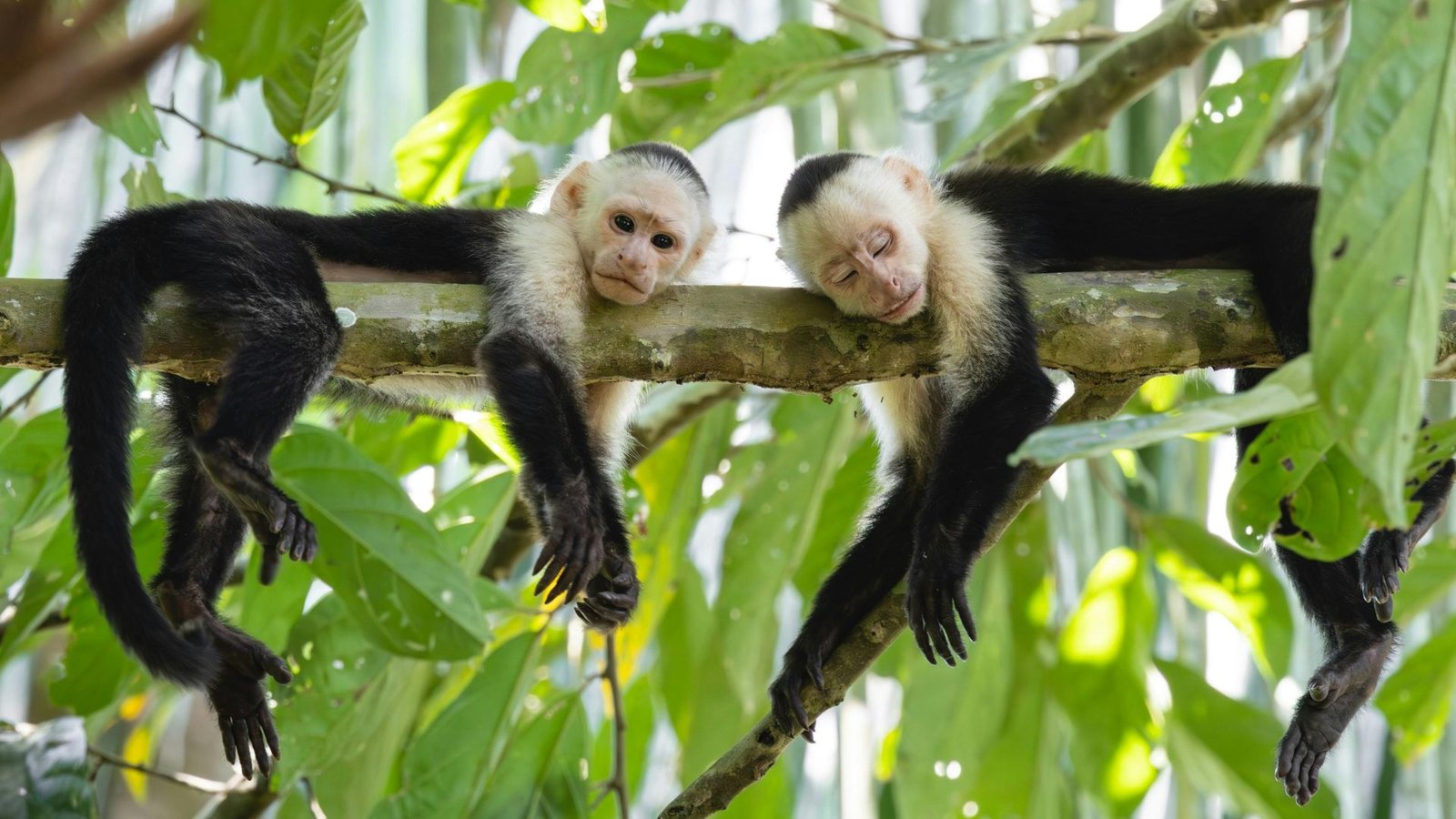

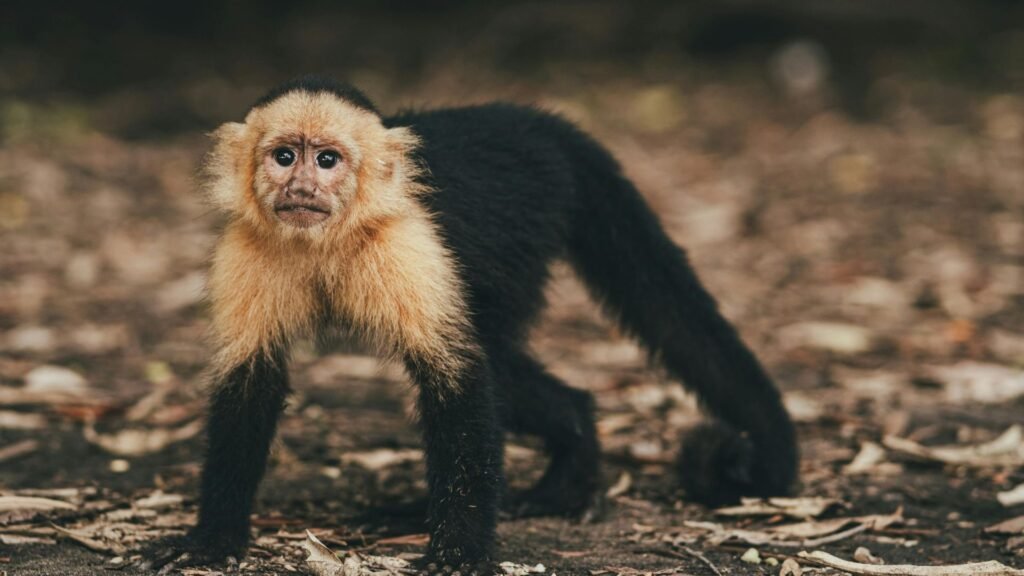



Small, highly agile New‑World monkey distinguished by a creamy‑white face, throat, shoulders and chest that contrast sharply with glossy black limbs, back and tail. Crown sports a dark “cap” bordered by a pale brow band. Head–body length 33–45 cm; prehensile tail 40–55 cm equals or exceeds body length and is furred to tip. Adult males weigh 3.4–4.8 kg (mean ≈ 3.9 kg), females 2.5–3.9 kg. Limbs are long and gracile with curved digits for rapid quadrupedal and arboreal travel; hind limbs proportionally longer, facilitating 3–4 m leaps. Dentition features robust premolars and canines suited to cracking hard fruits and arthropod exoskeletons. Infants are born pale grey‑pink, developing adult coloration by three months. [1][3]
Sexual dimorphism refers to the physical differences between males and females of the same species that go beyond reproductive organs. For example, size, colour or form.
adult males ~25 % heavier with enlarged canines and more pronounced cranial crest; females smaller and lighter.
Head–body 33–45 cm; tail 40–55 cm
Males 3.4–4.8 kg; females 2.5–3.9 kg
25–30 yr wild; up to 54 yr captivity
Data deficient
Data deficient
Females ≈ 4 yr; males ≈ 6 yr
Aseasonal; births peak Oct–Dec (late rainy season)
Number of Offspring per Event: 1 infant; inter‑birth interval ≈ 26 mo
Small, highly agile New‑World monkey distinguished by a creamy‑white face, throat, shoulders and chest that contrast sharply with glossy black limbs, back and tail. Crown sports a dark “cap” bordered by a pale brow band. Head–body length 33–45 cm; prehensile tail 40–55 cm equals or exceeds body length and is furred to tip. Adult males weigh 3.4–4.8 kg (mean ≈ 3.9 kg), females 2.5–3.9 kg. Limbs are long and gracile with curved digits for rapid quadrupedal and arboreal travel; hind limbs proportionally longer, facilitating 3–4 m leaps. Dentition features robust premolars and canines suited to cracking hard fruits and arthropod exoskeletons. Infants are born pale grey‑pink, developing adult coloration by three months. [1][3]
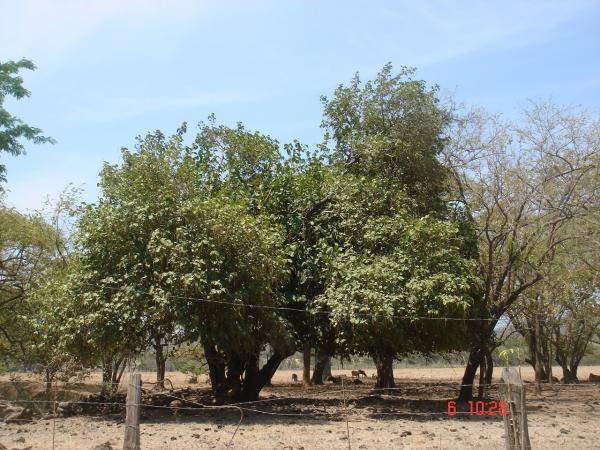
Inhabits primary and secondary lowland rain forest, seasonal dry forest, mangroves and premontane gallery forest from sea level to ~1 600 m; tolerates human‑modified mosaics if canopy connectivity persists.
Omnivorous frugivore–insectivore: diet ~55 % fruit, 30 % invertebrates, 10 % vertebrate prey, 5 % plant exudates; key seed disperser
Activity pattern: strictly diurnal; 50 – 70 % of the day devoted to foraging and extractive processing.
Group size: multi‑male/multi‑female troops of 10 – 35 (average ≈ 18).
Mating system: polygynandrous; alpha male sires most infants but females may mate promiscuously.
Dispersal: females are philopatric (remain natal); males disperse at ≈ 6 yr and may immigrate with peers.
Dominance: linear female hierarchy based on matrilines; males exhibit queuing dominance that changes after take‑overs.
Territoriality: home ranges 30 – 150 ha with 20–40 % overlap; vigorous vocal and chase encounters at core‑area borders.
Communication: 30 + distinct vocalisations (chirps, barks, “hiccups”), facial grimaces, branch shaking, urine‑washing.
Special behaviours: renowned tool use—stone pounding of hard fruits, leaf “sponge” dipping for water, millipede rubbing as insect repellent; cooperative coalitions during intergroup conflicts; alloparental carrying of infants by sub‑adults.

Taxonomic classification is a hierarchical system used in biology to organize and name living organisms. It arranges species into nested groups based on shared characteristics and evolutionary relationships.
🌍 The IUCN status refers to the conservation category assigned to a species by the International Union for Conservation of Nature, based on its risk of extinction
Exhibits one of the highest encephalization quotients among New‑World monkeys, enabling complex problem‑solving.
Uses leaves as “insect repellent” by rubbing aromatic plants over fur during grooming.
Female‑bonded societies practise alloparenting; males typically disperse at puberty.
Documented to crack oysters and snails with stones in mangrove habitats—rare tool use in Neotropics.
Vocal repertoire includes over 30 discrete calls ranging from whistles to barks for predator alarm.
Native
Decreasing