


Swainson’s Hawk

Buteo swainsoni Bonaparte, 1838

Also known / common namesHalcón de Swainson

Swainson’s Hawk(s) General Description

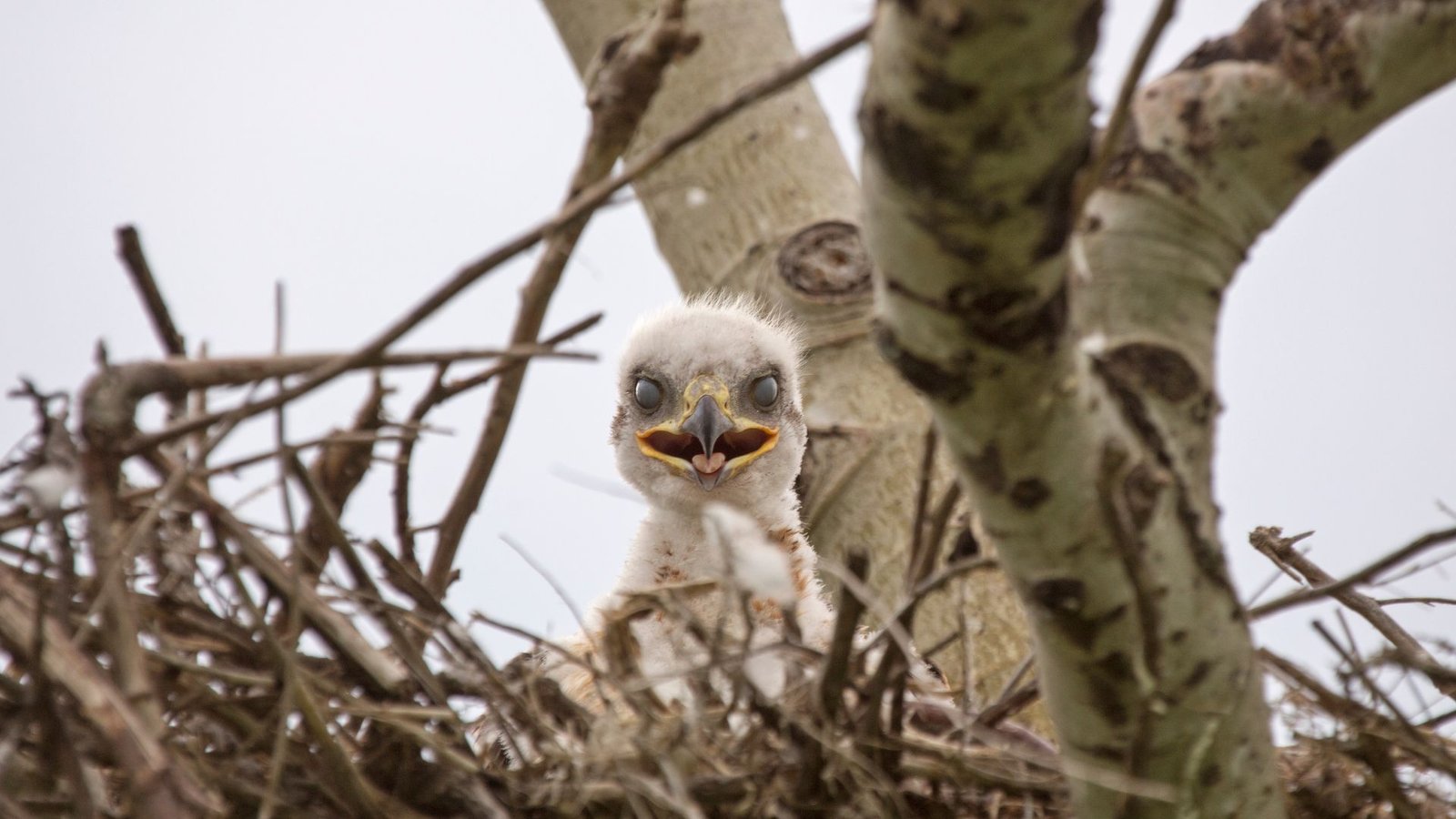
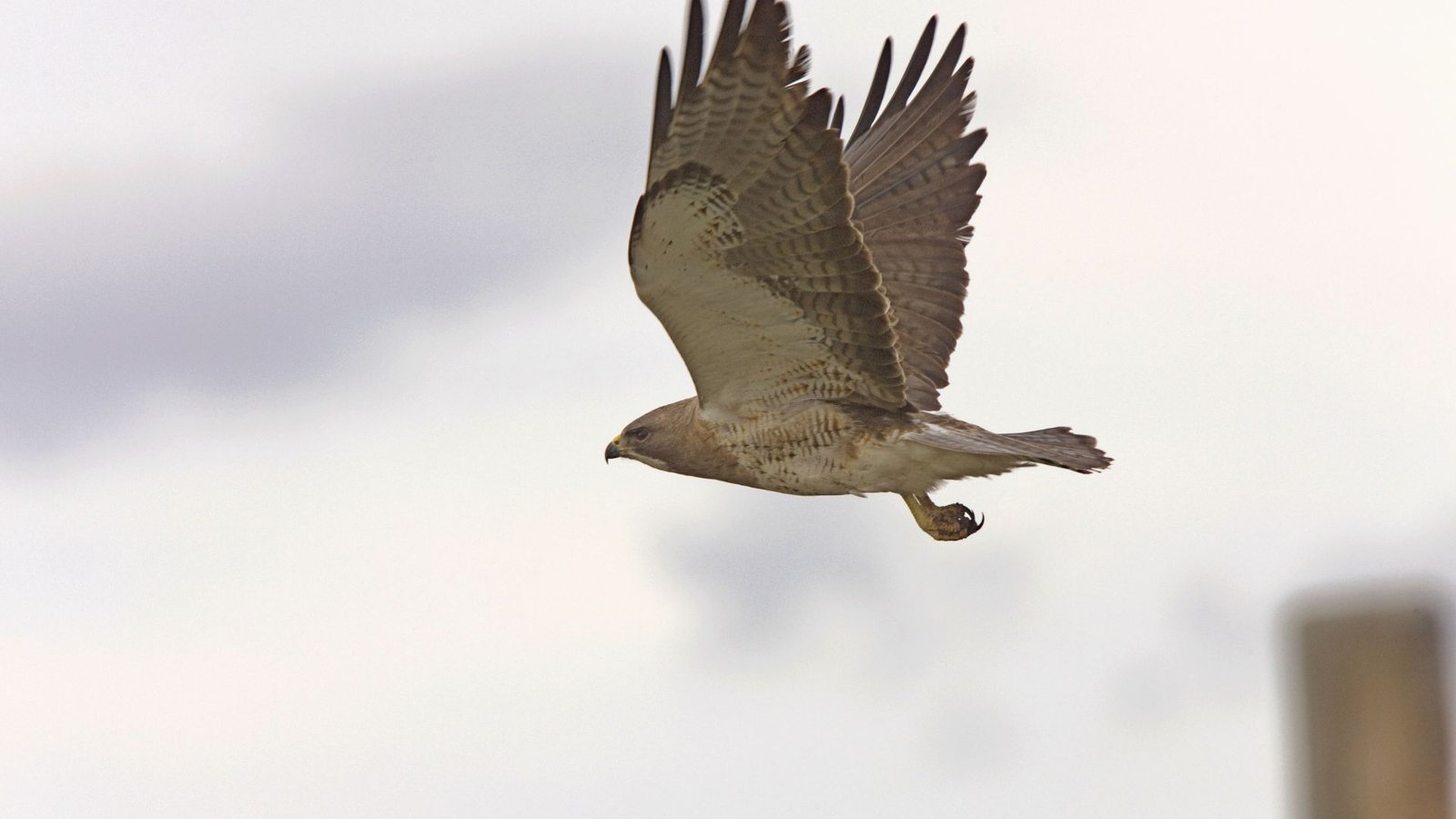
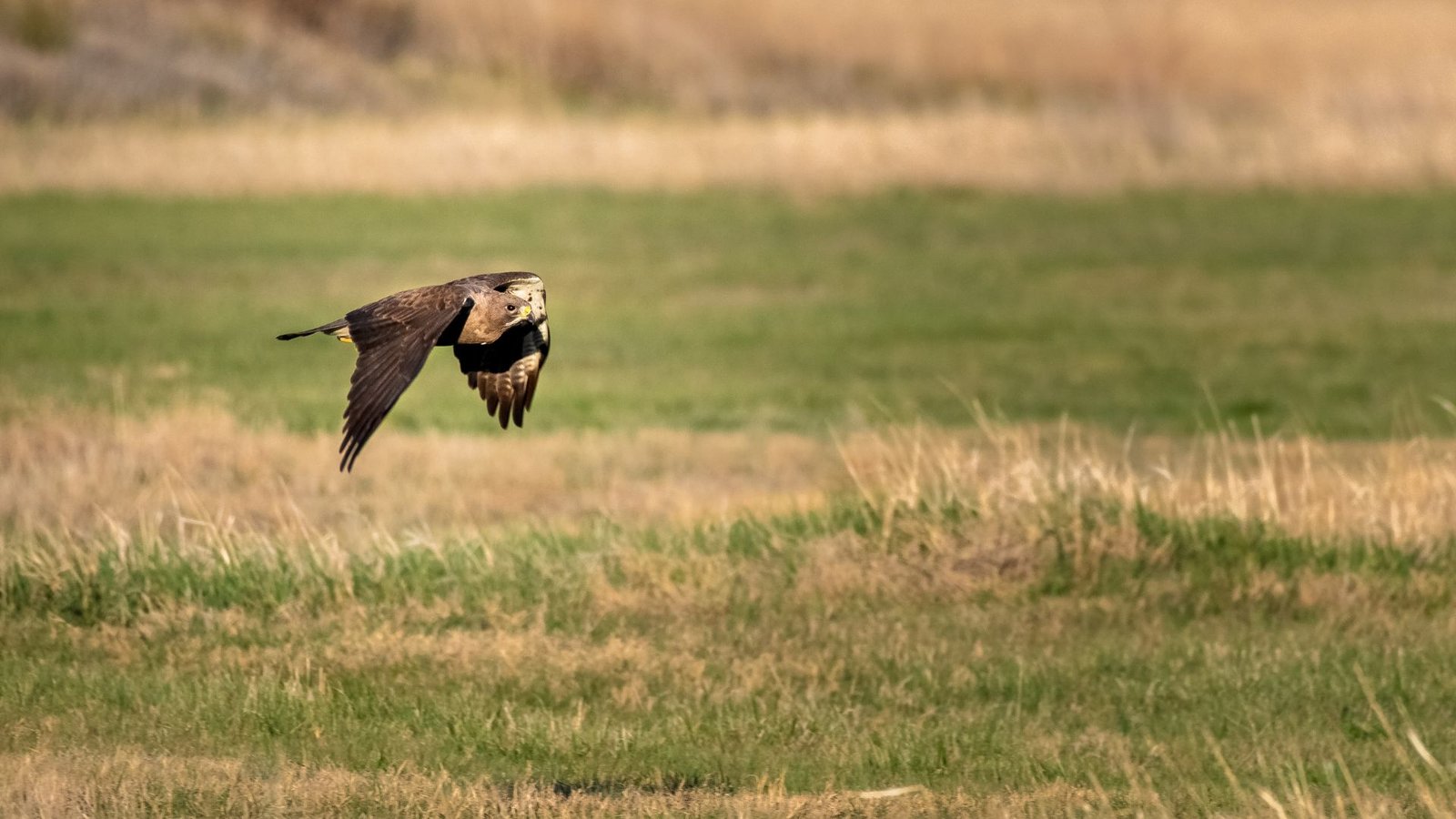
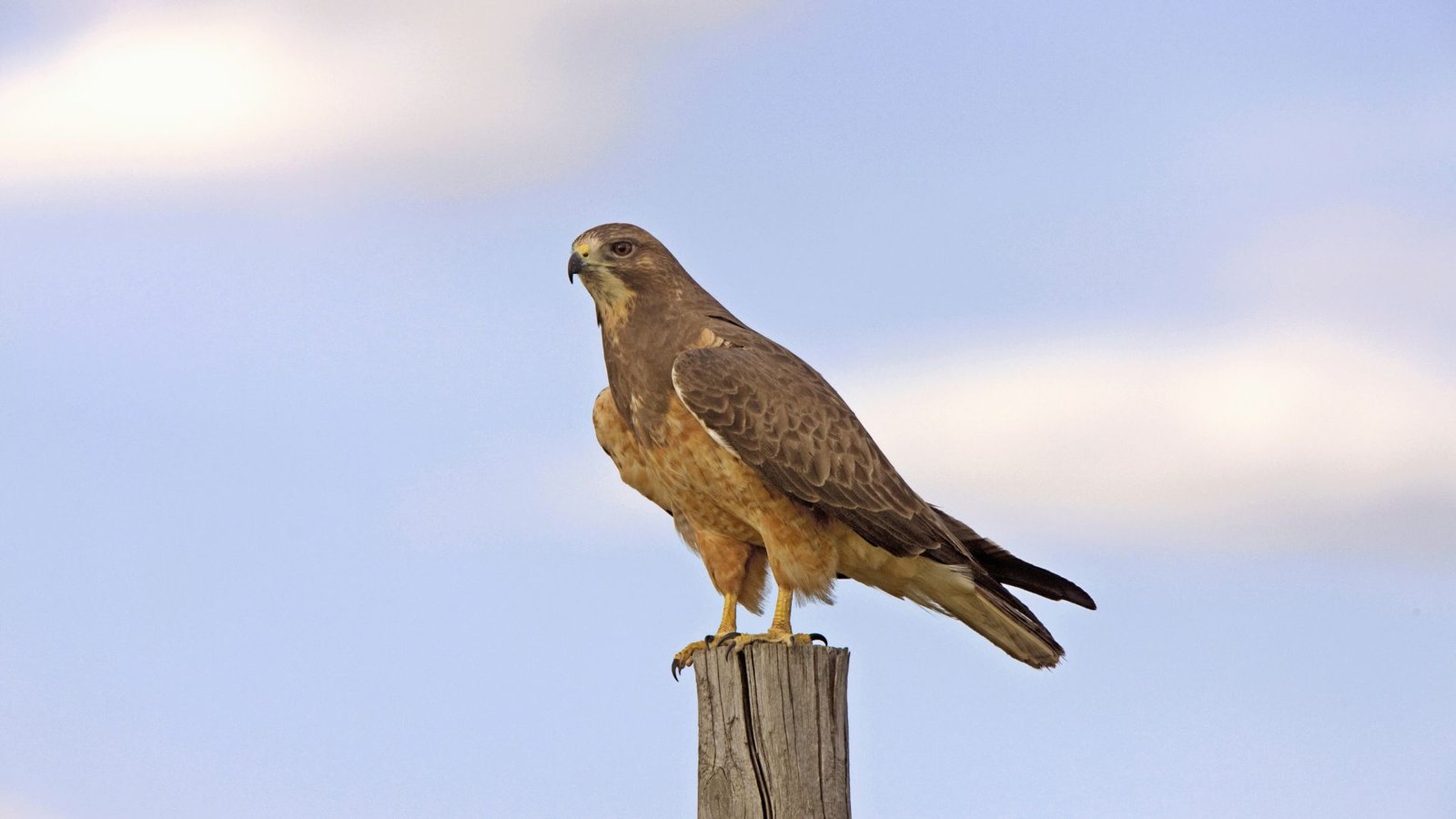
The Swainson’s Hawk is a medium-to-large Buteo with a slim body, long pointed wings, and a relatively small head. Adults typically exhibit two main morphs: light morphs have whitish underparts with a rufous chest band and dark flight feathers contrasting with pale wing linings, while dark morphs are uniformly dark brown. The tail is grayish with narrow dark bands. Juveniles are paler below, with streaked breasts and more mottled wings. Body length ranges from 43–56 cm, wingspan 117–137 cm, and mass 0.8–1.4 kg. Adapted for long-distance soaring, it has long primary feathers and a buoyant flight style. Sexual dimorphism is minimal, with females slightly larger than males [1][2][3].

Has Sexual Diamorphism?

Yes — females slightly larger and heavier; plumage differences minimal.

LIFE‑HISTORY & VITAL STATISTICS OF THE Swainson’s Hawk(S)

Average Height / Length / Diameter

43–56 cm length

Average Adult Weight / Mass

0.8–1.4 kg

Typical Lifespan / Longevity

12–16 years in wild

Typical Lifespan / Longevity for males

Data deficient

Typical Lifespan / Longevity for Females

Data deficient

Age at Sexual Maturity

~2 years

Breading Season

Apr–Jul (breeding in N America; non-breeding in Costa Rica)

Gestation

Reproductive Outcome

Clutch of 1–4 eggs; one brood/year

Ecology and Behaviour for Swainson’s Hawk(s)

The Swainson’s Hawk is a medium-to-large Buteo with a slim body, long pointed wings, and a relatively small head. Adults typically exhibit two main morphs: light morphs have whitish underparts with a rufous chest band and dark flight feathers contrasting with pale wing linings, while dark morphs are uniformly dark brown. The tail is grayish with narrow dark bands. Juveniles are paler below, with streaked breasts and more mottled wings. Body length ranges from 43–56 cm, wingspan 117–137 cm, and mass 0.8–1.4 kg. Adapted for long-distance soaring, it has long primary feathers and a buoyant flight style. Sexual dimorphism is minimal, with females slightly larger than males [1][2][3].

Habitat

Open habitats such as grasslands, savannas, agricultural lands, and open woodlands during migration and wintering. In Costa Rica, observed in lowland pastures, fields, and open dry forest edges.

Trophic Chain

Opportunistic predator and insectivore; feeds on large insects (especially during non-breeding season), small mammals, reptiles, and occasional birds.

Interespecies relationships noted for Swainson’s Hawk

Mutualism +/+

Data deficient

Symbiosis +/+

Data deficient

Commensalism + / 0

Following agricultural plowing to capture exposed insects

Inquilinism +/0

Data deficient

Phoresy +/0

Data deficient

Tanatocresis +/0

Feeding on insects flushed by livestock movement

Parasitism +/-

Lice or mites infesting plumage

Predation -/+

Prey to larger raptors (rare) such as Geranoaetus melanoleucus

Amensalism 0/-

Disturbance of insect prey by human pesticide use

Competition -/-

With other raptors (e.g., Roadside Hawk) for insect prey in dry season

Social behaviour of Swainson’s Hawk

Diurnal; largely solitary or in pairs during breeding, but highly gregarious in migration and on wintering grounds, forming large flocks. Courtship involves aerial displays and mutual soaring. Foraging in Costa Rica focuses on aerial hawking or ground pursuit of large insects, often in recently burned or plowed fields. Territoriality is minimal in wintering grounds; extensive seasonal migrations span the Americas.

Distribution and Sighthings ofSwainson’s Hawk(s) in Costa Rica

General Regions of Costa Rica where to find Swainson’s Hawks

Seasonal dry forest (Guanacaste)

National Parks and Reserves of Costa Rica where to find Swainson’s Hawks

Parque Nacional Barra Honda
Parque Nacional Guanacaste
Parque Nacional Palo Verde
Parque Nacional Volcán Poás
Parque Nacional Rincón de la Vieja
Parque Nacional Santa Rosa
Reserva Biológica Lomas de Barbudal
Refugio Nacional de Vida Silvestre Bahía Junquillal
Refugio Nacional de Vida Silvestre Curú

Best Time to seeSwainson’s Hawk(s) in Costa Rica

Dry Season
January
February
March
April
June
July
August
September
October
November
December

Media

Videos

Sounds and calls

Taxonomy

Conservation Status

Status IUCN

Threats

⚠️Habitat loss and degradation of open grasslands and wetlands.
⚠️Pesticide use reducing insect prey availability.
⚠️Collision with vehicles and power lines during migration.
⚠️Climate change altering migratory timing and prey abundance.

Fun Facts

  • One of the longest-distance raptors, migrating up to 11,000 km between breeding and wintering grounds.

  • In non-breeding season, diet shifts heavily to insects, especially grasshoppers.

  • Often migrates in flocks of hundreds to thousands, a rare behavior among raptors.

Origins & Record

Origin Status

Migratory

Population trend

Decreasing

Added by

Reviewed by

More Species