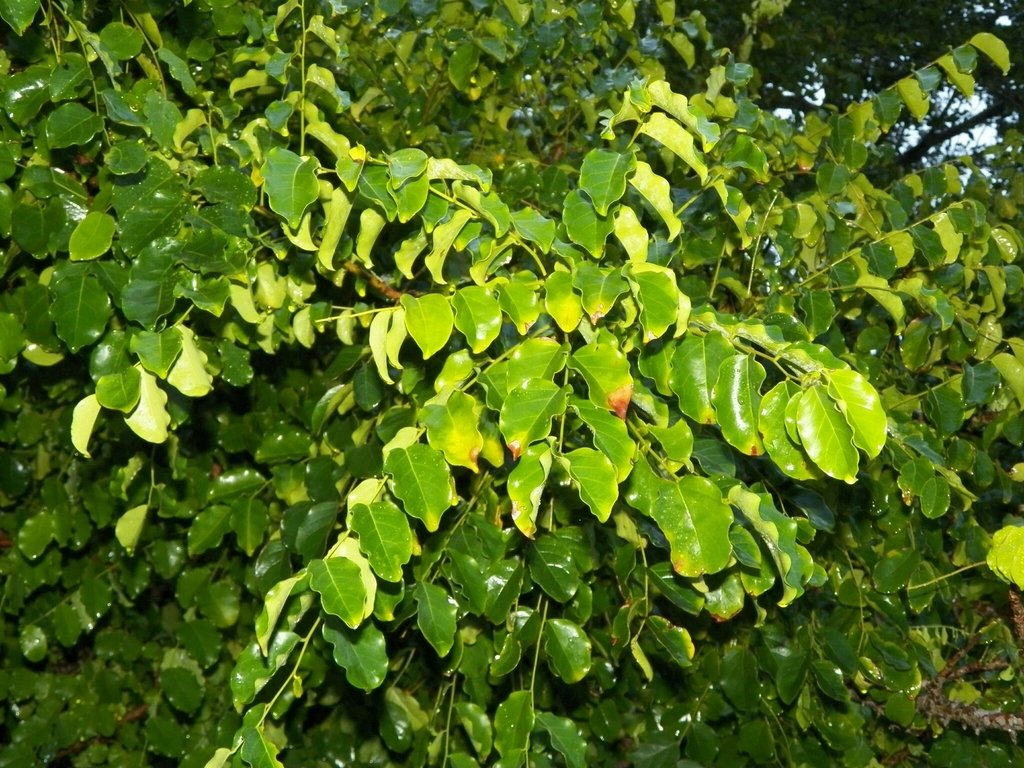
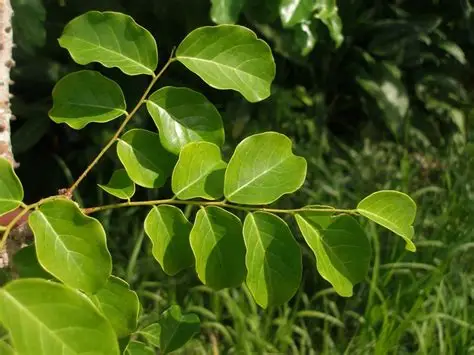
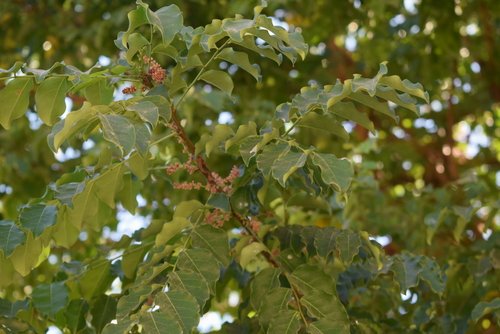
Evergreen riverine tree typically 7–10 m tall with a dense, rounded crown and gray-brown bark; often single-stemmed but may resprout after pruning. Leaves alternate with conspicuous ochreae (sheathing stipules) at the petiole base; blades leathery, entire-margined, elliptic to suborbicular, with prominent secondary venation beneath. Inflorescences are very elongate, many-flowered spikes, bearing small, greenish-cream, fragrant flowers; plants are often functionally dioecious as in many Coccoloba. Fruits are achenes enclosed by a fleshy, accrescent perianth (“grape-like” strings), edible but astringent, and attractive to frugivores.
Has Sexual Diamorphism?
No
Sexual dimorphism refers to the physical differences between males and females of the same species that go beyond reproductive organs. For example, size, colour or form.
LIFE‑HISTORY & VITAL STATISTICS OF THE Phyllanthus elsiae(S)
Average Height / Length / Diameter
Height 7–10 m; typical DBH 10–30 cm (riparian trees; approximate).
Average Adult Weight / Mass
Data deficient
Typical Lifespan / Longevity
Perennial tree; Data deficient (likely several decades)
Typical Lifespan / Longevity for males
Not enough data
Typical Lifespan / Longevity for Females
Not enough data
Age at Sexual Maturity
Data deficient
Breading Season
Flowering May–June and December in Costa Rica (observed).
Gestation
Fruit development weeks to few months (general for genus); Data deficient for species-specific timing
Reproductive Outcome
Ecology and Behaviour for Phyllanthus elsiae(s)
Evergreen riverine tree typically 7–10 m tall with a dense, rounded crown and gray-brown bark; often single-stemmed but may resprout after pruning. Leaves alternate with conspicuous ochreae (sheathing stipules) at the petiole base; blades leathery, entire-margined, elliptic to suborbicular, with prominent secondary venation beneath. Inflorescences are very elongate, many-flowered spikes, bearing small, greenish-cream, fragrant flowers; plants are often functionally dioecious as in many Coccoloba. Fruits are achenes enclosed by a fleshy, accrescent perianth (“grape-like” strings), edible but astringent, and attractive to frugivores.
Habitat
Riparian forest and floodplains of the Central Pacific lowlands (Parrita, Puntarenas); also used as live fences and shade trees in pastures. Tolerates seasonally waterlogged alluvial soils.
Trophic Chain
Primary producer; zoocoric fruits (birds, other frugivores) and melittophilous flowers that attract butterflies, bumblebees, bees, and wasps.
Interespecies relationships noted for Phyllanthus elsiae
Mutualism +/+
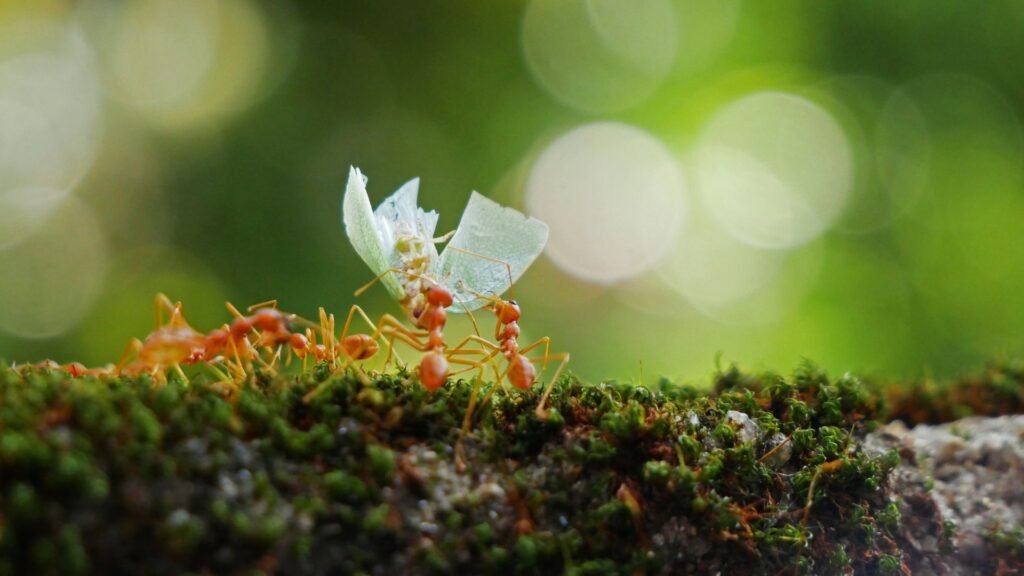
Pollinators (butterflies, bumblebees, bees, wasps) obtain nectar/pollen; tree gains pollination (May–Jun & Dec blooms).
Symbiosis +/+
Likely mycorrhizal associations enhance nutrient uptake in alluvial soils; fungi gain carbon (inferred for the genus/family).
Commensalism +/0
Epiphytes and lianas use its trunk/canopy as substrate; tree largely unaffected under moderate loads. (General riparian forest dynamic.)
Inquilinism +/0
Birds nesting in the dense crown benefit from structure/shade; minimal cost to the tree. (Observed broadly in live-fence trees.)
Phoresy +/0
Seeds may be incidentally transported in mud on hooves/boots, aiding dispersal; vector unaffected. (General riparian scenario.)
Tanatocresis +/0
Dead wood provides habitat for detritivores and cavity nesters; tree already dead.
Parasitism -/+
Fungal pathogens and sap-sucking hemipterans can reduce vigor; species-specific data deficient.
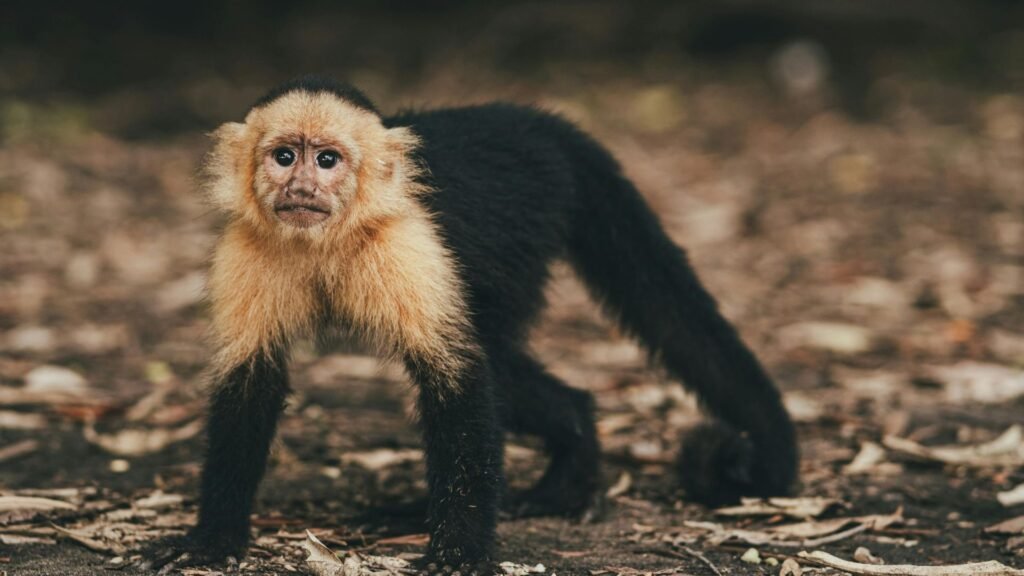
Birds and mammals consume the fleshy perianth; damage to tissues offset by seed dispersal along rivers.
Amensalism 0/-
Dense shade beneath adult trees can suppress seedlings of other species in narrow riparian strips.
Competition -/-
Competes with grasses/invasive shrubs in disturbed banks; altered flows can favor heliophiles over saplings.
Social behaviour of Phyllanthus elsiae
Not applicable (plant). Perennial riparian tree frequently planted as live fence/shade; resprouts well after pruning and coppicing.
Distribution and Sighthings ofPhyllanthus elsiae(s) in Costa Rica
General Regions of Costa Rica where to find Phyllanthus elsiaes
Tropical
National Parks and Reserves of Costa Rica where to find Phyllanthus elsiaes
Parque Nacional Cahuita
Best Time to seePhyllanthus elsiae(s) in Costa Rica
Dry Season
January
February
March
April
June
July
August
September
October
November
December
Media
Videos
Sounds and calls
This entry needs further information with:
Nrew species review needed
This sheet is marked as: Revision required
Taxonomy
Taxonomic classification is a hierarchical system used in biology to organize and name living organisms. It arranges species into nested groups based on shared characteristics and evolutionary relationships.
Kingdom Plantae
Phylum Tracheophyta
Class Magnoliopsida
Order Caryophyllales
Genus Coccoloba
Conservation Status
Status IUCN
🌍 The IUCN status refers to the conservation category assigned to a species by the International Union for Conservation of Nature, based on its risk of extinction
Not Evaluated (NE)
Threats
⚠️Coastal development & tourism pressure in the Limón area affecting lagoon/estuary margins.
⚠️Hydrologic alteration & pollution in estuaries/mangroves reducing suitable back-mangrove thickets.
⚠️Very narrow known distribution in Costa Rica (single confirmed locality), increasing vulnerability to local disturbances.
⚠️Climate change (sea-level rise/salinity shifts) impacting coastal ecotones used by the species.
Fun Facts
First confirmed Costa-Rican record in 2024 at Estero Negro (between Limón and Cahuita).
The species is explicitly noted as dioecious in national reporting.
WFO lists leafy branchlets with very large leaves (10–30 cm) and a dry, woody drupe, highlighting unusual fruit type within the genus.
Broader range includes Mexico, Central America, the West Indies and Guianas at low elevations.